‘পরের কোনও পর্যটক বাঁচবে, তাই
কোথায় হাঁটি, কোথায় থামি… লিখে গেলাম।’ Srijato
Another traveller will arrive, so
where I walk, where I stop… I inscribe.
The River
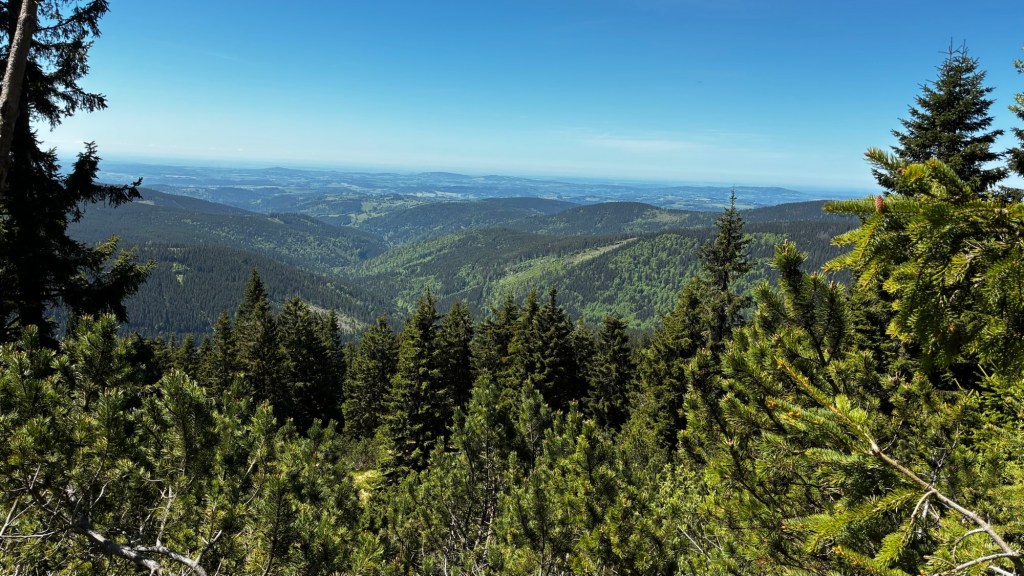
We are on the high moorland of the Giant Mountains nearly 1,400 metres above sea level, wondering how on earth this insignificant seepage through cracks in the stones will somehow gather enough strength to become one of Europe’s great waterways—crossing the breadth of Czechia and Germany before entering the North Sea some 1,200 kilometres away.
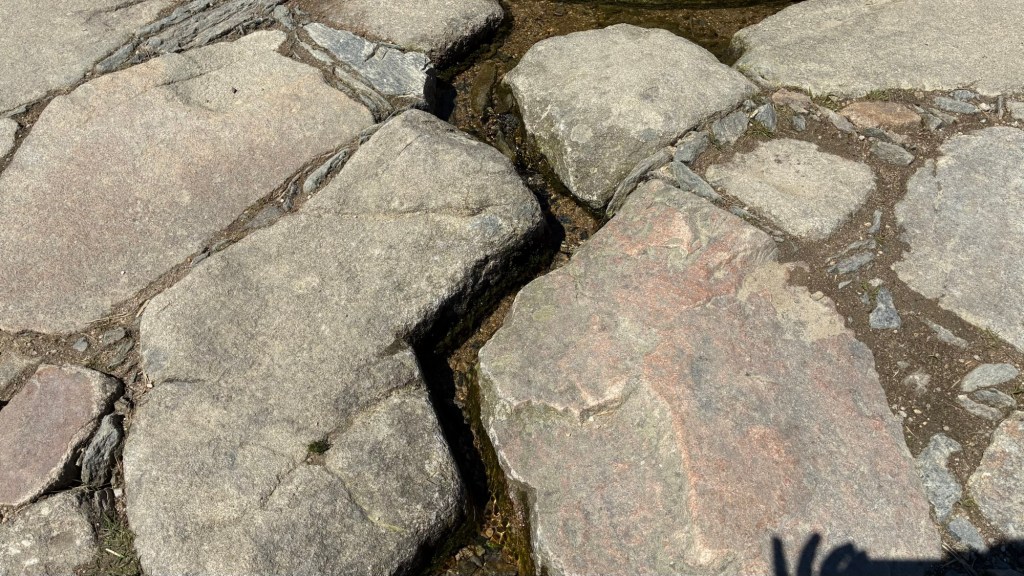
Pramen Labe, the Elbe’s official birthplace, is marked by a circular stone well and prominent signage. It takes quite some digging to discover that this is not where the river actually first surfaces. The marked site serves the traveller’s needs rather than a hydrological one: it gives us a place to arrive, a point from which our journey can begin, while leaving the river to be born in peace in a protected peat bog further west, undisturbed by human feet.
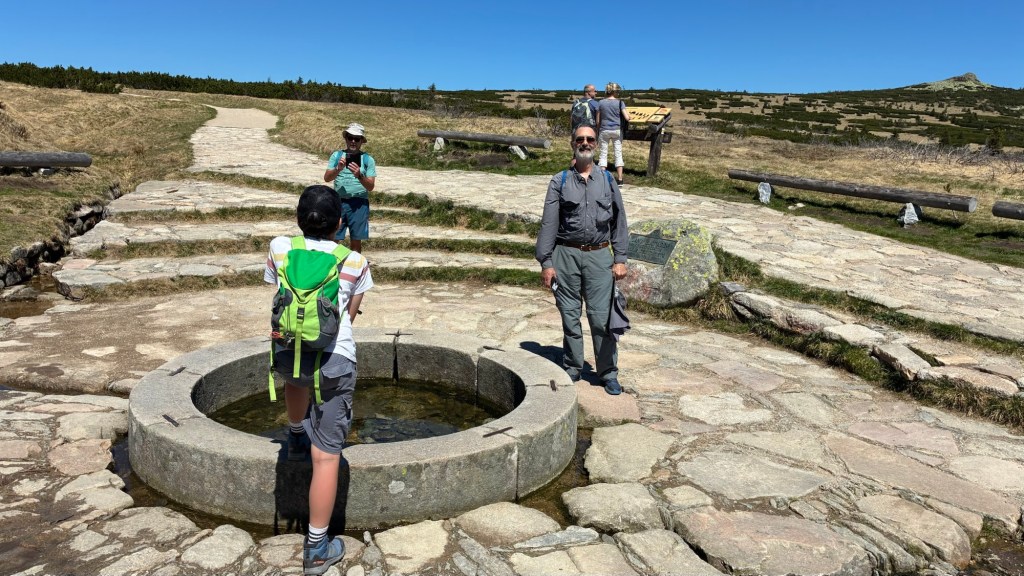
The river seems impatient. Barely a kilometre from the official source, it is already hurling itself over black granite, dropping somewhere between 30 and 45 metres—depending, I suppose, on how they measure a waterfall—before continuing through another two hundred metres of rapids into the valley below.
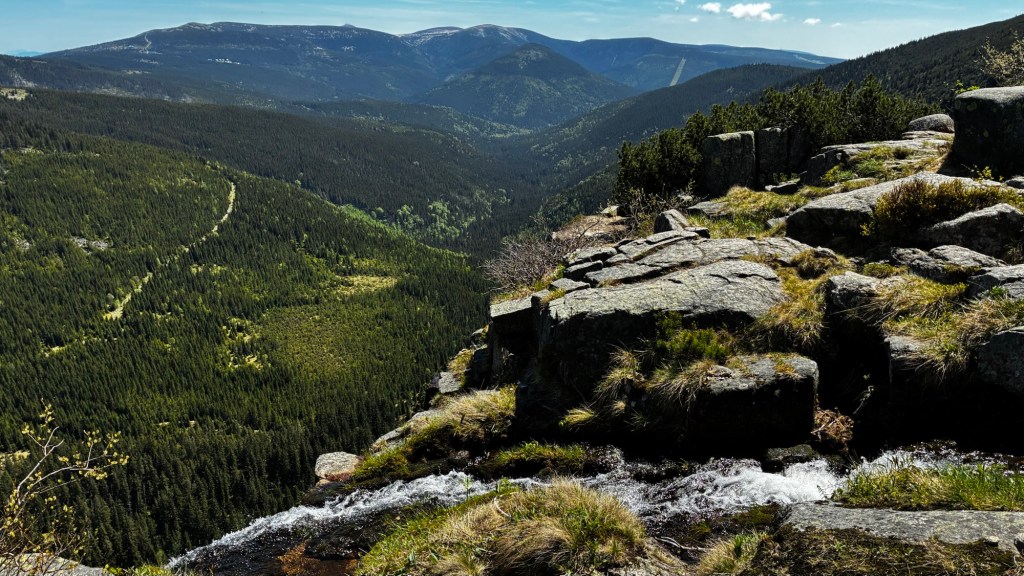
Last year, while cycling beside the Danube, we watched a great river gather itself slowly over many days of riding. The Elbe, by contrast, appears in a hurry to grow. Just eight kilometres from its source—and a thousand vertical metres lower—in the little town of Špindlerův Mlýn, it is already a gushing stream, at times ten metres wide.
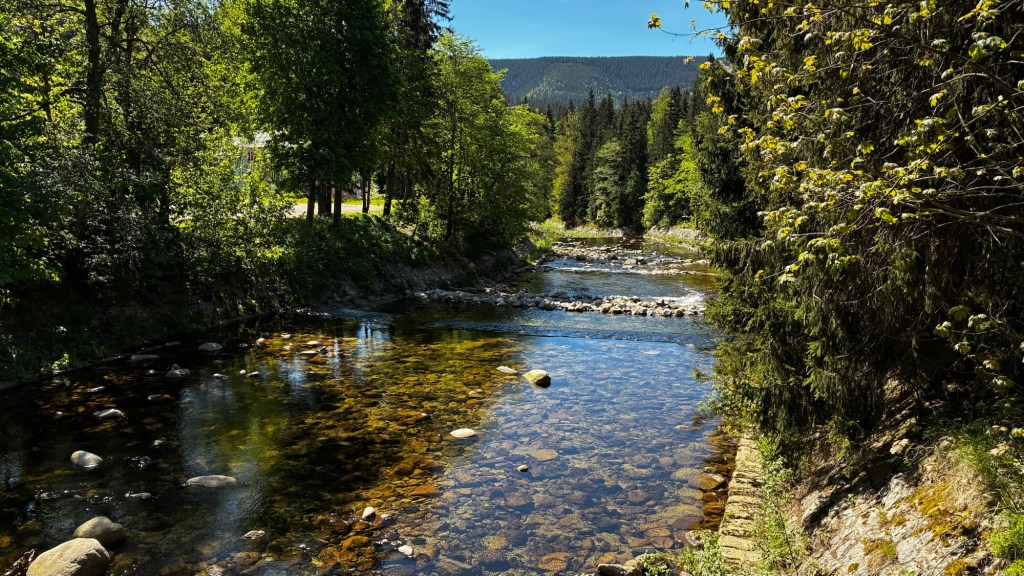
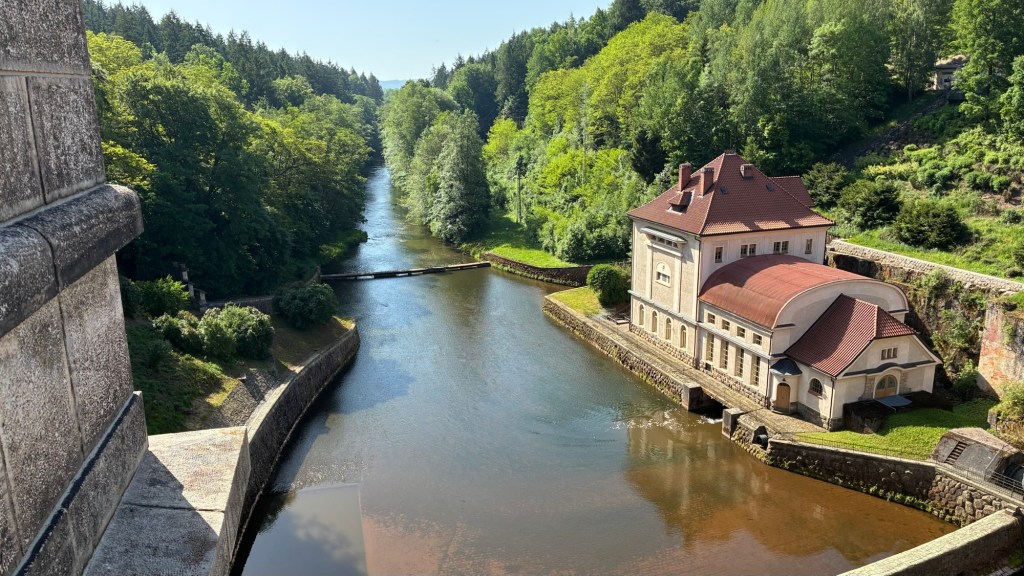
Historically, snowmelt and heavy mountain rains had the river surging through these valleys and periodically causing devastating floods. Dams built in the early twentieth century eventually curbed some of those excesses.
Even so, by the time we are another hundred kilometres downstream at Hradec Králové, an old Bohemian dowry town once ruled by queens, the river is more than twenty metres wide. Soon afterwards, swollen by the Chrudimka, it doubles its girth again. And so it goes.
The Hike
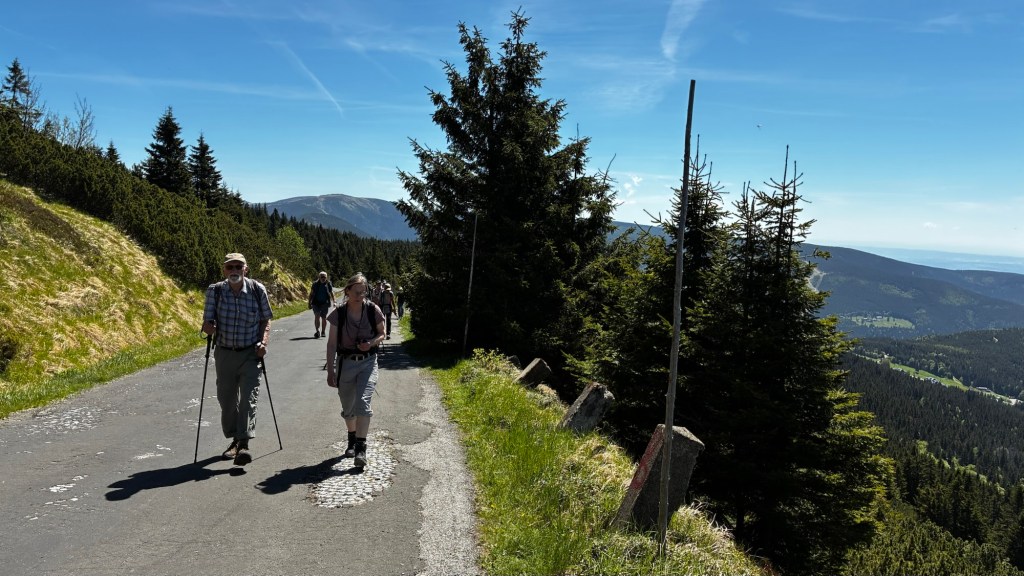
For us, the actual cycling began at Vrchlabí, about twenty kilometres downstream from Pramen Labe.
We had considered cycling all the way to the ceremonial source from Vrchlabí railway station, as the Elbe Cycle Route Guidebook (henceforth, “the Book”) recommends. But after several days of negotiations involving maps, gradients and public transport timetables, we concluded that riding a thousand metres uphill was quite beyond us. Having since watched a couple of cyclists labour through the final stages of the climb to Pramen Labe, I can say with some confidence that we made the correct decision.
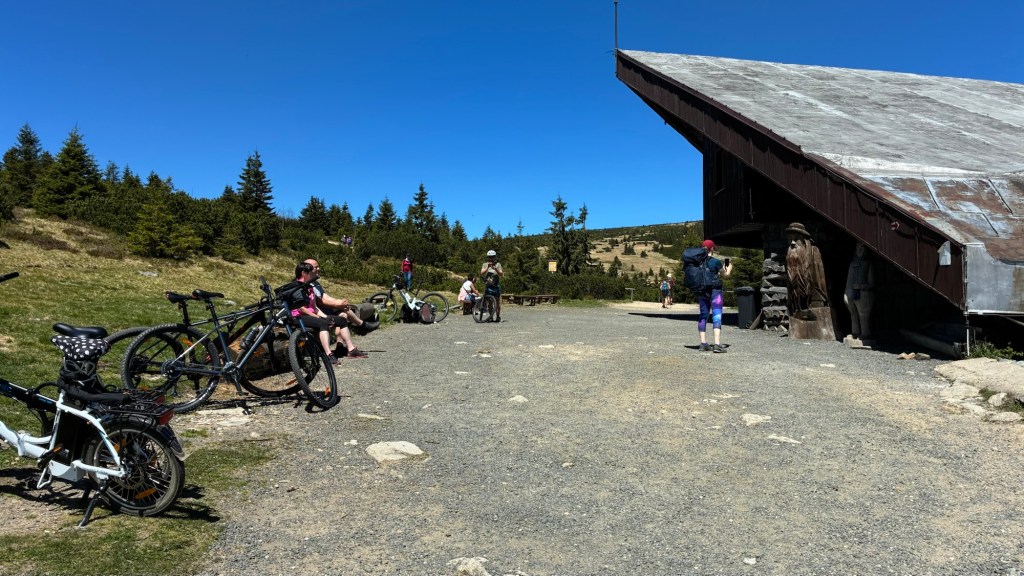
A six-kilometre hike involving five hundred metres of ascent to obtain the obligatory photographs of an official beginning seemed challenge enough. After that, the route would be downhill most of the way—or so the Book promised.
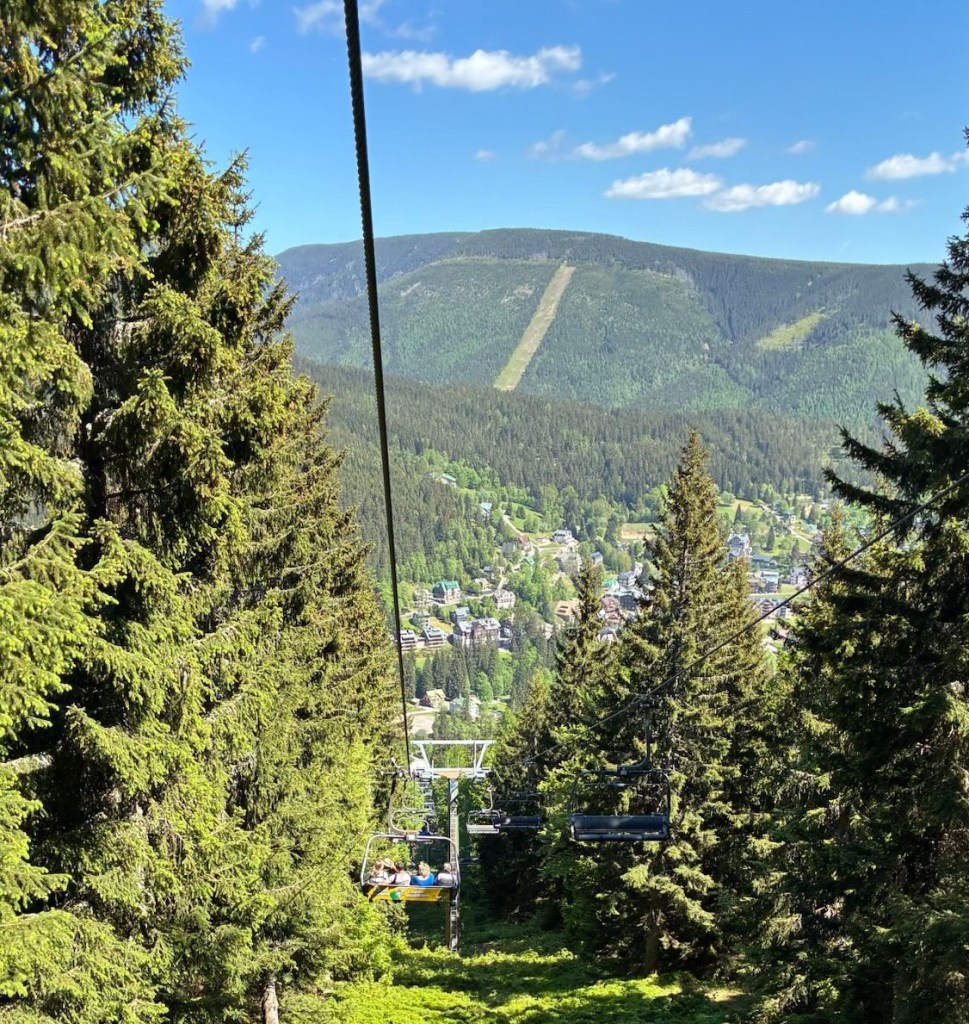
The Giant Mountains are breathtaking in both the figurative and literal sense.
The Ride: The First Hundred Kilometres
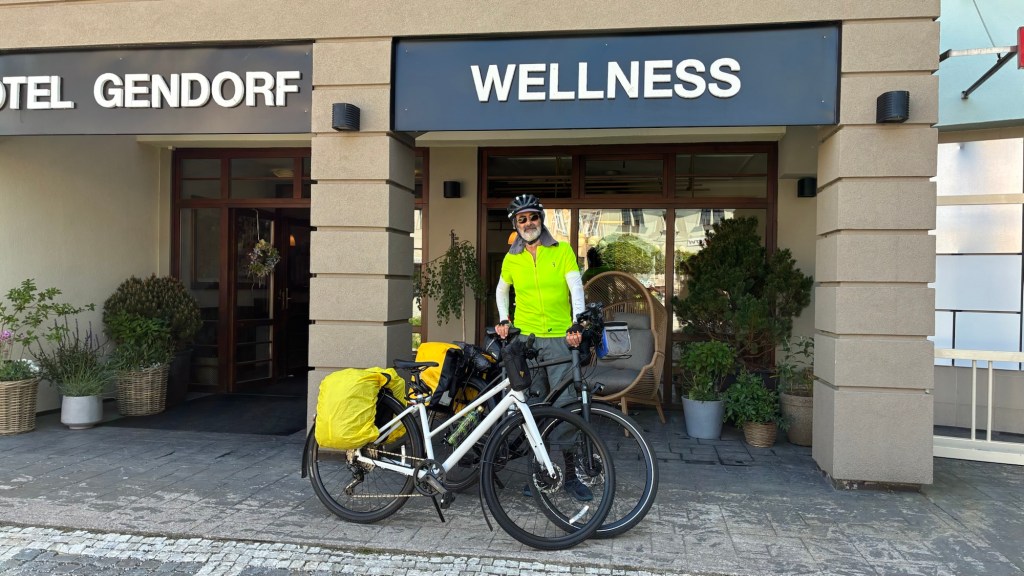
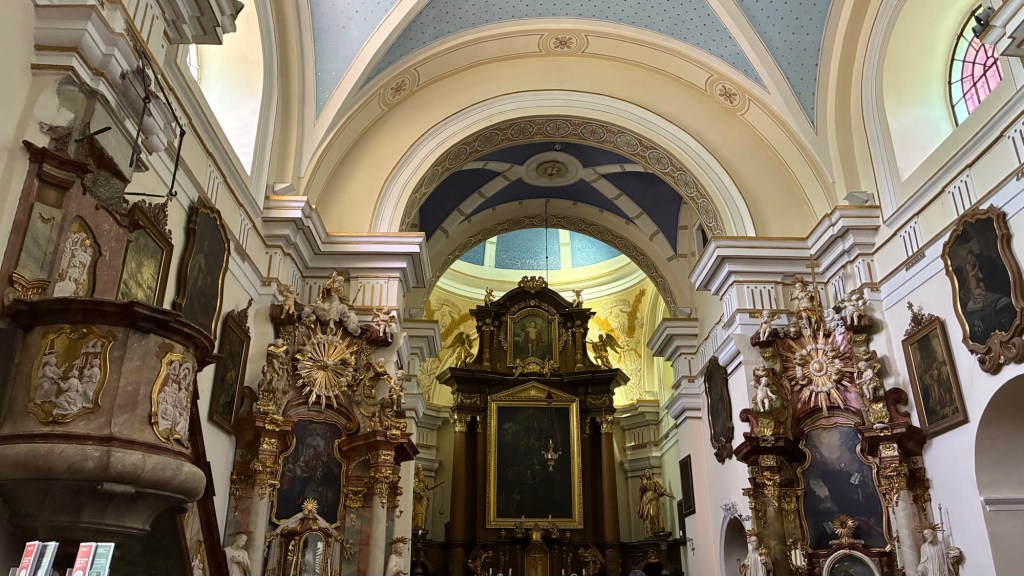
A hundred kilometres of riding brings us to Pardubice, where I began writing these notes. Any town at which you choose to stop seems to possess a medieval castle, church, monastery or some other grand structure dating from somewhere between the tenth and eighteenth centuries.
In late May, summer is beginning to shoulder spring aside. Wild poppies line the roads. Swallows dart overhead, frustratingly difficult to capture in a photograph. The cherries are still green. The skies have been crystal clear. Most days the breeze has been an ally against the heat, although a capricious westerly can sometimes get a bit pushy.
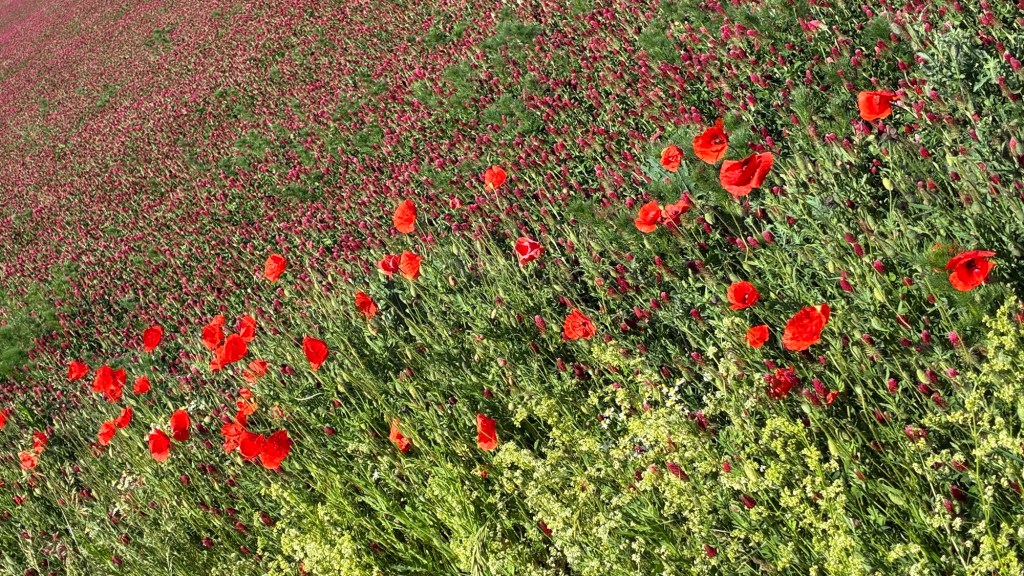
The promise of “downhill all the way” does not immediately materialise. Our second day of riding, from Hostinné to Jaroměř, included several long, slow climbs—particularly challenging on a busy road and with temperatures approaching thirty degrees. Naturally there are no photographs from those sections; one is generally too occupied with panting and cursing. Even the trucks are polite in Czechia, however. So the traffic never feels unsafe.
A Stop
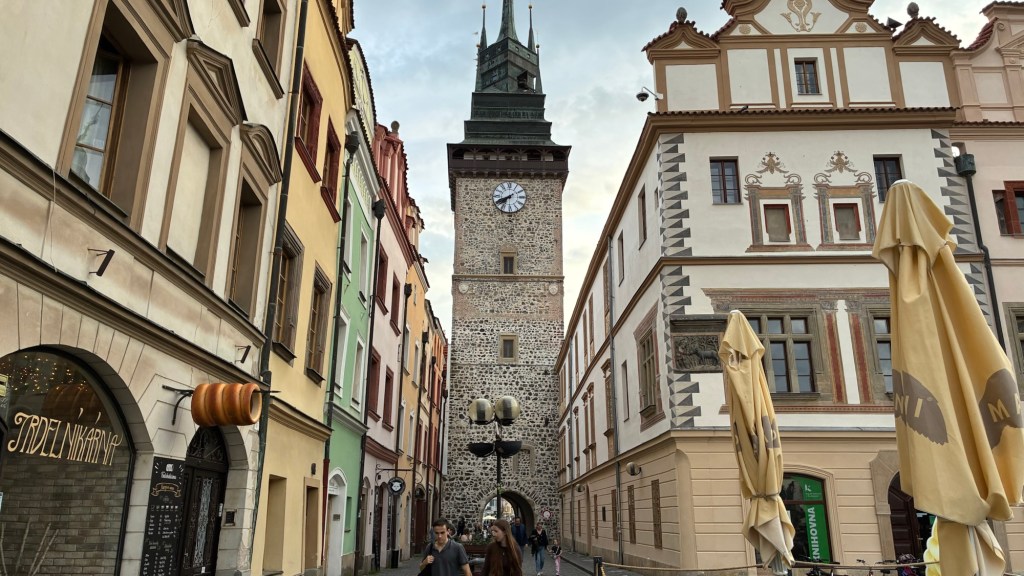
At the end of a forty or fifty-kilometre ride, it feels good simply to stop. But Pardubice, a regional capital of some 93,000 people and the largest town we had set foot in since Prague, seemed determined to make us feel particularly welcome. Our hotel room overlooked the fortress walls. Music drifted across in the evening air.
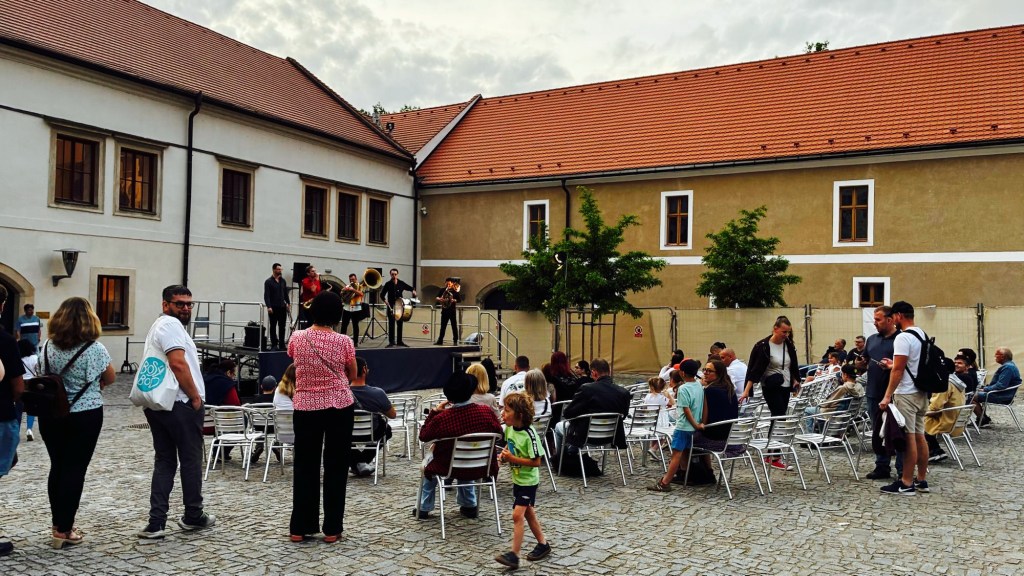
Was the city putting on a show for us? But no, we had stumbled into Pardubice Museum Night.
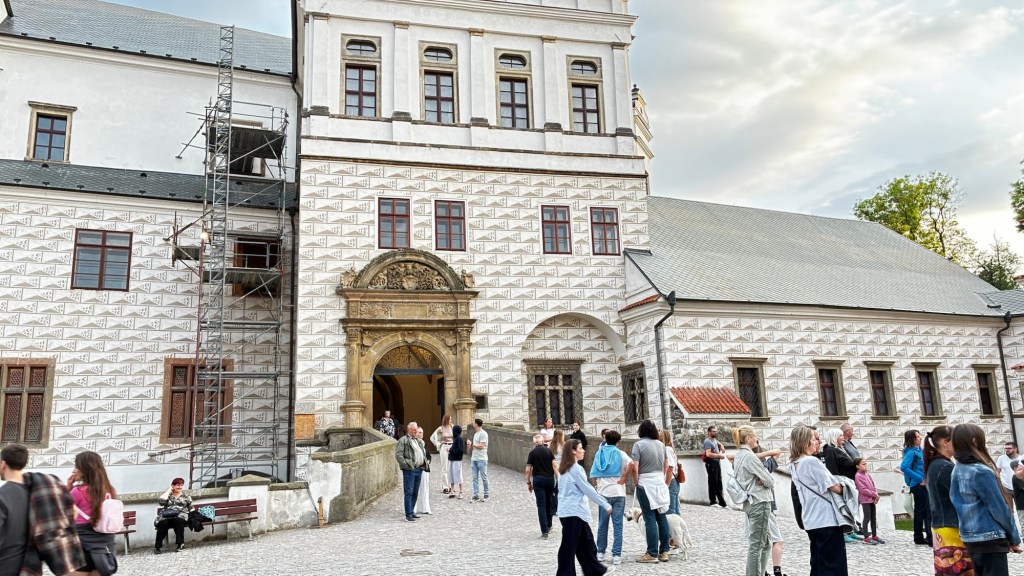
One night in May, each year, the Pardubice Castle—originally a thirteenth-century moated fortress, later transformed into a Renaissance château—and the East Bohemian Museum housed within it remains open until eleven o’clock, with free admissions. Bands play in the courtyard, loudly enough to keep even the weariest cyclist awake.
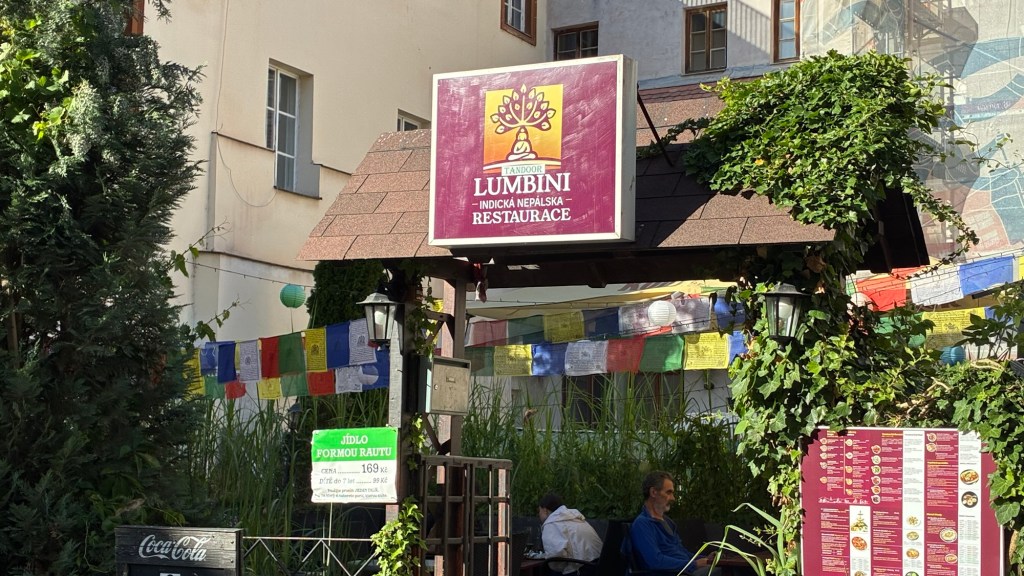
Several days later, Sidekick is still salivating over the dinner he ate at Pardubice’s only Nepali restaurant, Lumbini. Meanwhile, I am still trying to work out why a family of peacocks—decidedly not native to Bohemia—seem to have taken up residence inside a medieval castle-fortress-château.
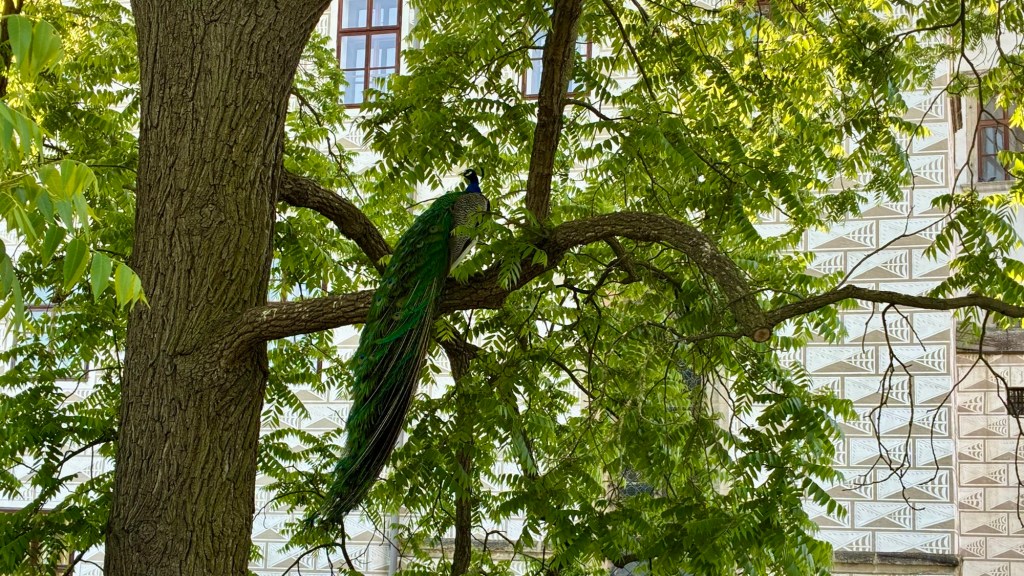
A renaissance mansion, free museum, live music, good food and inexplicable peacocks: this is a place refusing to disappear in the blur of the long distance cyclist’s one-night stops.


Wonderful thank you David and Krishna am enjoying your travels what a wonderful experience keep up the good work. Lyn
LikeLike
Thanks for coming along with us on this ride, Lyn😊
Get Outlook for iOShttps://aka.ms/o0ukef
LikeLike