Following the Elbe: Slow Riders, Impatient River 

‘পরের কোনও পর্যটক বাঁচবে, তাই
কোথায় হাঁটি, কোথায় থামি… লিখে গেলাম।’ Srijato

Another traveller will arrive, so
where I walk, where I stop… I inscribe.

The River
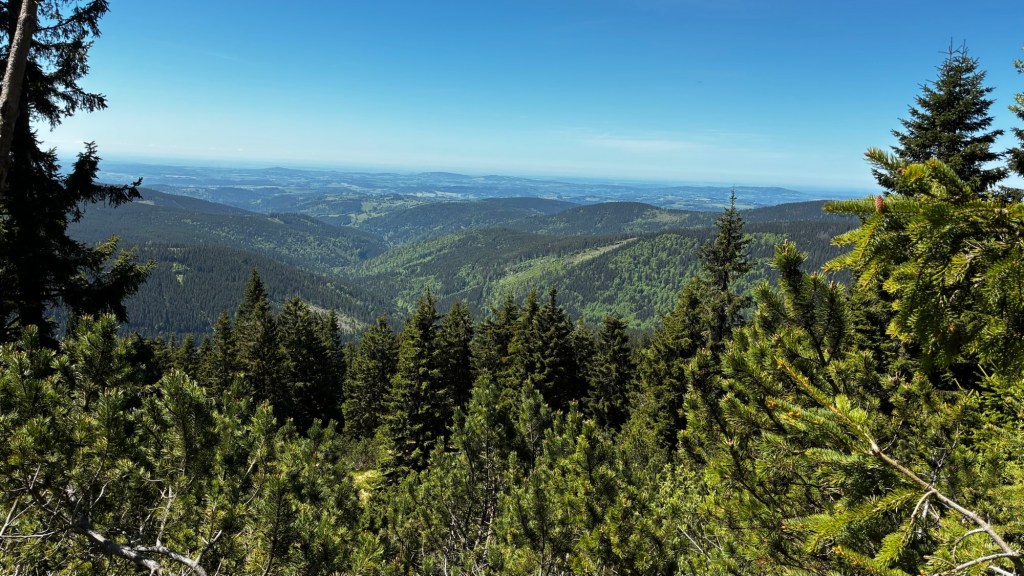
Mountains on the border of Czechia and Poland

We are on the high moorland of the Giant Mountains nearly 1,400 metres above sea level, wondering how on earth this insignificant seepage through cracks in the stones will somehow gather enough strength to become one of Europe’s great waterways—crossing the breadth of Czechia and Germany before entering the North Sea some 1,200 kilometres away.
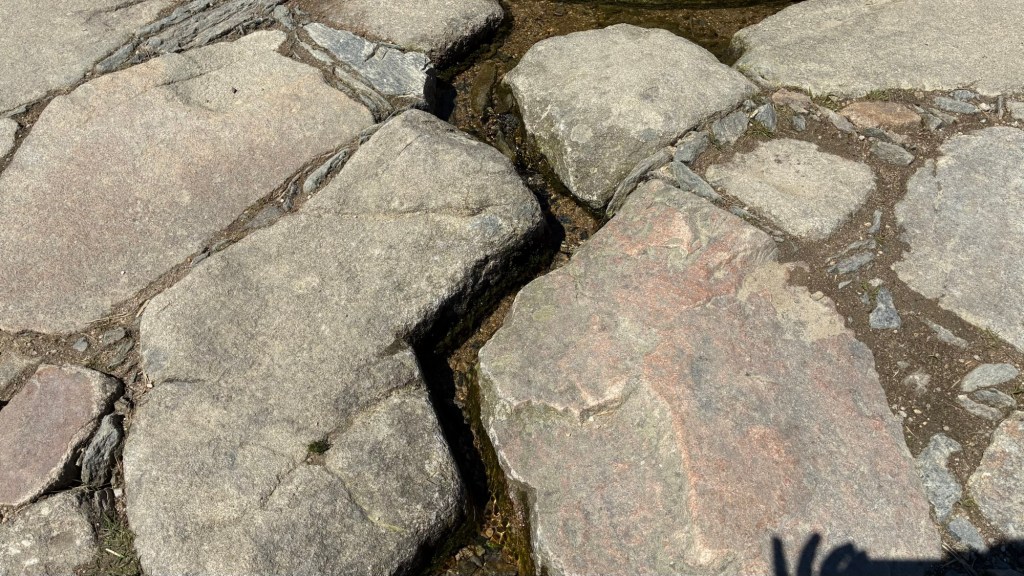
Unconvincing trickle!

Pramen Labe, the Elbe’s official birthplace, is marked by a circular stone well and prominent signage. It takes quite some digging to discover that this is not where the river actually first surfaces. The marked site serves the traveller’s needs rather than a hydrological one: it gives us a place to arrive, a point from which our journey can begin, while leaving the river to be born in peace in a protected peat bog further west, undisturbed by human feet.
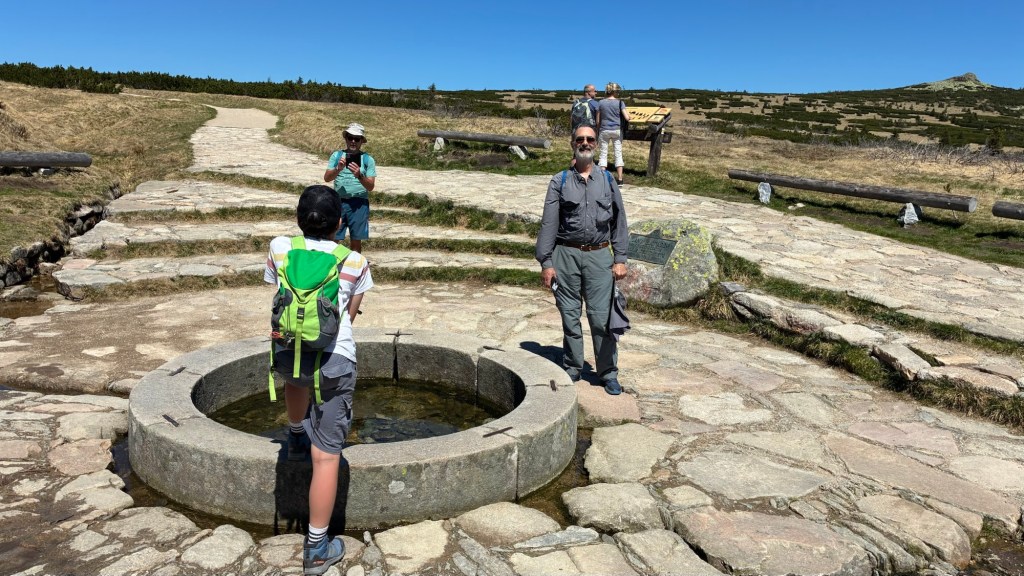
Pramen Labe – Obligatory tourist photo

The river seems impatient. Barely a kilometre from the official source, it is already hurling itself over black granite, dropping somewhere between 30 and 45 metres—depending, I suppose, on how they measure a waterfall—before continuing through another two hundred metres of rapids into the valley below.
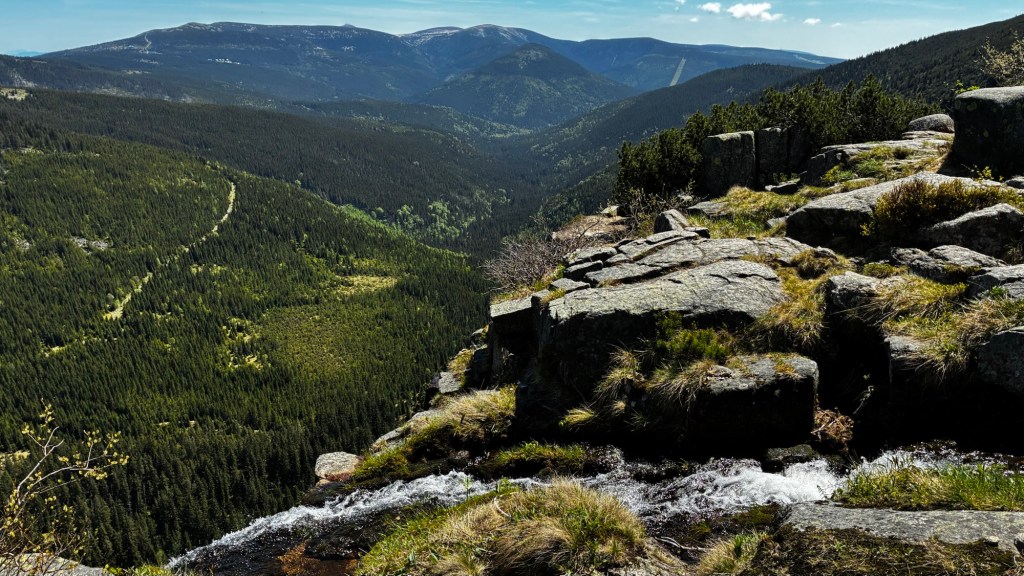
The Elbe Falls: you have to be there to see its magic

Last year, while cycling beside the Danube, we watched a great river gather itself slowly over many days of riding. The Elbe, by contrast, appears in a hurry to grow. Just eight kilometres from its source—and a thousand vertical metres lower—in the little town of Špindlerův Mlýn, it is already a gushing stream, at times ten metres wide.
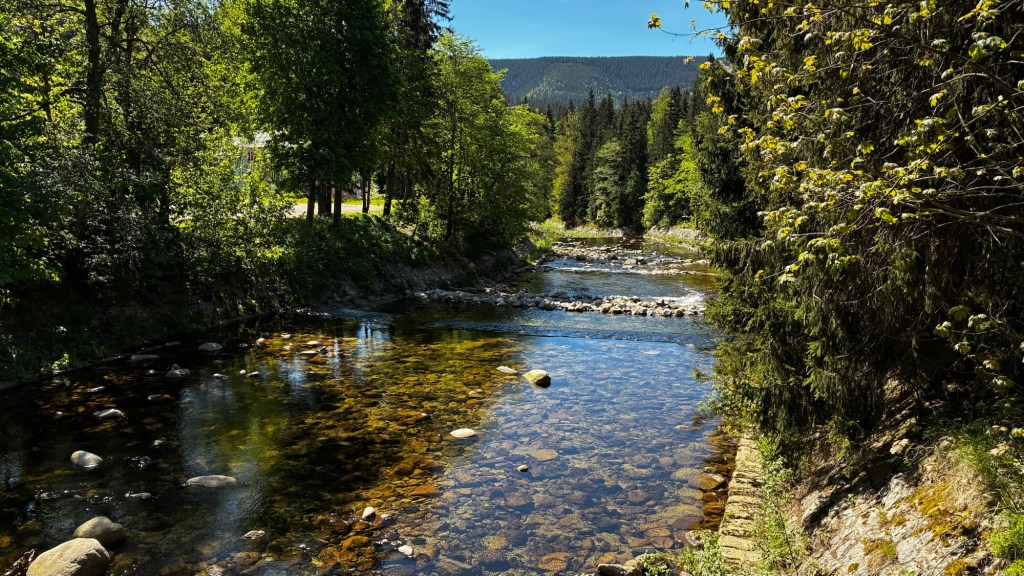
Elbe, as a mountain stream

Historically, snowmelt and heavy mountain rains had the river surging through these valleys and periodically causing devastating floods. Dams built in the early twentieth century eventually curbed some of those excesses.
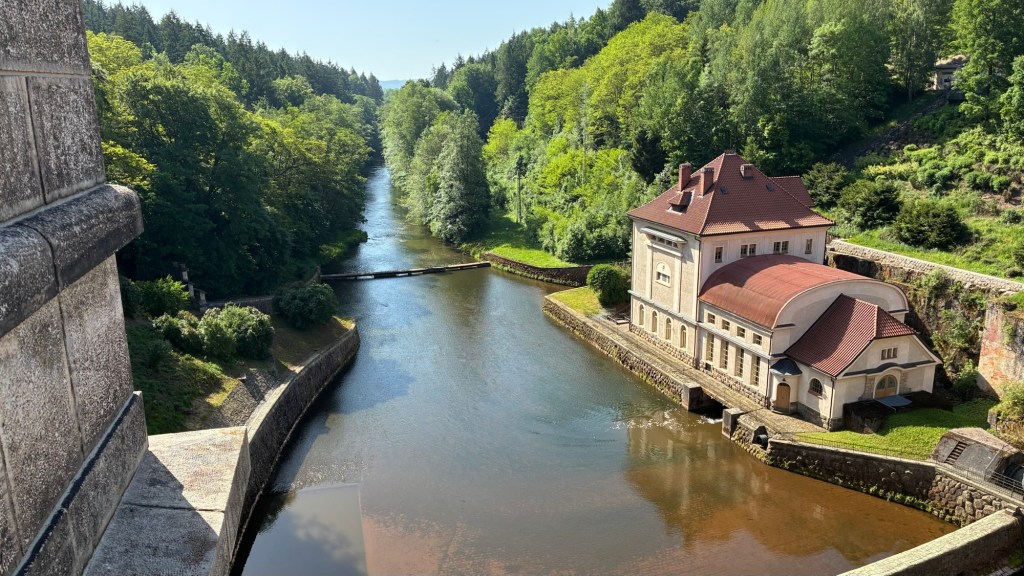
The Royal Forest Dam, whose architecture is as pretty as the surroundings

Even so, by the time we are another hundred kilometres downstream at Hradec Králové, an old Bohemian dowry town once ruled by queens, the river is more than twenty metres wide. Soon afterwards, swollen by the Chrudimka, it doubles its girth again. And so it goes.

The Hike
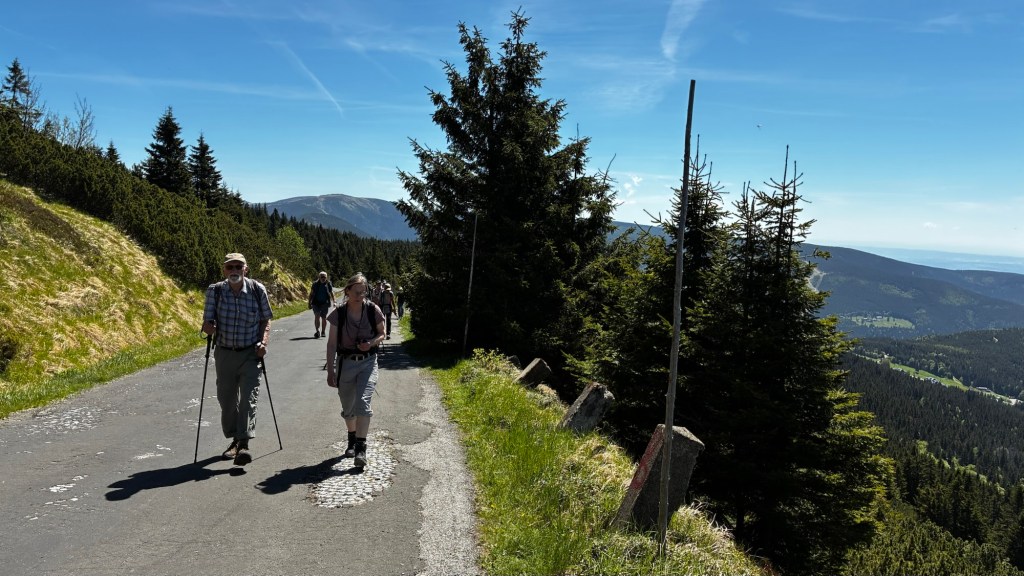
Crowds walking up to Pramen Labe

For us, the actual cycling began at Vrchlabí, about twenty kilometres downstream from Pramen Labe.

We had considered cycling all the way to the ceremonial source from Vrchlabí railway station, as the Elbe Cycle Route Guidebook (henceforth, “the Book”) recommends. But after several days of negotiations involving maps, gradients and public transport timetables, we concluded that riding a thousand metres uphill was quite beyond us. Having since watched a couple of cyclists labour through the final stages of the climb to Pramen Labe, I can say with some confidence that we made the correct decision.
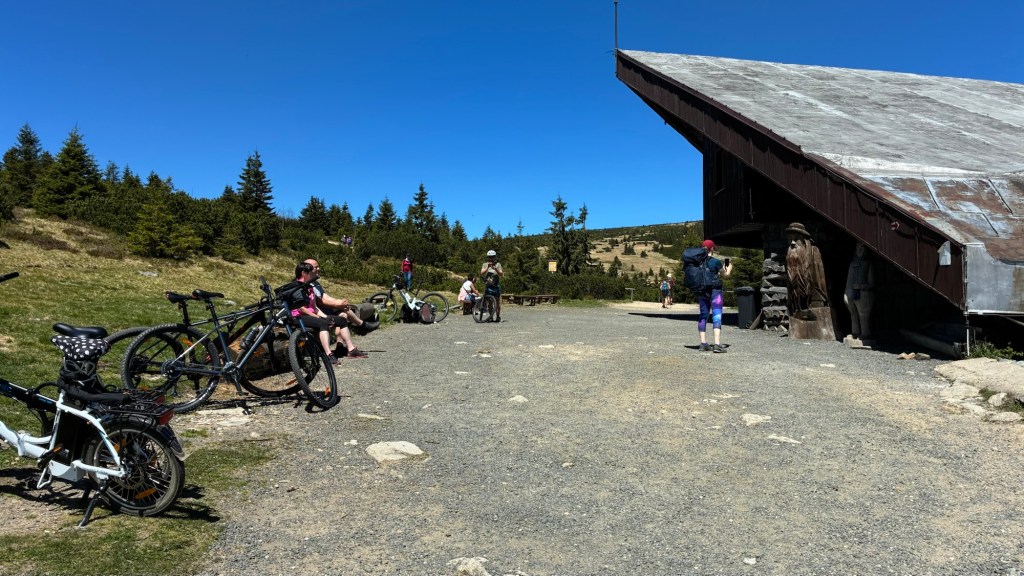
Cyclists parking at Labska Bouda– walkers only beyond this point

A six-kilometre hike involving five hundred metres of ascent to obtain the obligatory photographs of an official beginning seemed challenge enough. After that, the route would be downhill most of the way—or so the Book promised.
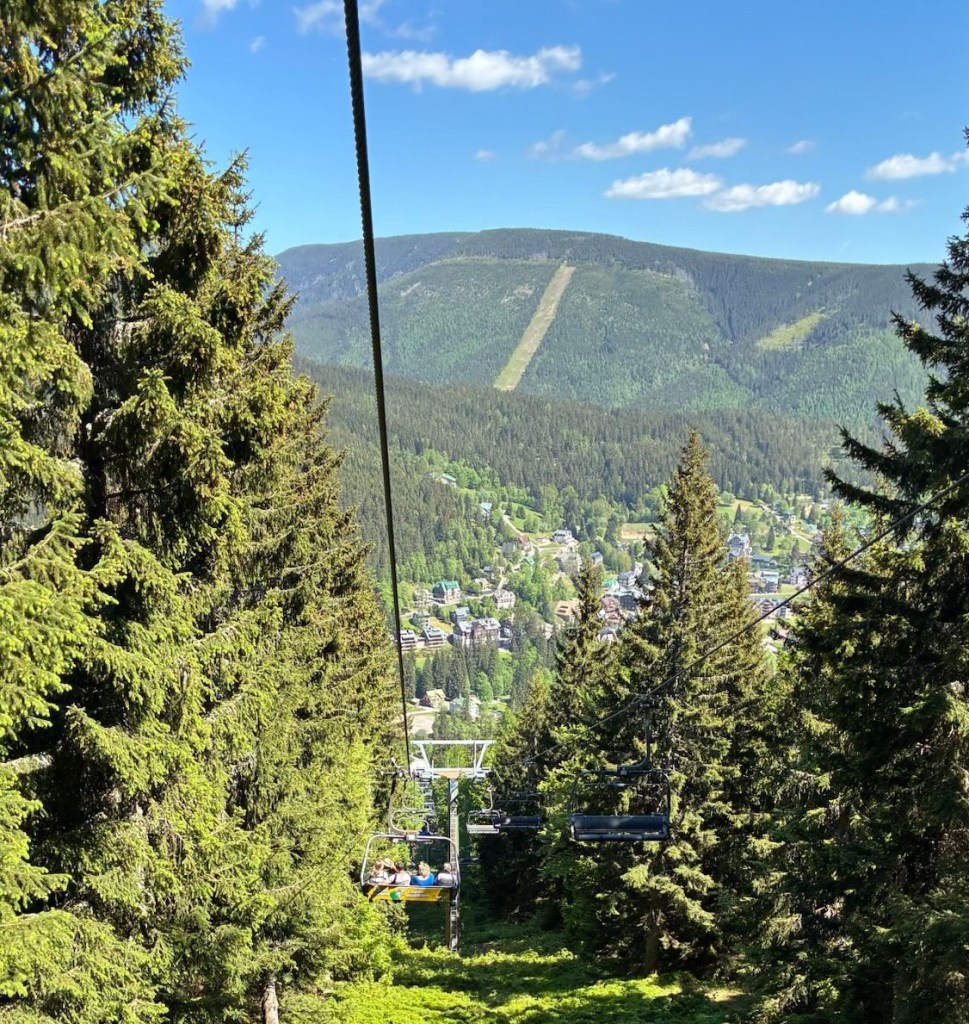
Ski lifts which take the walkers part way up the hills

The Giant Mountains are breathtaking in both the figurative and literal sense.

The Ride: The First Hundred Kilometres
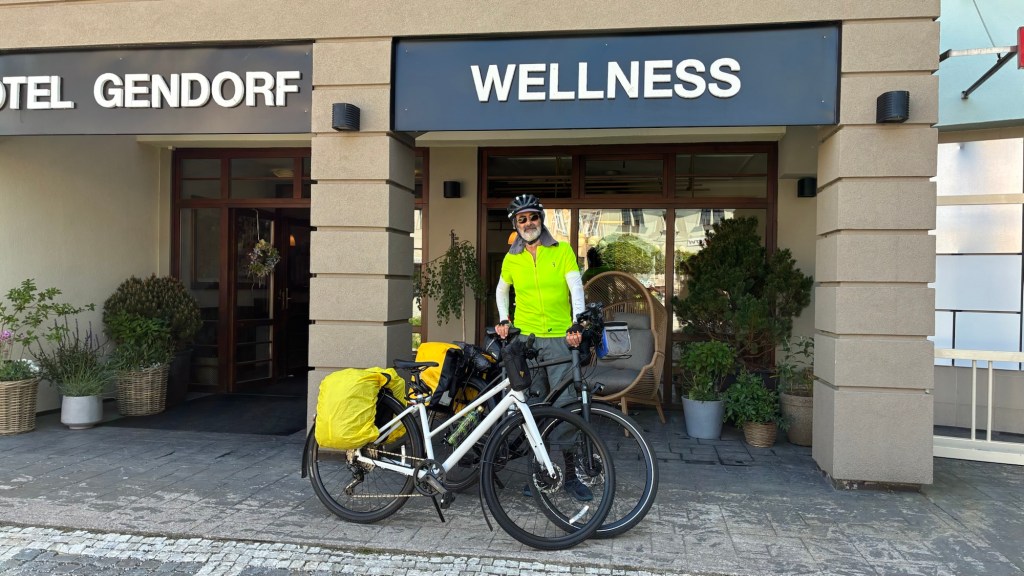
Starting off from the little resort town of Vrchlabi

A hundred kilometres of riding brings us to Pardubice, where I began writing these notes. Any town at which you choose to stop seems to possess a medieval castle, church, monastery or some other grand structure dating from somewhere between the tenth and eighteenth centuries.
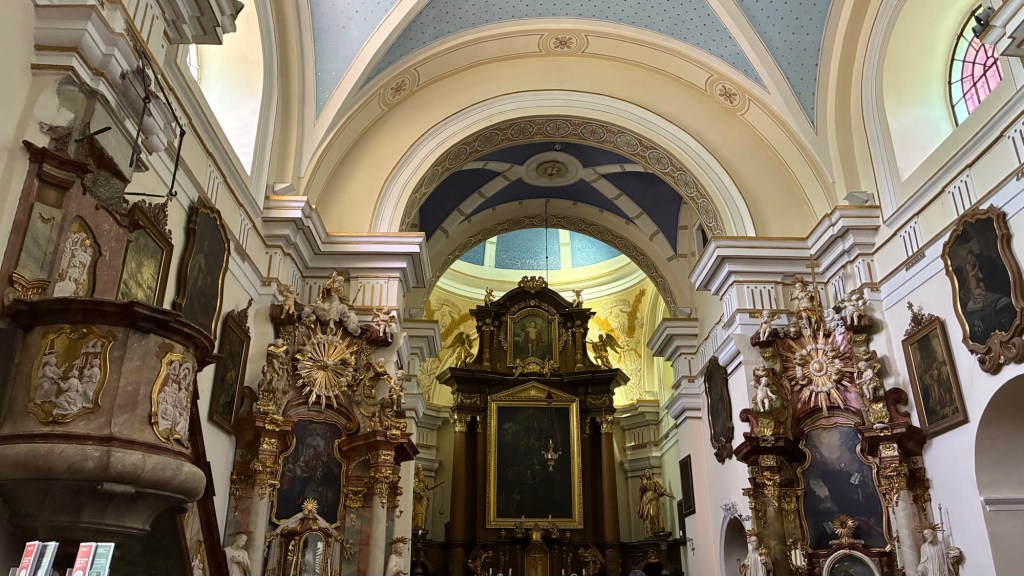
Zirec church runs interesting projects and was open, unlike many others

In late May, summer is beginning to shoulder spring aside. Wild poppies line the roads. Swallows dart overhead, frustratingly difficult to capture in a photograph. The cherries are still green. The skies have been crystal clear. Most days the breeze has been an ally against the heat, although a capricious westerly can sometimes get a bit pushy.
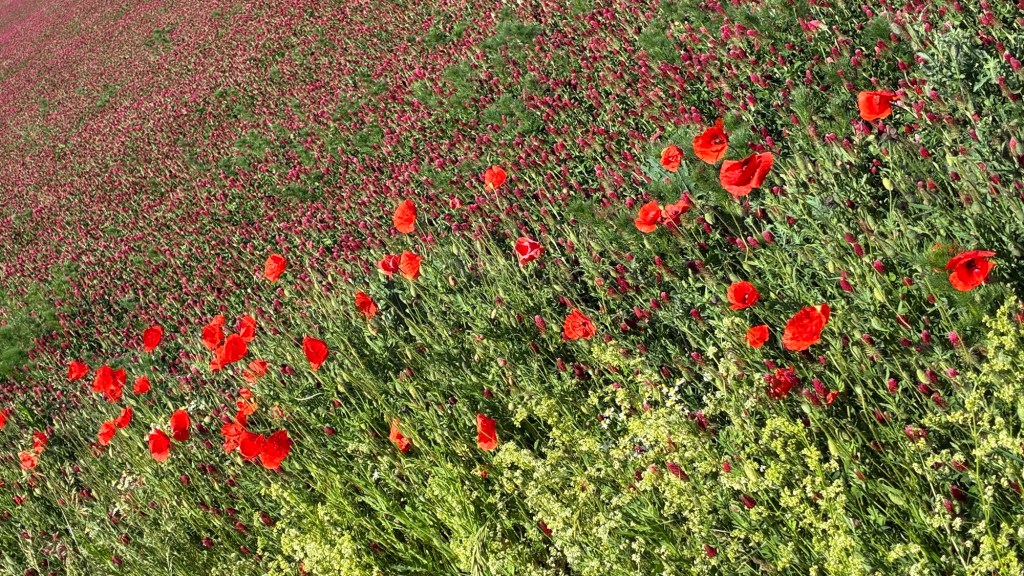
Poppies: shot from camera mounted on handlebar, thus the angle

The promise of “downhill all the way” does not immediately materialise. Our second day of riding, from Hostinné to Jaroměř, included several long, slow climbs—particularly challenging on a busy road and with temperatures approaching thirty degrees. Naturally there are no photographs from those sections; one is generally too occupied with panting and cursing. Even the trucks are polite in Czechia, however. So the traffic never feels unsafe.

A Stop
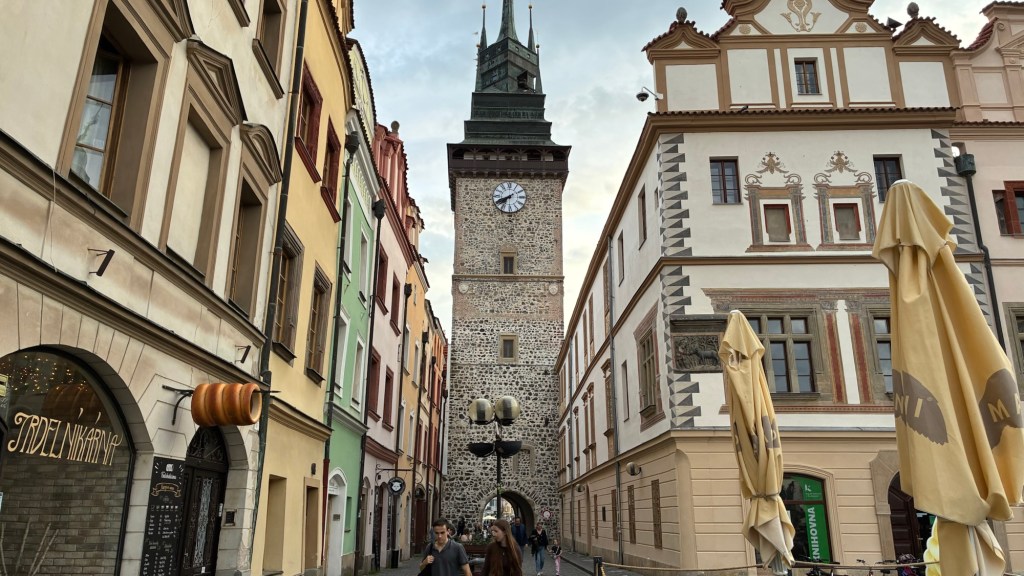
Gateway to the old town centre in Pardubice

At the end of a forty or fifty-kilometre ride, it feels good simply to stop. But Pardubice, a regional capital of some 93,000 people and the largest town we had set foot in since Prague, seemed determined to make us feel particularly welcome. Our hotel room overlooked the fortress walls. Music drifted across in the evening air.
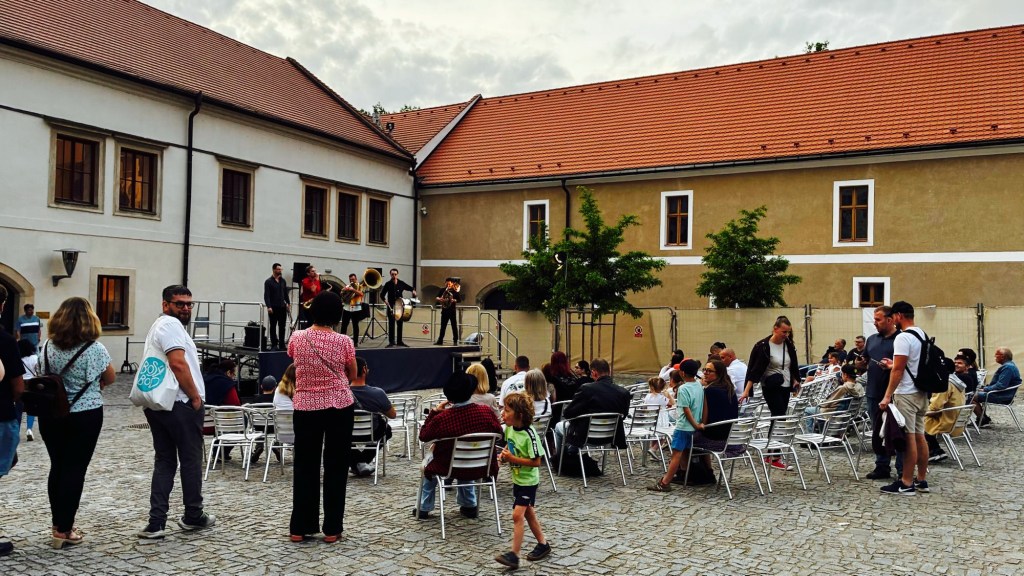
Band in the castle courtyard

Was the city putting on a show for us? But no, we had stumbled into Pardubice Museum Night.
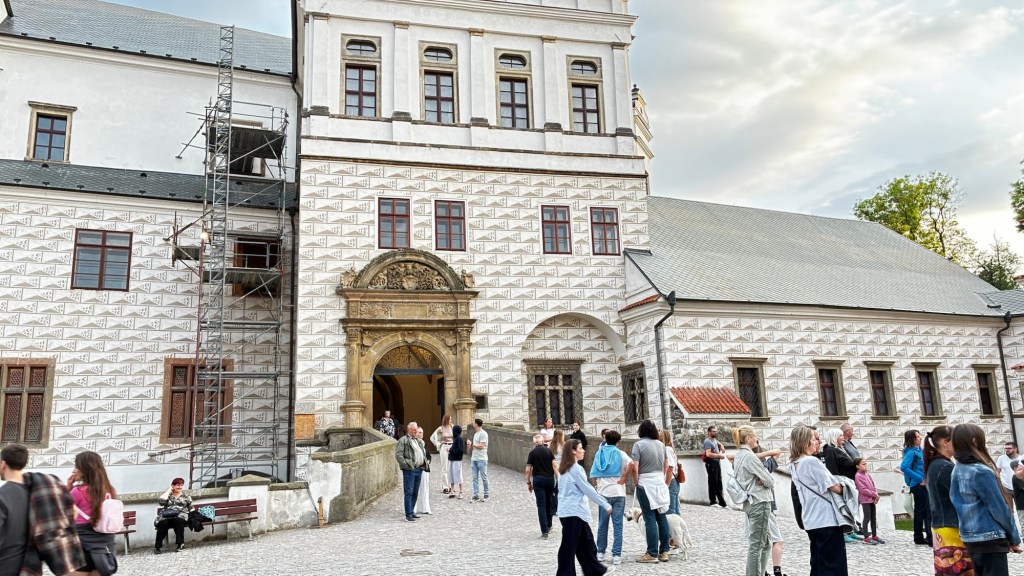
Pardubice Castle on ‘Museum Night’ 2026

One night in May, each year, the Pardubice Castle—originally a thirteenth-century moated fortress, later transformed into a Renaissance château—and the East Bohemian Museum housed within it remains open until eleven o’clock, with free admissions. Bands play in the courtyard, loudly enough to keep even the weariest cyclist awake.
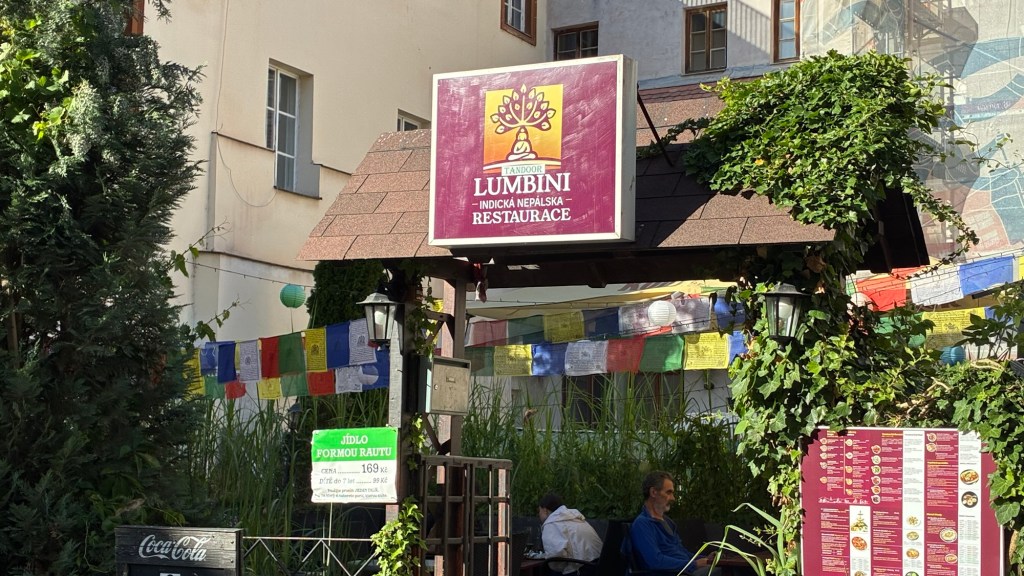
Lumbini in Czechia? This one is a cafe in Pardubice.

Several days later, Sidekick is still salivating over the dinner he ate at Pardubice’s only Nepali restaurant, Lumbini. Meanwhile, I am still trying to work out why a family of peacocks—decidedly not native to Bohemia—seem to have taken up residence inside a medieval castle-fortress-château.
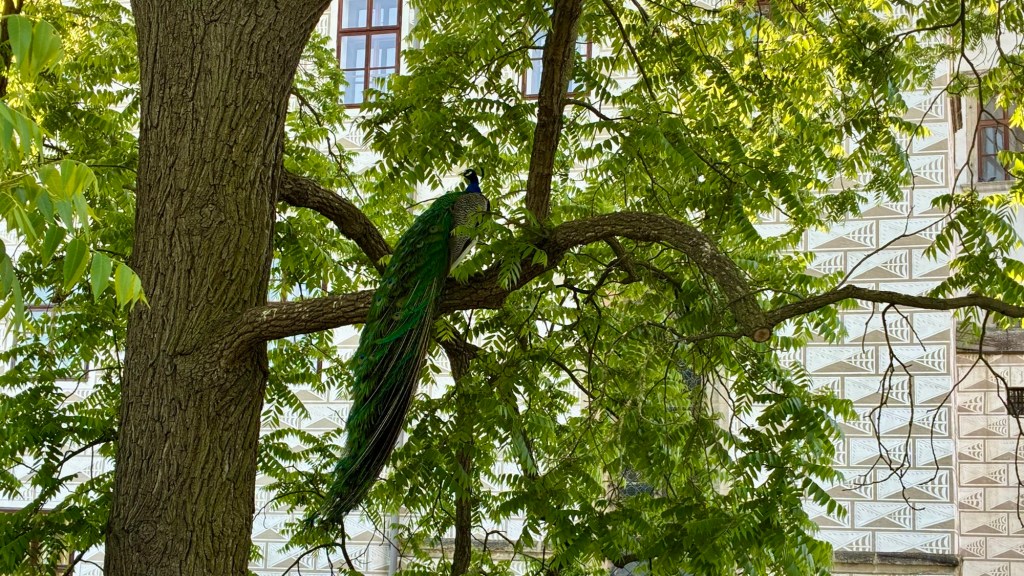
A fine feathered South Asian a long way from his origins?

A renaissance mansion, free museum, live music, good food and inexplicable peacocks: this is a place refusing to disappear in the blur of the long distance cyclist’s one-night stops.

Austria, We Bike You A Lot! Upper Austria to Vienna

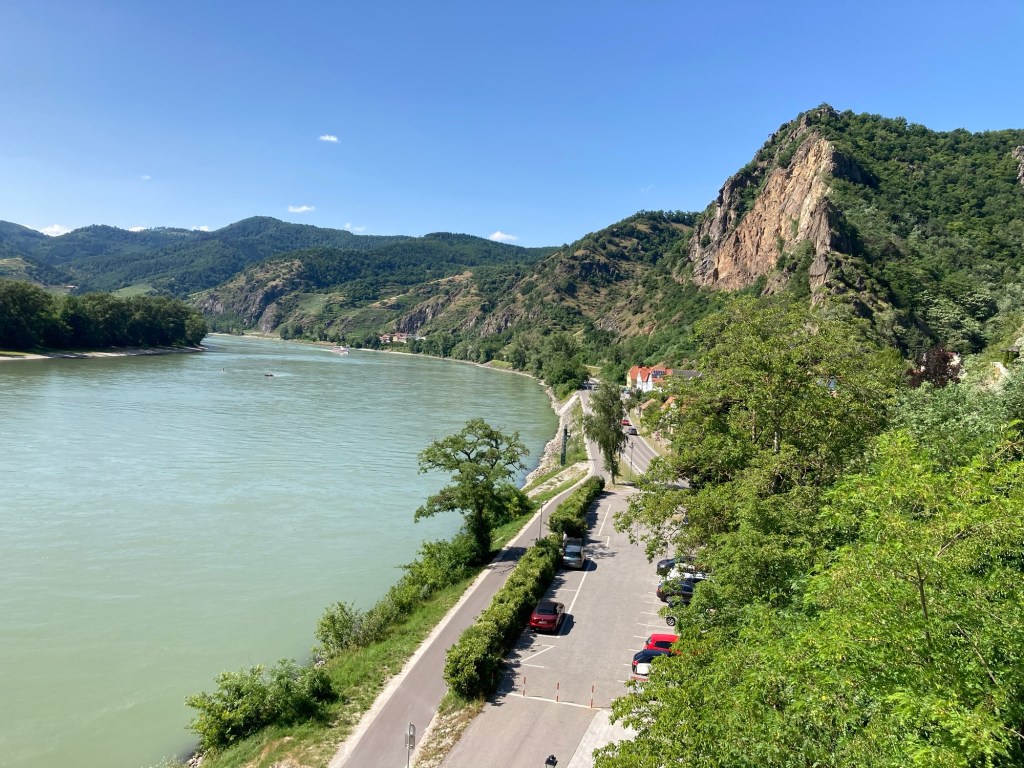
There can’t be many cycle routes in the world that blend pastoral charm, imperial grandeur, and perfectly smooth tarmac quite like Austria’s 380-kilometre stretch of the Danube Cycleway. The Austrian section of the EuroVelo 6 is Mary Poppins-like—practically perfect: signage impeccable, surfaces silky, and views almost unfailingly charming.

Most of the time you see the river and the hills far away

And then there are the OAMTC Fahrrad stations—at least six of them dotted along this stretch of the Danube. A kind of roadside toolkit for the travelling cyclist, each station offers the basic implements of self-rescue: air pump, Allen keys, and more, all mounted on a frame. A little touch of infrastructure, that makes a cyclist feel truly loved.

Bike repair station: we even met the maintenance crew

For much of the ride to Vienna, cyclists are spoiled for choice: left bank or right? Both sides offer their own temptations—orchards, taverns, castles, villages—and whichever you choose, the other side continues to look greener. So, FOMO (fear of missing out) may be your biggest challenge. One day we followed the northern track and missed the pear cider said to be “unique” to Ardagger Markt. Now I’ll never know just how unique. But just ten kilometres downstream, Grein appeared with a theatrical flourish: a bend in the river, a palace poised above the town, and hints of the Alps rising behind. A missed sip, perhaps—but in return, a stage set.

Sweeping into Grein

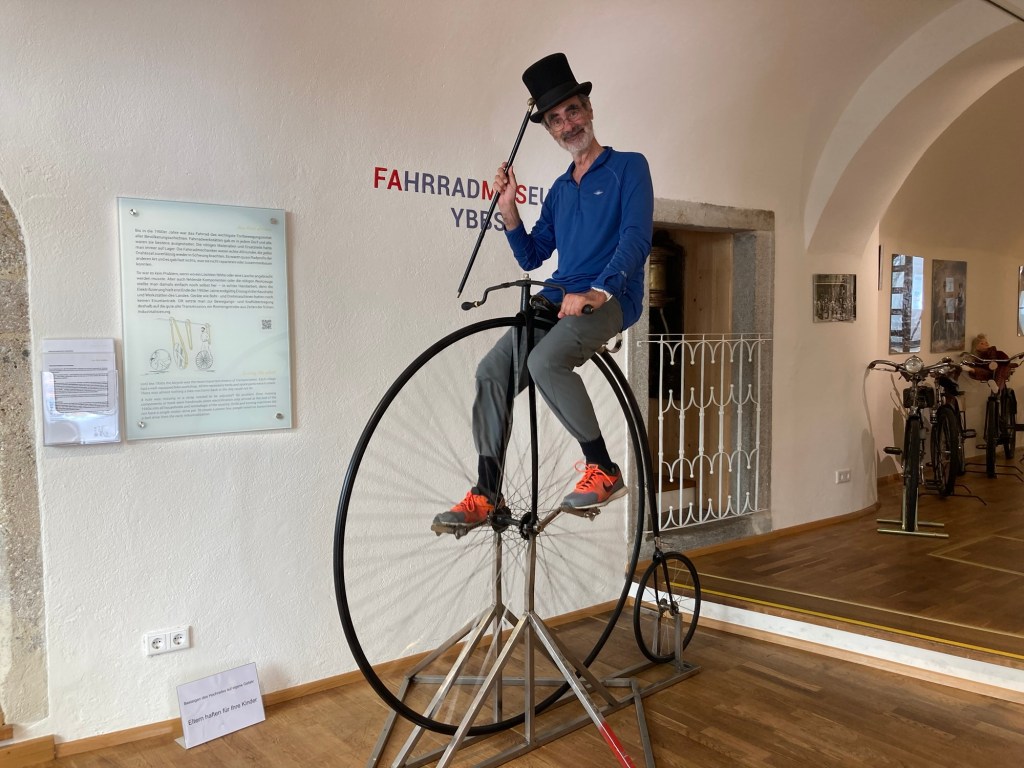
You’ll need to dip south again for Ybbs an der Donau, which probably doesn’t top anyone’s bucket list. But for cyclists, its bicycle museum is an endearing trove of eccentric stories, oddball engineering, and persuasive reminders—if you needed any—of just how marvellous and revolutionary a bicycle really is.

Ybbs: Cycle Sidekick trying out yet another bike

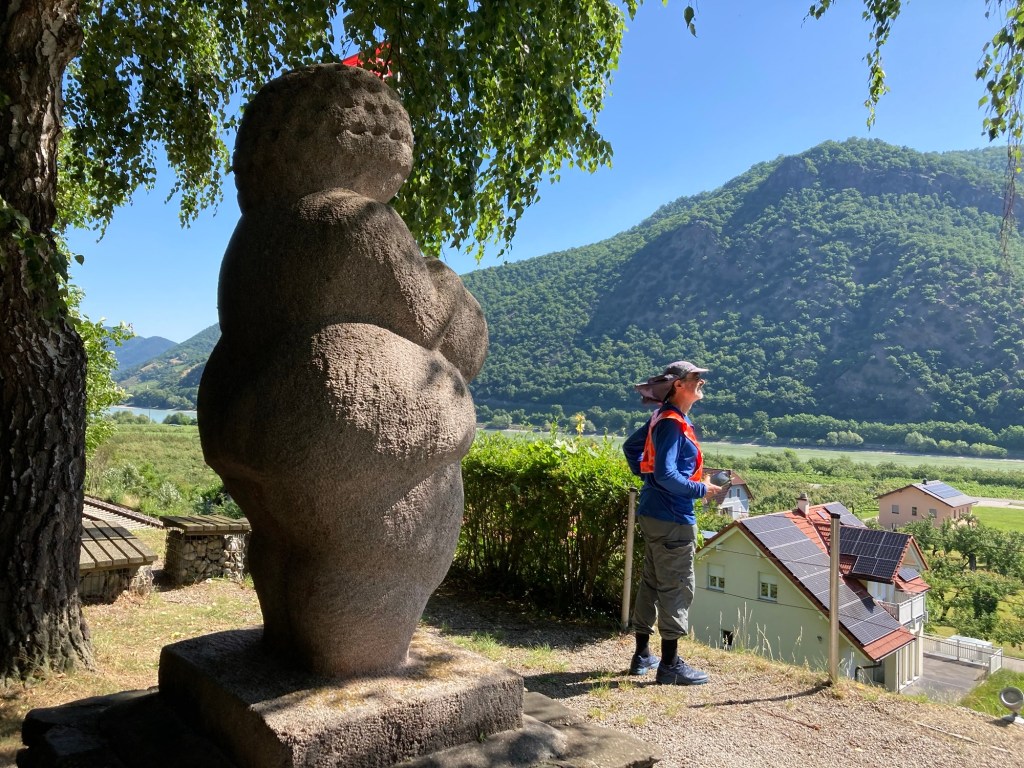
For the Venus of Willendorf, you’ll want to be back on the north side. She’s 30,000 years old, discovered above the sleepy town of Willendorf and now on display in Vienna’s Natural History Museum. A gigantic replica of the 11 cm original figurine watches over the Wachau Valley—a UNESCO-listed ‘cultural landscape’ of myth and memory.

Willendorf Venus

For cyclists, Wachau is the deliciously undulating stretch between Melk and Krems on the north bank, winding through vineyards, orchards, and villages steeped in centuries of slow, productive living. Apricots are in season. Wine tastings can be frequent and sometimes free. In hindsight, that may explain why the road felt so… floaty.

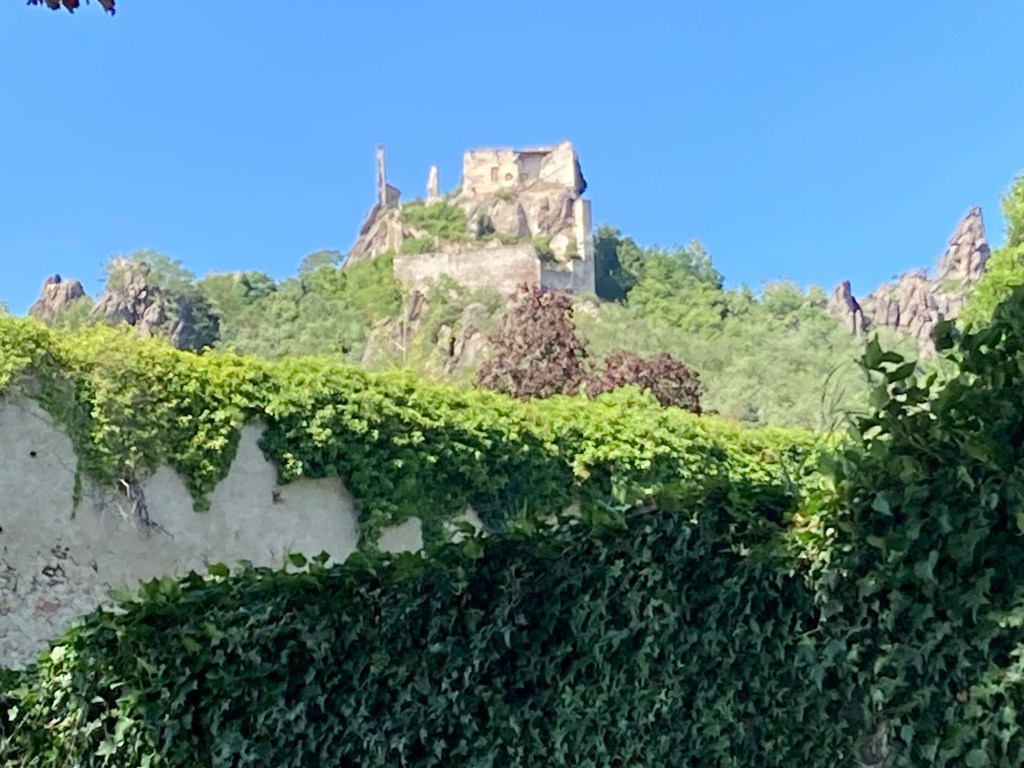
Ruins of the Durnstein Castle

If you’d rather not end your day in Krems—a large industrial town—consider tiny Dürnstein (population 800-ish). England’s King Richard the Lionheart was once imprisoned in the castle above the village. The past isn’t just preserved here—it’s baked in, fermented, and ferried.

Our hotel in Durnstein

We stayed in a bed&breakfast in a 600-year-old building that doubles as the Rathaus (town hall), lunched at a bakery founded in 1780, and bit into a Wachauer Laberl—crusty roll invented here in 1905 and now boasting its own Wikipedia page.

Historic Bakery: here in this building since 1780

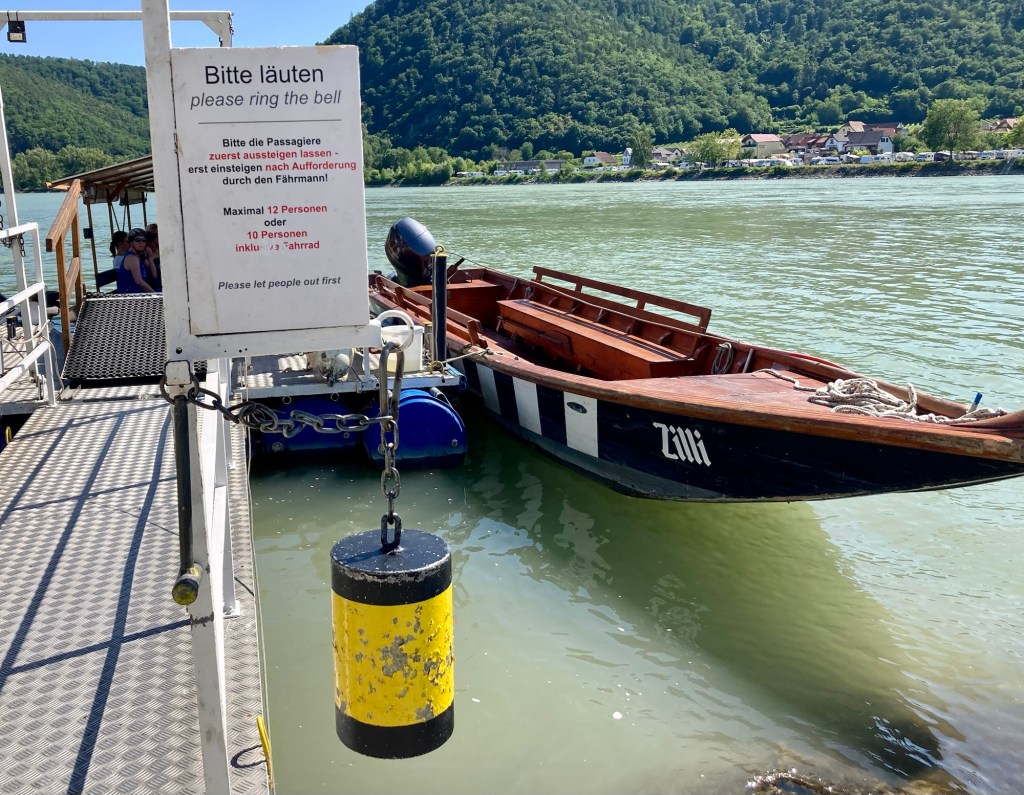
Later, you can cross the river on a ferry run by a company that’s been at it since 1358. Though the boats are solar-powered these days, they’ve kept some old communication technology—you summon the ferryman from the opposite bank by banging a metal drum.

A drumbeat from long ago

We didn’t take that ferry. Instead, we crossed later via the Traismauer Bridge, where the S33 highway and a bike path converge. You and your bike corkscrew up from the river on a ramp shaped like a half-helix to a cycle path, suspended from the motor vehicle bridge, eight metres above water. Fly across the river, and swish down the other side—equal parts cycleway and theme park ride, with industrial chimneys and tranquil waters taking turns to catch your eye.

Photo take from halfway down the ramp, Traismauer Bridge

Then comes a jolt: Zwentendorf, where Austria’s only nuclear power plant squats like a Cold War ghost behind a popular café. The plant was completed but never used, rejected in a 1978 referendum by a margin of less than one percent. Today, it’s rented out for dystopian film shoots. One wonders: what would this gentle stretch of the Danube be like if Austria had voted differently.

Nuclear shadow?

The Austrian section of EuroVelo 6 is packed with sights, stories, and what-ifs. The real trick is giving yourself time. Go slowly. Stop often. Don’t choose between the castle, the café, and the scenary—choose all three. Meander left and right, take bridges cute and commanding, ride ferries medieval and modern.

And then—before you quite realise it—you’re in Vienna.

Vienna harbour: crowds boarding

There’s something deeply satisfying about arriving in a great capital under your own steam. No timetables, no turnstiles, no confused rush through the Hauptbahnhof or being disgorged from a tour bus into a cruise ship. Just you and your bike, rolling gently through the outskirts, the Danube now, broad and hard-working, the city gradually revealing itself—new sky-scrapers and old steeples rising through the treetops.

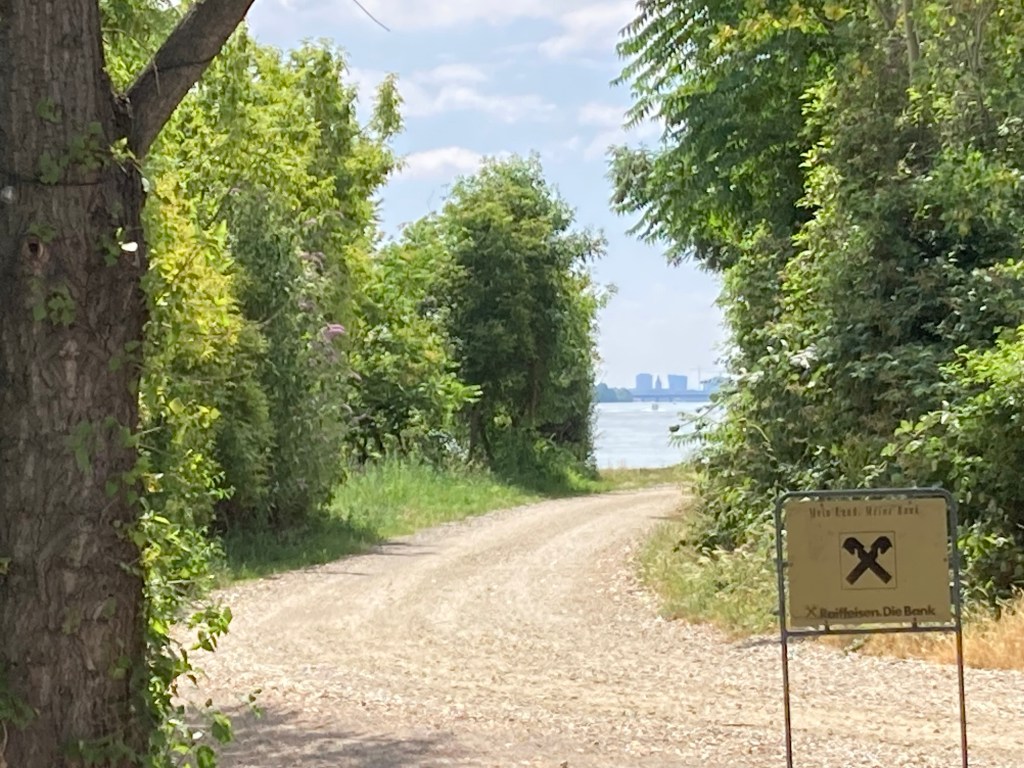
First glimpses of the city still more than 10 km ahead

From the Steinitzsteg Bridge, where EuroVelo 6 swings north towards the Donau-Auen National Park, we peeled off and followed the river toward the Innere Stadt, our base for the next few days. It was one of the easiest, most elegant entries into a major city we’ve ever made—by any mode of transport.

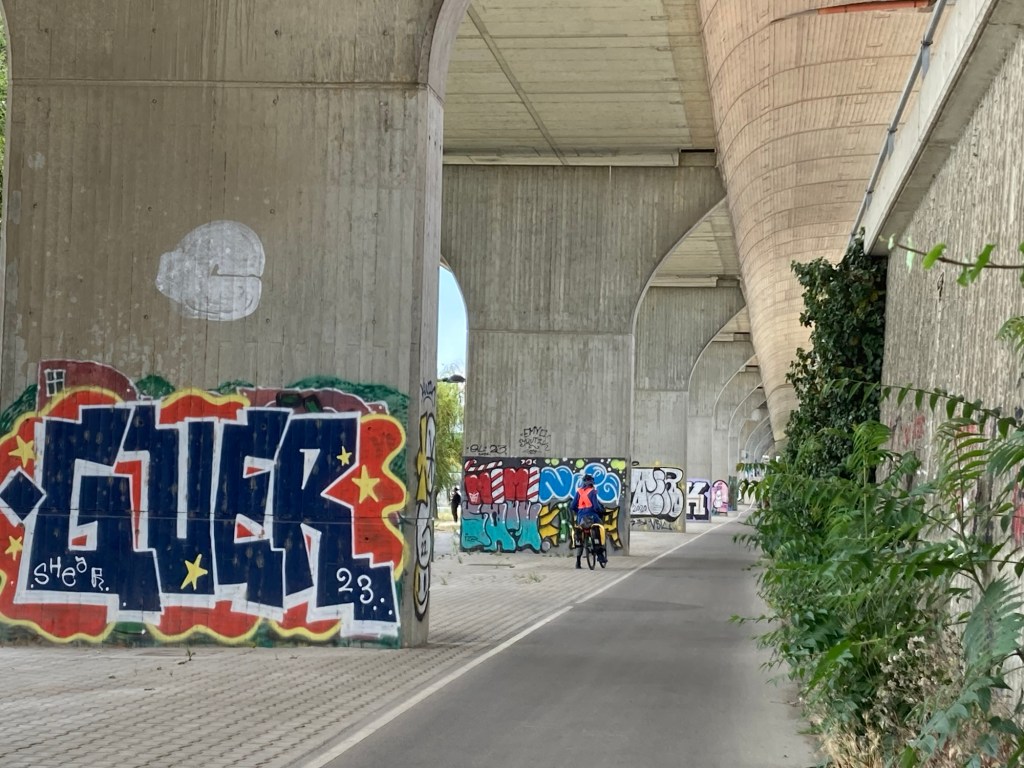
The gallery under the bridge

The final riverside stretch is so effortlessly beautiful, you barely notice the shift from countryside to capital—except, perhaps, for the uber-urban graffiti art under the bridges. And then you’re undeniably in the metropolis: bands on boat cafés, trams clanging past palaces, and a cacophony of traffic noises and languages, swirling around you.

Like any other great city, Vienna has its underbelly, of course. But Austria via EuroVelo 6 has no downside for the slow traveller.