We were in Berlin due to poor planning — which is the governing principle of our travels. We first had to retrieve our bicycles from storage in The Hague and then somehow transport both bicycles and owners across the width of Western Europe to a small Czech town near the Polish border. Then turn around and head back, more or less in the direction from which we had come.
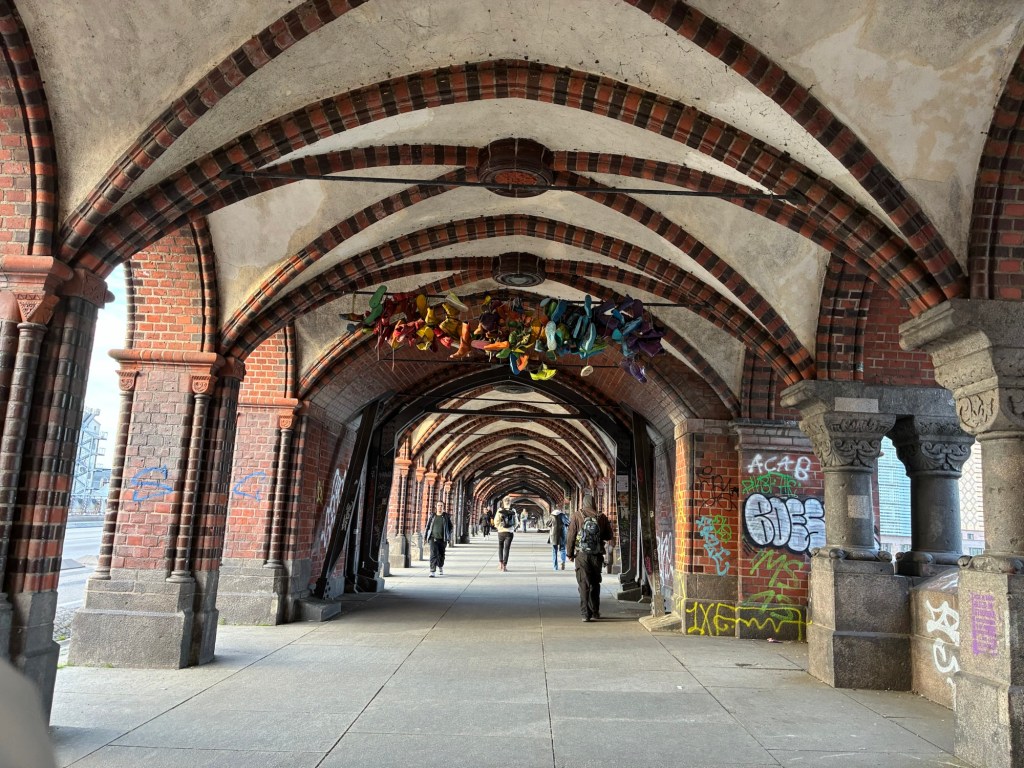
But great cities do not like being relegated to mere transit. Berlin decided to get up-close and personal.
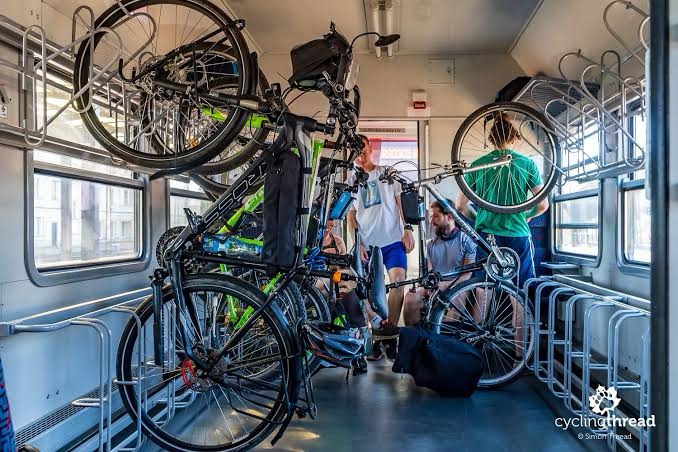
In Europe, getting two bicycles and their owners onto the same international train at the same time is itself a demanding sport. Booking systems appear designed by the young for the young, with excellent eyesight and rapid reflexes. The actual business of boarding continental trains with loaded touring bicycles has only slightly more grace and civility than entering a third-class railway compartment in Kolkata’s Howrah Station just before Dashera.
Things did not improve when we reached Berlin and failed to enter our “smart apartment,” a modern arrangement in which hospitality has been liberated from human presence. The promised “personalised” check-in instructions never arrived. The “emergency” phone number on the door went unanswered. To be fair, it was after nine on a Friday night — clearly even bots do not work that late.
We were beginning to wonder whether the people sleeping under the railway bridge opposite the Chutney Indian Restaurant were guests of the same ‘smart apartments’ who had just given up. Just then we were rescued by two young angels. They appeared, zapped open the outer door, and allowed me to drag bicycle, panniers, and remaining dignity into the lift, while David — aka Sidekick — outdid himself by conjuring from a reticent machine the key-card that finally opened our tiny top-floor apartment.
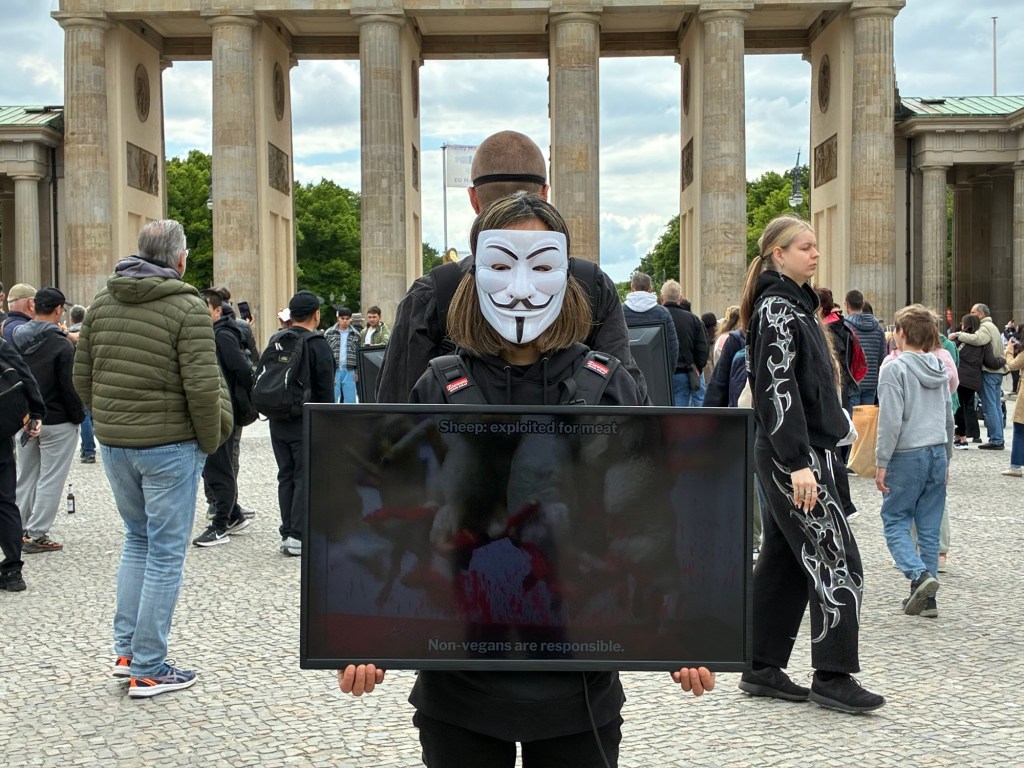
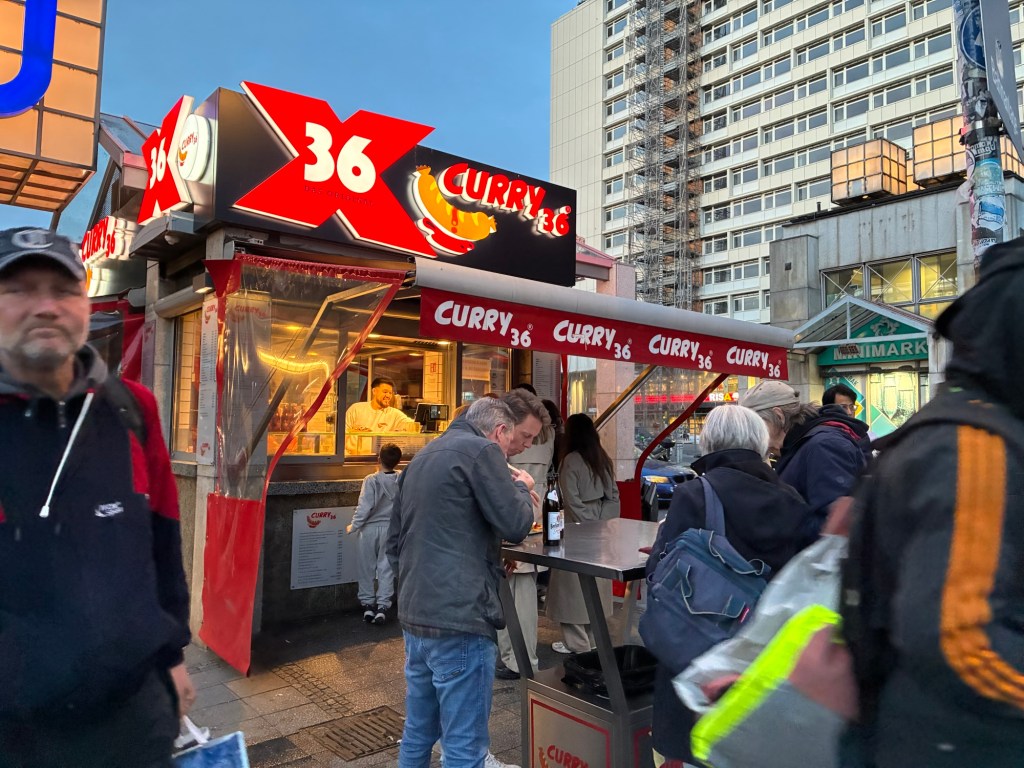
The next day Berlin embraced the weary riders at its sunniest best. Crowds drifted around the Brandenburg Gate carrying banners for every conceivable cause, and several inconceivable ones. Currywurst stalls — once, according to a Berliner friend, the culinary life-support system of West Berlin — now edible historical monuments on crowded footpaths. Cyclists and runners flowed through the Tiergarten. Somewhere nearby, a fellow South Asian was belting out Tamil lyrics, though sadly, linguistic difference prevented conversation.
As we rode past Berlin’s many museums, I found myself wondering what became of the Tagore paintings once acquired by the National Gallery here. During his third and final visit to the city in 1930, Berlin had hosted a major exhibition of his watercolours and sketches. Later, the five paintings he gifted to the gallery, were swept up in Nazi purges. It remains unclear where they finally ended up.
Bengalis do not travel very far in Europe before Rabindranath Tagore enters the conversation. We move through foreign cities with the comforting assumption that he has already been there before us — observed the place properly, formed an opinion, and left behind some immense cultural footprint for the rest of us to inherit.
And Berlin, in the 1920s, absolutely adored him. Thousands attended his lectures. He was mobbed wherever he went. German editions of his books, hurried into print for his visits, sold out rapidly. During his first visit in 1921, admirers are said to have unharnessed the horses from his carriage and pulled it themselves through the streets. (Apocryphal as it sounds, google tells me it is quite true, and that pleases a Bengali immensely.)
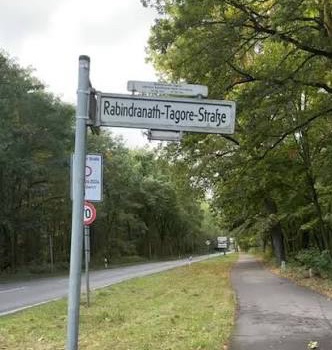
That admiration survives now mostly in small markers and fading signs. Somewhere in the suburbs there is a street named after him, though too far away for two exhausted cyclists with only two days in Berlin. At the Hauptbahnhof information desk, a young employee looked baffled by my determination to locate an obscure residential street an hour away by public transport. Berlin, it turns out, has streets named after foreign writers everywhere; Berliners perhaps do not quite understand why this particular one matters so much to me.
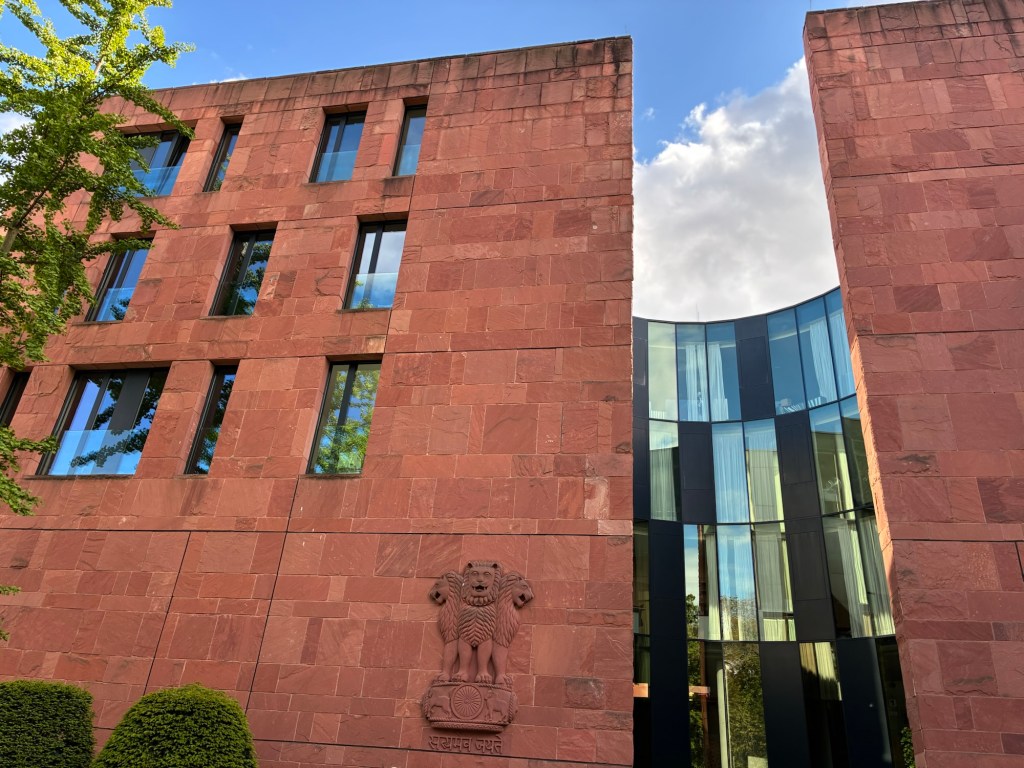
There is also a Tagore Centre inside the Indian embassy, and a school named after him — Tagore Gymnasium. Both, naturally, were closed because we were there on a Sunday.
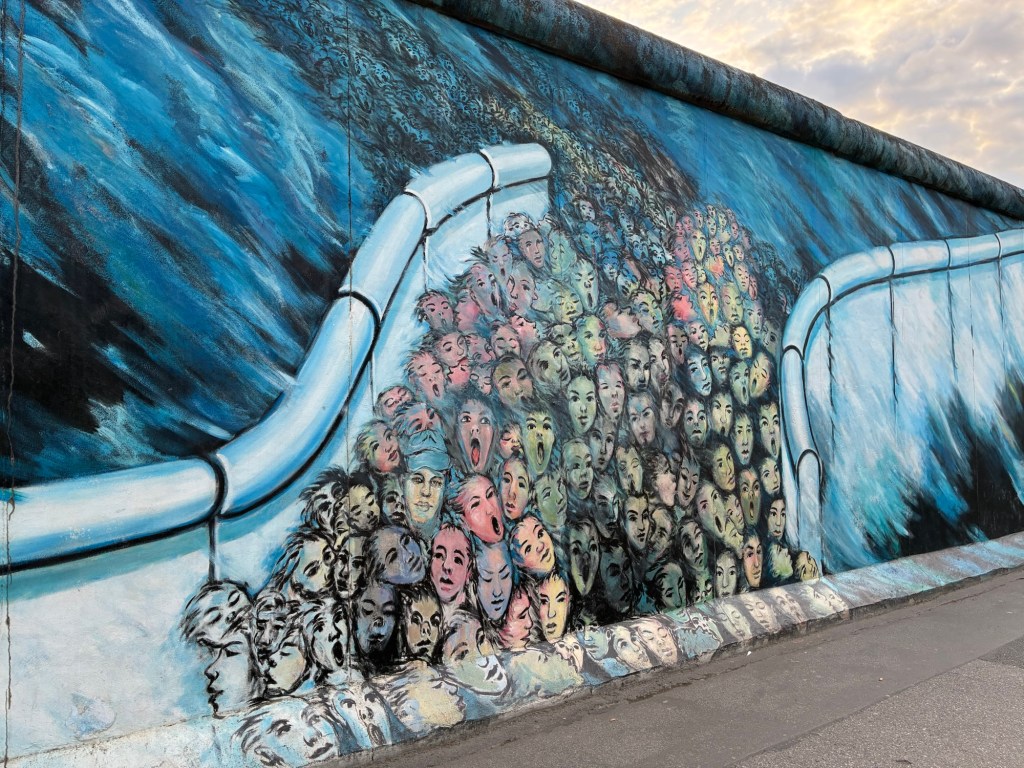
It was later that evening, standing before the remains of the Berlin Wall, that the more personal ghosts appeared.
If you are Bengali, the fragments of the Wall feel strangely familiar. They echo other partitions elsewhere — other borders drawn abruptly through landscapes both material and emotional.
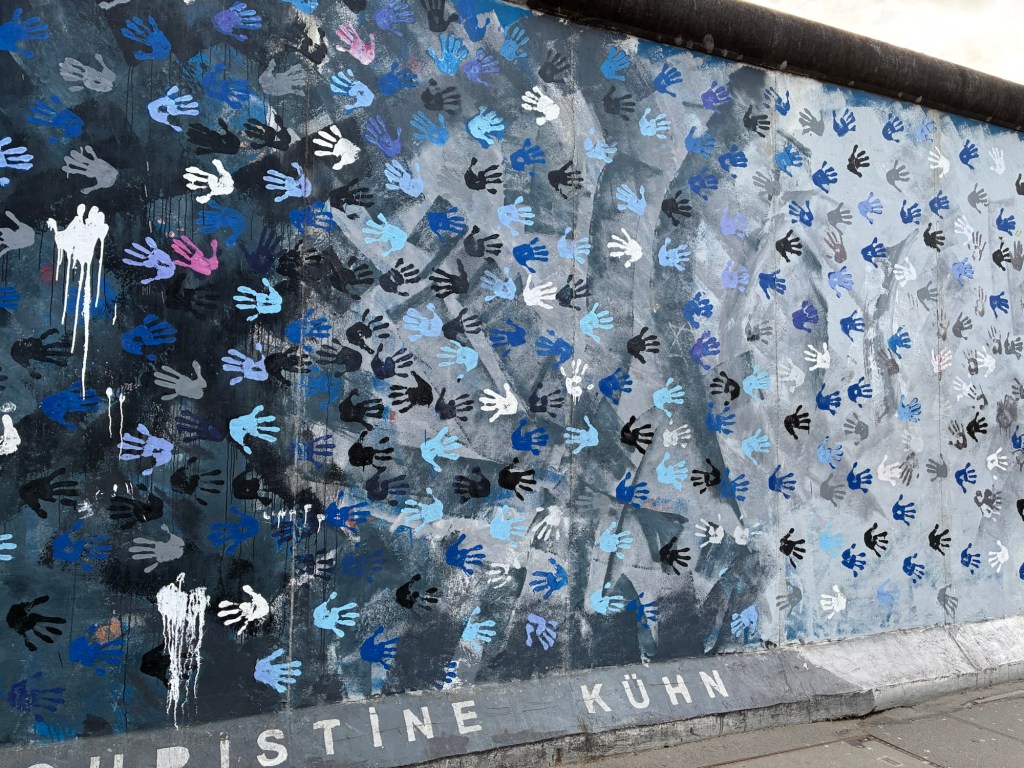
The Partition of India, which came some years before my birth, separated my parents’ homeland from their nation. Their ancestral landscape lay in what eventually became Bangladesh, while their country was India. Like millions of others of their generation, I suspect my parents never entirely recovered from that rearrangement. So while hundreds of tourists, including me, photographed the once-grey slabs now covered in some of the world’s most famous street art, my father’s ghost wandered beside me carrying another battered and bloodied map.
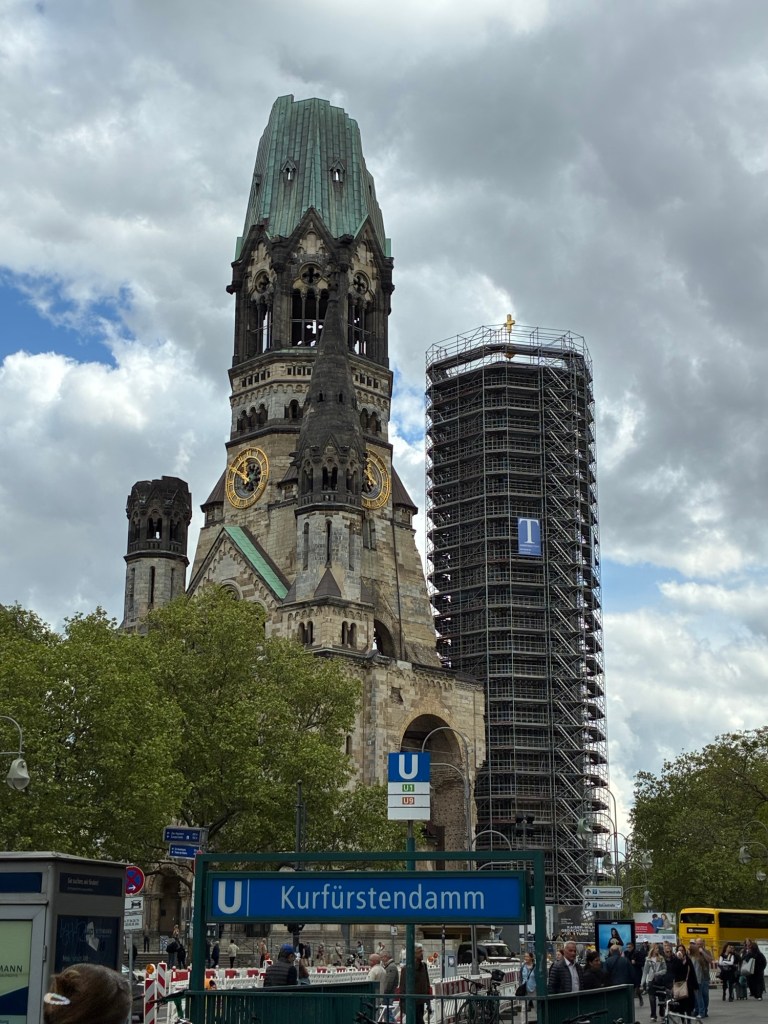
He would have liked Berlin. The actual city of today would baffle him: the high-tech shops and automated hotels, young men shooting up beneath railway bridges, kebab shops everywhere, and the surrounding cacophony of languages. But he would have liked the idea of Berlin — a divided, ideological, argumentative city. “Rather like Kolkata,” he might have said.
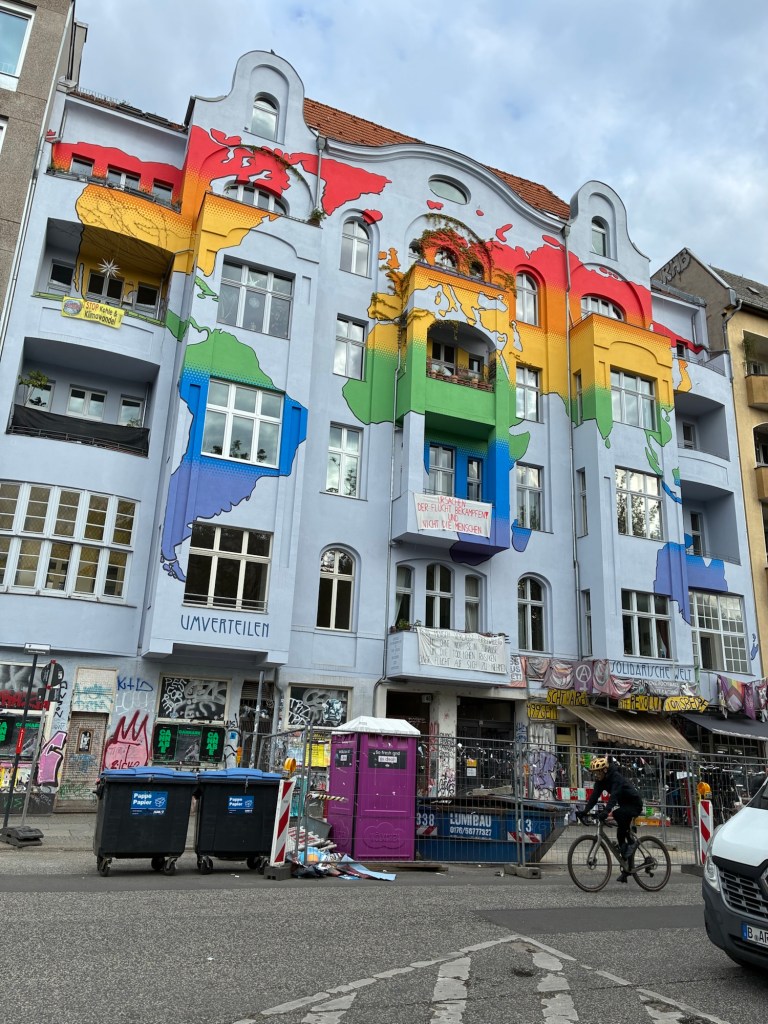
On this trip, Berlin seems a city of traces, where walls break into memories. Histories are painted over only to become more visible. And an iconic Bengali name lives on as a sign on the road long after the crowds have gone home.


