Berlin via Bengal

We were in Berlin due to poor planning — which is the governing principle of our travels. We first had to retrieve our bicycles from storage in The Hague and then somehow transport both bicycles and owners across the width of Western Europe to a small Czech town near the Polish border. Then turn around and head back, more or less in the direction from which we had come.
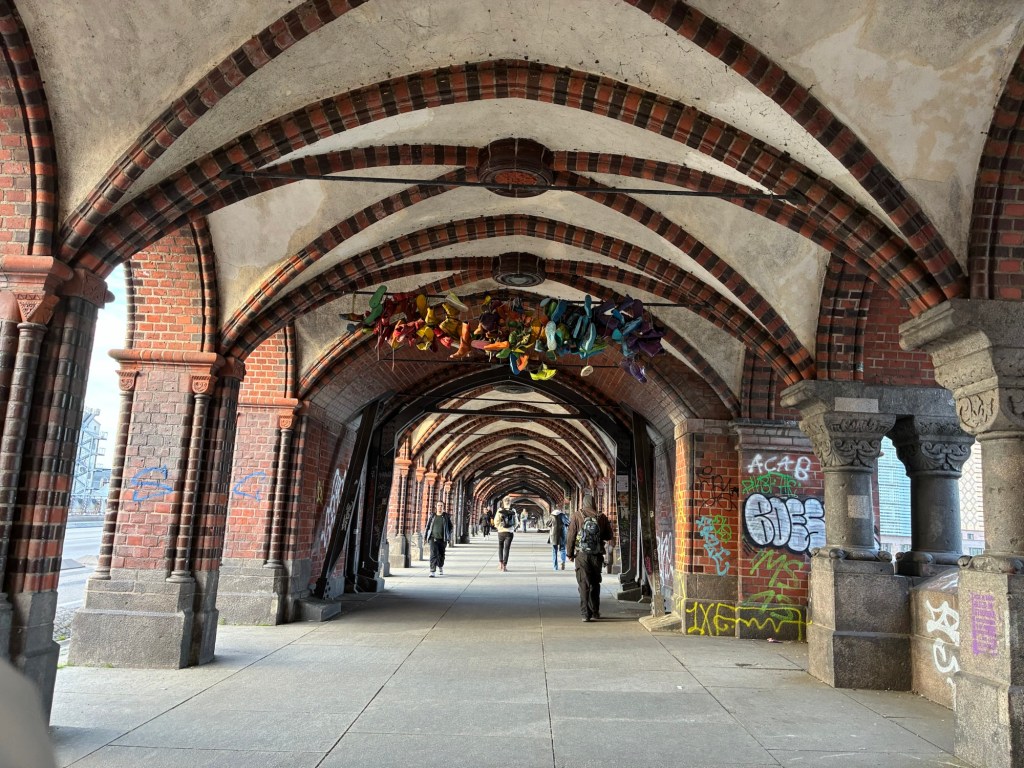
Oberbaum Bridge across once a checkpoint in a partitioned city

But great cities do not like being relegated to mere transit. Berlin decided to get up-close and personal.
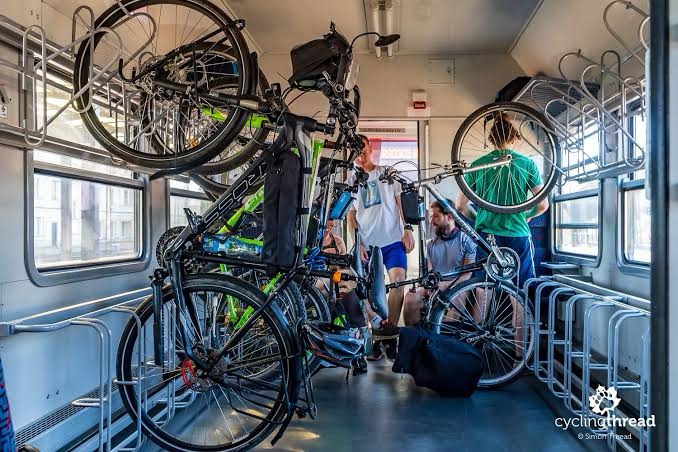
Photo from the net- I’m too frazzled to take photos by this stage!

In Europe, getting two bicycles and their owners onto the same international train at the same time is itself a demanding sport. Booking systems appear designed by the young for the young, with excellent eyesight and rapid reflexes. The actual business of boarding continental trains with loaded touring bicycles has only slightly more grace and civility than entering a third-class railway compartment in Kolkata’s Howrah Station just before Dashera.
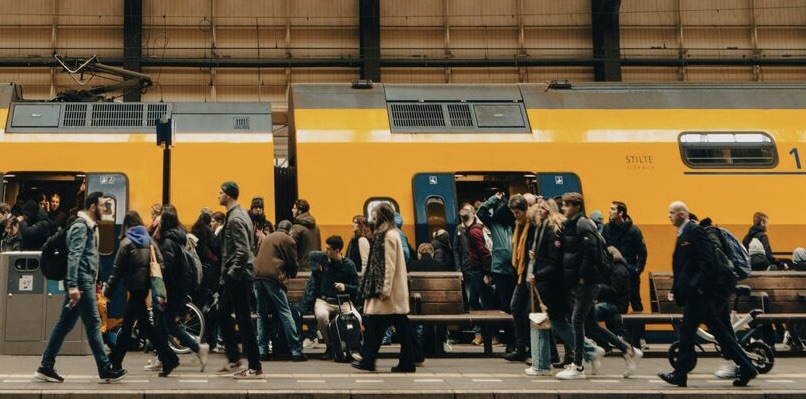
Amsterdam – not our photo, but definitely our experience boarding for Berlin

Things did not improve when we reached Berlin and failed to enter our “smart apartment,” a modern arrangement in which hospitality has been liberated from human presence. The promised “personalised” check-in instructions never arrived. The “emergency” phone number on the door went unanswered. To be fair, it was after nine on a Friday night — clearly even bots do not work that late.

We were beginning to wonder whether the people sleeping under the railway bridge opposite the Chutney Indian Restaurant were guests of the same ‘smart apartments’ who had just given up. Just then we were rescued by two young angels. They appeared, zapped open the outer door, and allowed me to drag bicycle, panniers, and remaining dignity into the lift, while David — aka Sidekick — outdid himself by conjuring from a reticent machine the key-card that finally opened our tiny top-floor apartment.

One of the many causes at the Brandenburg Gate

The next day Berlin embraced the weary riders at its sunniest best. Crowds drifted around the Brandenburg Gate carrying banners for every conceivable cause, and several inconceivable ones. Currywurst stalls — once, according to a Berliner friend, the culinary life-support system of West Berlin — now edible historical monuments on crowded footpaths. Cyclists and runners flowed through the Tiergarten. Somewhere nearby, a fellow South Asian was belting out Tamil lyrics, though sadly, linguistic difference prevented conversation.
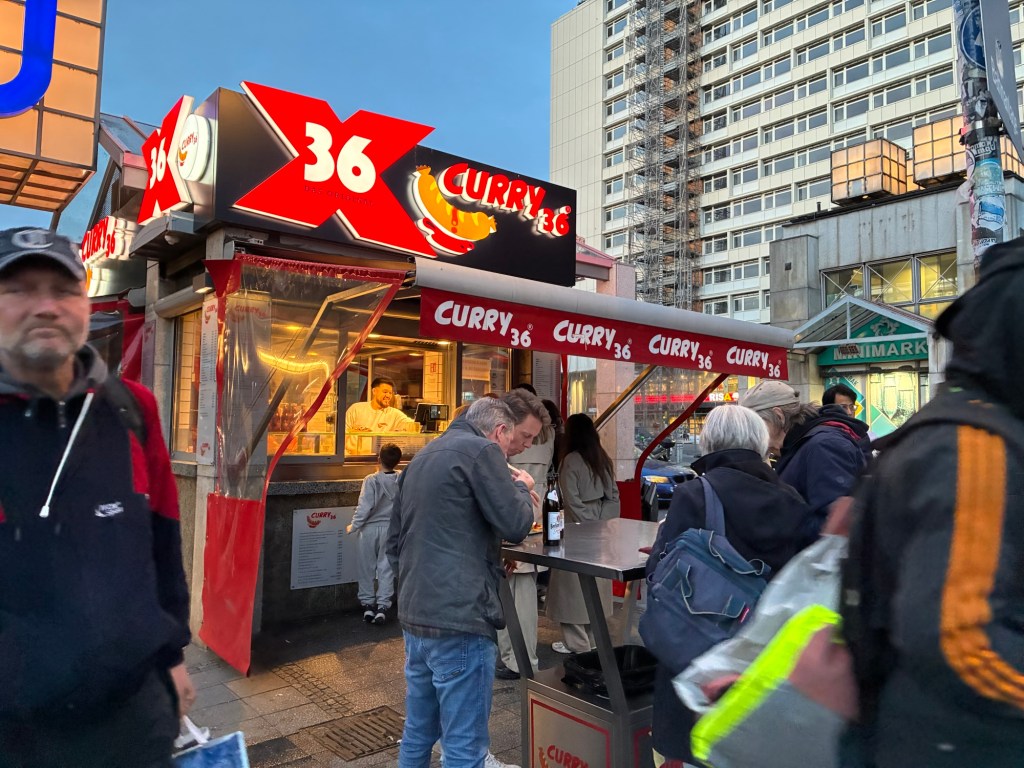
Currywurst: no comment!

As we rode past Berlin’s many museums, I found myself wondering what became of the Tagore paintings once acquired by the National Gallery here. During his third and final visit to the city in 1930, Berlin had hosted a major exhibition of his watercolours and sketches. Later, the five paintings he gifted to the gallery, were swept up in Nazi purges. It remains unclear where they finally ended up.

Bengalis do not travel very far in Europe before Rabindranath Tagore enters the conversation. We move through foreign cities with the comforting assumption that he has already been there before us — observed the place properly, formed an opinion, and left behind some immense cultural footprint for the rest of us to inherit.

And Berlin, in the 1920s, absolutely adored him. Thousands attended his lectures. He was mobbed wherever he went. German editions of his books, hurried into print for his visits, sold out rapidly. During his first visit in 1921, admirers are said to have unharnessed the horses from his carriage and pulled it themselves through the streets. (Apocryphal as it sounds, google tells me it is quite true, and that pleases a Bengali immensely.)
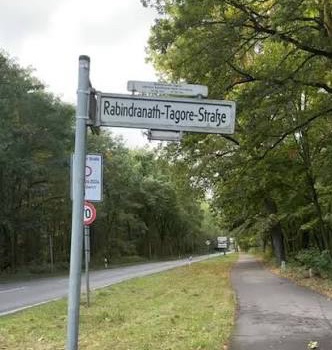
Tagore Street – Stock photo

That admiration survives now mostly in small markers and fading signs. Somewhere in the suburbs there is a street named after him, though too far away for two exhausted cyclists with only two days in Berlin. At the Hauptbahnhof information desk, a young employee looked baffled by my determination to locate an obscure residential street an hour away by public transport. Berlin, it turns out, has streets named after foreign writers everywhere; Berliners perhaps do not quite understand why this particular one matters so much to me.
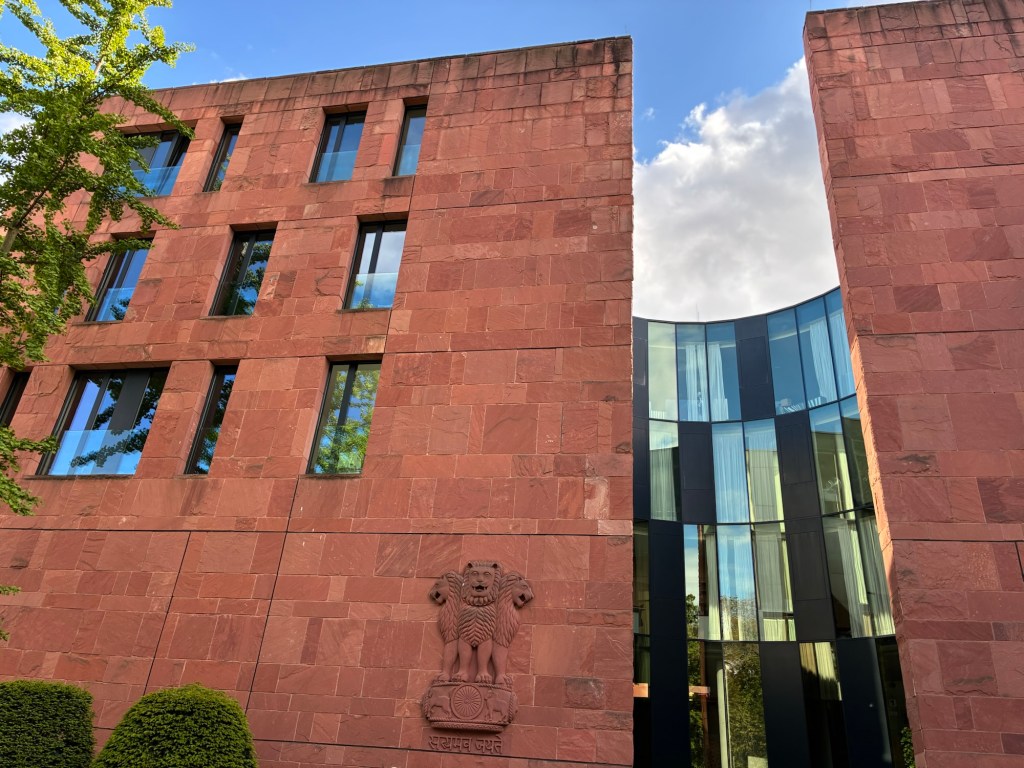
Indian Embassy – Closed and no visible sign of the Tagore Centre

There is also a Tagore Centre inside the Indian embassy, and a school named after him — Tagore Gymnasium. Both, naturally, were closed because we were there on a Sunday.
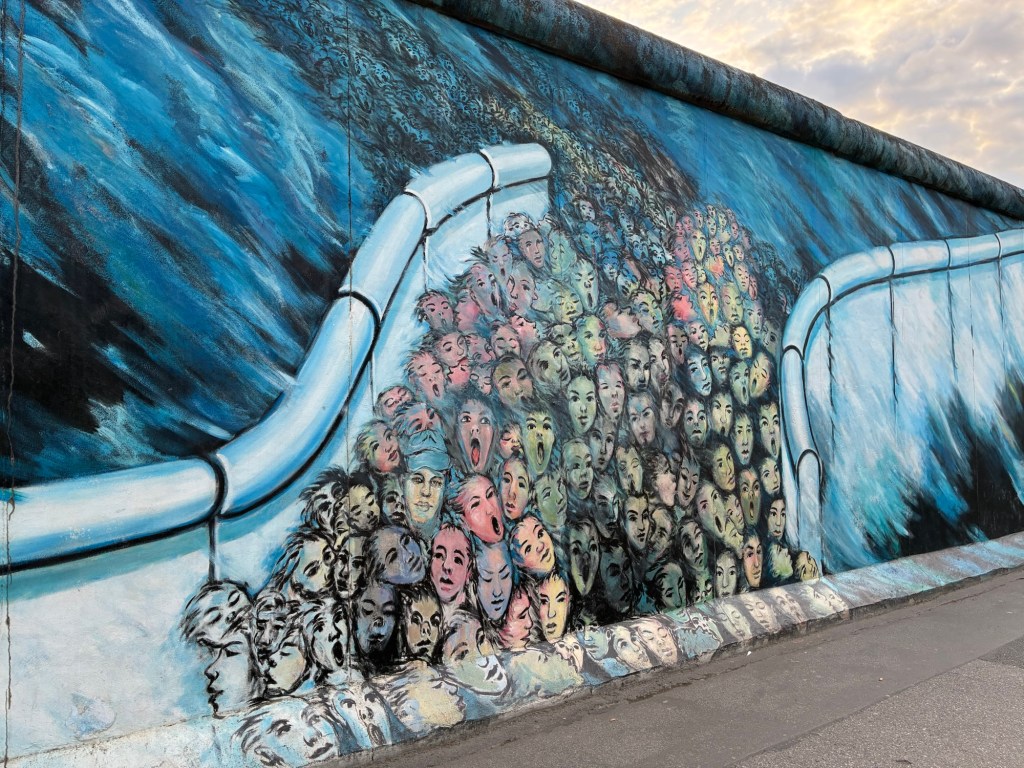
The Berlin wall with its ghosts

It was later that evening, standing before the remains of the Berlin Wall, that the more personal ghosts appeared.

If you are Bengali, the fragments of the Wall feel strangely familiar. They echo other partitions elsewhere — other borders drawn abruptly through landscapes both material and emotional.
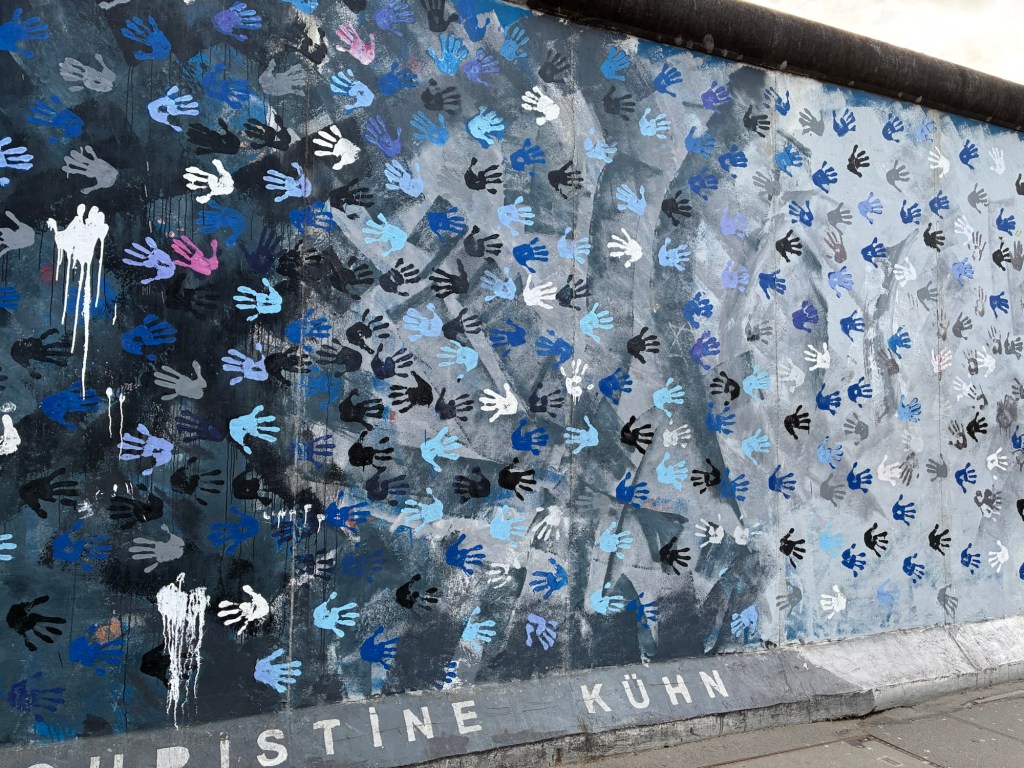
Famous Christine Kuhn project at the wall

The Partition of India, which came some years before my birth, separated my parents’ homeland from their nation. Their ancestral landscape lay in what eventually became Bangladesh, while their country was India. Like millions of others of their generation, I suspect my parents never entirely recovered from that rearrangement. So while hundreds of tourists, including me, photographed the once-grey slabs now covered in some of the world’s most famous street art, my father’s ghost wandered beside me carrying another battered and bloodied map.
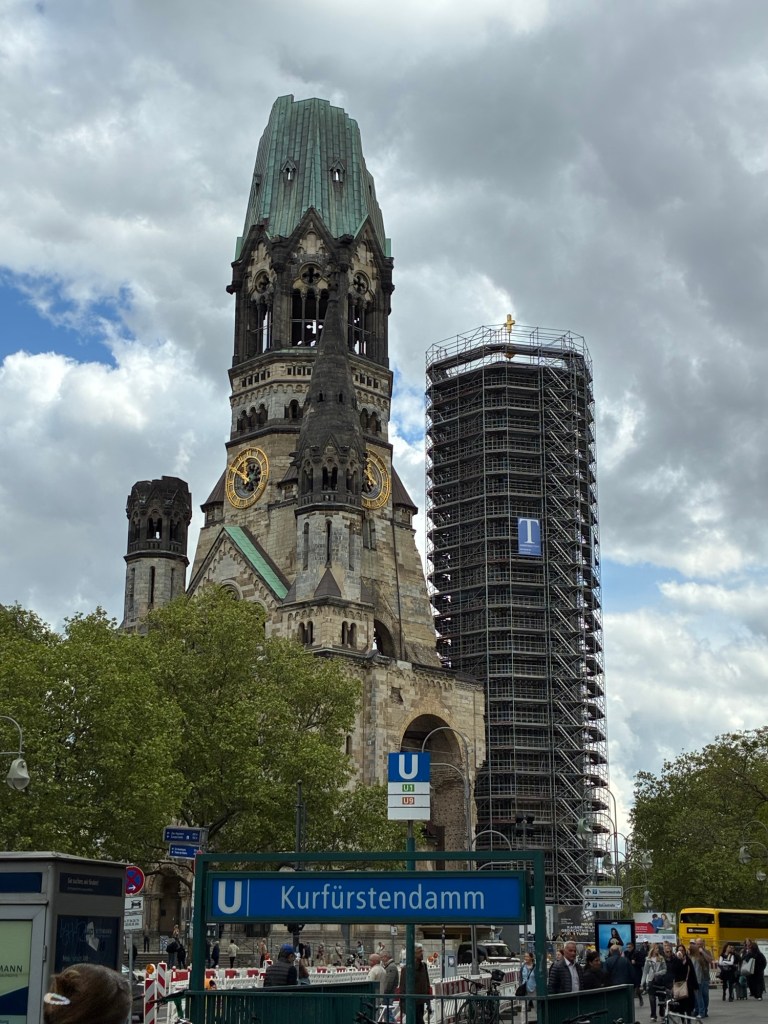
Big, crowded, confusing, old, new and under construction

He would have liked Berlin. The actual city of today would baffle him: the high-tech shops and automated hotels, young men shooting up beneath railway bridges, kebab shops everywhere, and the surrounding cacophony of languages. But he would have liked the idea of Berlin — a divided, ideological, argumentative city. “Rather like Kolkata,” he might have said.
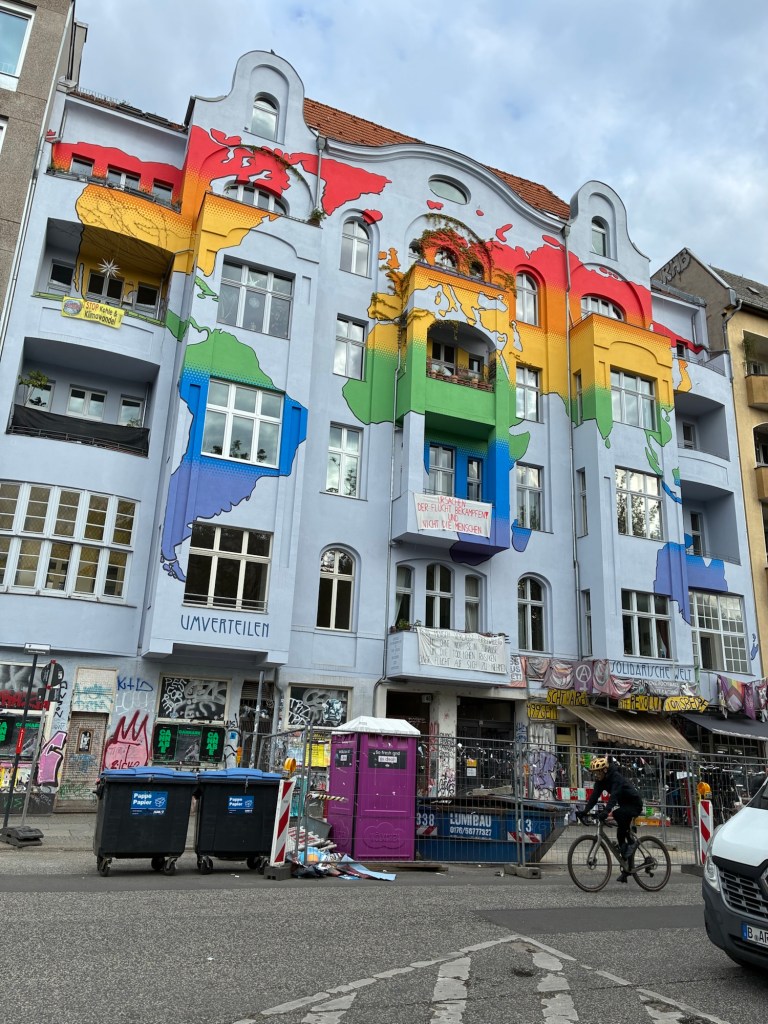
Kreuzberg – apartment block with a giant map inviting the world in

On this trip, Berlin seems a city of traces, where walls break into memories. Histories are painted over only to become more visible. And an iconic Bengali name lives on as a sign on the road long after the crowds have gone home.

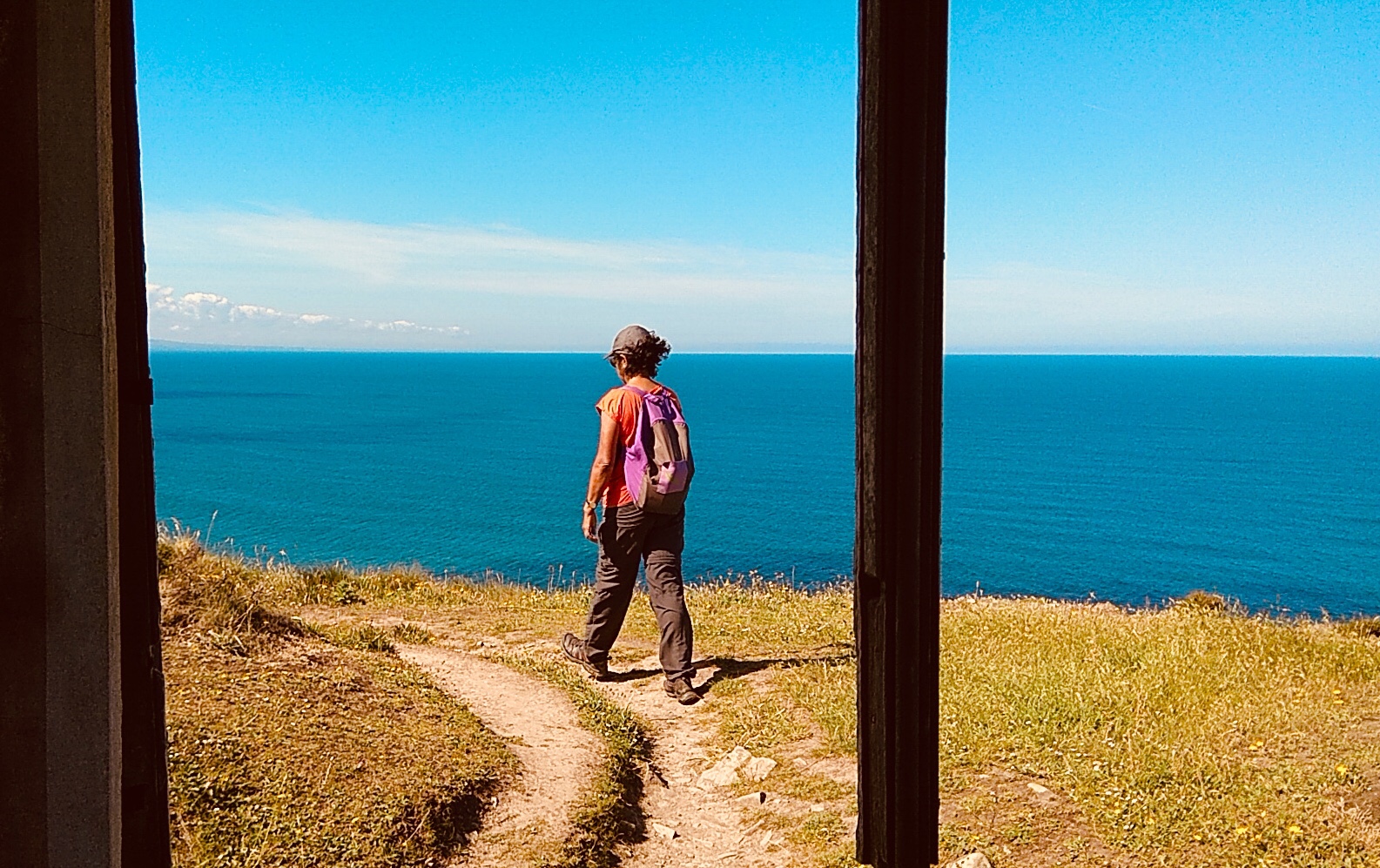
Indian Take-Away II: Walk like a Bengali*

Not all who are wandering are lost. But many are. I myself have been a little lost trying to come to terms with the idea of a Bengali who walks (Yours Truly), because in general, well, Bengalis don’t walk. My father always mobilised Huxley, who was famously dismissive of the English practice of nature rambling. And my maternal uncle who spent the better part of his adult life in Oxford amongst English saunterers regarded my love of walking as a westernised affectation.

In Kolkata, the capital of the Indian province West Bengal, where I grew up in the 1960s and 70s, no one walked unless they had to. Beggars, mostly women and children, as I recall, once walked door to door but that ended with the city growing upwards into multi-storied apartment blocks. Now even beggars gathered in street corners and rushed from one car window to the next. Beharis and Oriyas walked. Mostly disparaged by Bengalis, they were the displaced populations, mostly men, from neighbouring provinces – pushed out of their villages occasionally by dreams of a better life, but mostly by corruption, industrialisation, and other mismanaged disasters. The upper-caste Oriyas cooked in the genteel households and worked in the gardens of the city’s tiny wealthy population. The low-caste Beharis pulled rikshaws which ferried us to and from school; they swept the streets and cleaned toilets, but were rarely allowed into Bengali kitchens. The ‘darwan’, the neighbourhood guard, walked through the night banging his stick on the street lamp-posts round and round the narrow suburban streets, where we lived. They were outsiders too – probably Biharis I imagined, having rarely actually seen one let alone spoken to one. Good girls didn’t walk the streets at that hour of the night. Mostly you walked because you had no choice and if you walked for a living, you probably were not a Bengali.

In Tagore’s songs which are part of Bengali cultural DNA, any reference to walking, that I can recall, is tragic.

কেন চোখের জলে ভিজিয়ে দিলেম না …

‘Why did I not moisten with my tears every grain of parched dust!

Who knew you would arrive, my beloved as though uninvited.

You have crossed the desert without a tree to shade –

Your suffering on the road is my cursed fate.’

Tagore in translation often sounds silly. English unsettles the mellifluous Bangla and metaphorical dimensions of Tagore’s lyrics. But it is in part the magic of Tagore’s language that renders the road so distressingly uninviting. In an oeuvre so large as Tagore’s there are exceptions of course. Famously exhorting Gandhi on to the ‘salt march’ (see https://en.wikipedia.org/wiki/Salt_March) Tagore wrote ‘if no one responds to your call, then walk on alone’. But mostly walking is a pain metaphor in the songs most commonly sung.

Left-leaning modern lyrics added to the litany of walking woes by drawing on the life of the working-walking poor, most famously the smash hit of the 1960s, Runner. This protest song harked back several centuries to a Mughal postal system, predating the railways which the British rulers introduced. The ‘runners’ were men in a relay system to deliver mail from city to city. I never questioned why a song of class protest had to draw on an outdated bit of exploitation, when there was plenty of contemporary evidence all around me. I was mesmerised when Hemanta Mukherjee’s divine voice rang out with the tears of the Runner’s beloved ‘nursing her lonely bed, through sleepless nights’. But something of the joy of running pulsated through the rhythm of the song. In my mind’s eye he was a lean dark figure with rippling legs cutting through the forest’s night air. But I just could not imagine him as a Bengali.

In the 1990s another significant Bengali pop-song reinforced the deadly dangers of walking, Suman Chatterjee’s gut-wrenching rendering of ‘The Walking Song of Sanjeeb Purohit’. Suman was a sort of Pete Seeger of 1990s Kolkata, his lyrics embedded in the structures of contemporary life of the city. Suman often referred to real events that provided the material for his ballads. ‘The walking Song’ starts with the singer-songwriter speaking as he strums his guitar: ‘This event was published in a Kolkata newspaper. In 1991. That year, in Orissa, for a job in the Forestry department, young men and women sat a written test…. Those that got through were then to go on to a test of physical stamina. In the Sambalpur area, in mid-summer, the young men and women were asked to walk non-stop for 25 kilometres. At high noon. Many fell over early in the walk. One man did not. His name was Sanjeeb Purohit. He walked the whole distance. He crossed the whole 25 kilometres. Then he fell. Dead.’ Suman welded together the familiar desperation of the young urban Bengalis’ search for a white-collar job, their fear of physical labour and the very real oppressive heat of the mid-day sun (‘which has dried the songs in the throats of birds’ croaks the singer) to produce walking as a form of torture. Every word, line and strain wields ‘the flaming whip of the sun’, dragging the hapless Sanjeeb towards a burning, aching, suffocating death through the trial by fire towards inevitable failure. The song ends: ‘Sanjeeb will never have to walk any street again/ Nor will he ever ever want for work again.’

Like the ‘Runner’, Sanjeeb was clearly not a Bengali. Anti-pedestrianist Bengali popular culture found its martyrs where it could.

But Bengalis did walk in their thousands in 1971, when the Pakistani army launched a ruthless attack against unarmed civilians in the eastern half of their own nation, mostly populated by Bengali-speaking Muslims. Up to three million might have died, several hundred thousand were raped. Eventually a new nation called Bangladesh was born. But in the nine months that the genocide raged, ten million Bengalis staggered across the 4000 km border between India and what was then East Pakistan – mostly into the frontier towns on the outskirts of Kolkata. Images of line upon line of dispossessed men, women and children, dragging frail bodies on bare-feet, filled the media. They say it was the largest single displacement of people since the Second World War. For once, Bengalis had walked, and in heart-breaking numbers.

The majority of those navigating long distances on foot are still the wretched of the earth: Rohingyas walking into Bangladesh, migrants from war-ravaged Middle East crossing the Balkans on foot, desperately seeking a place to call home. In a world where so many must walk for so long under such duress, it is a rare privilege to have never walked in despair and so to be able to recognise walking as a right and pleasure rather than punishment, to walk when and where you want, to strike out on your own. Such a privilege, it is almost a miracle!

——

*The idea of Bengaliness is a little complicated, as there is a whole nation called Bangladesh. But the cultural centre for defining what Bengali means has historically been Kolkata, the capital of the Indian province of West Bengal. There is a whole world of books and debates about this. Start with wiki <https://en.wikipedia.org/wiki/Culture_of_Bengal>.

La Route Est Longue

Photo: One day in August 2018, on the Chemin de St. Jacques.

In 1978-79, American Jim introduced a young woman from Kolkata to what he called hiking (that is hours of walking and days at a time), and his long-time mate, Aussie Barbara, called ‘bush walking’. Jim and Barbara had hiked in the US, in Asia and been on heaps of bush-walks in Australia.

The Kolkata Bengalis are build for comfort not for speed or any mobility at all, really. Tagore the greatest Indian poet described his fellow-Bengalis thus:

‘Short of height and wide of girth.

Bengal’s children buttoned up.

Peacefully asleep.’

Against all odds, Jim and Barbara persuaded the Bengali girl to come on a four-day hike in the Flinders’ Ranges in South Australia. She failed to learn any bush craft. They let her off camp duties. They gave her the lightest pack. Still, while stumbling through the bush, falling over in every puddle, held up by the scruff of her neck, she caught their walking bug.

Photo: Pulled along by Barbara, Flinders Ranges, South Australia, 1978.

Jim is the older brother I never had. Many in Indonesia, Australia, and elsewhere know him as an academic who wrote and taught about 20th century Indonesia and world politics. For me he did what older siblings should do – they teach you the simple things of life. Jim taught me the pleasure of walking – walking long distances.

In the last three weeks, while I have walked about 400 kilometres on the Camino in France, Jim has been doing the real heavy lifting. He has completed the last visit to his beloved Indonesia and has begun the last leg of his unique through-hike, as the Americans call the really long wilderness walks.

In 2014, I walked 780 kms, with my own walking-buddy, from St. Jean-Pied-de-port to Santiago de Compostella. The day I limped into Burgos moaning from shin-split pain, we were overtaken by a man with a tee-shirt saying something like ‘walking for Parkinsons’. We later learnt that he was PD sufferer who was walking the Camino without support. Along the way, other walkers gathered around him, gave him the support he needed on the day, then walked on at their own pace. Each to her or his own Camino.

Jim didn’t really hike much after he lost his walking-buddy in 1996. Parkinson’s disease eventually forced him to stop walking, in the ordinary sense of the word. But he kept going with all the determination of the long-distance walker, that he was. Wisely, he found a track-angel because every hiker needs one and deserves one.

‘La route est longue’ the French say about the Camino and as a metaphor for life.

On a really long walk, the days run into each other. It is hard to remember where you stayed one night or how many kilometres you did another day or indeed what day of the week it is!

Putting one foot then another would be monotonous, except that the foot, even encased in the most expensive hiking shoes is ever-aware of the changing surface: here cautious on slippery rocks, and minutes later gratefully relaxing into silty softness. Legs tighten at even a five degree incline on the road. Hearts pound going up the mound that looked like a pimple on the topographical map.

Each step is made new by the details you can see when you move at walking pace: a tiny brown creature emerges out of foamy pupa, spiderweb hangs from the fencing wires like meters of fine silk. One day the moon shadow stays up all morning. You squint your camera into the light, but it dodges all attempts to record its unexpected presence. In some stretches of the walk autumn has already begun to lay down a carpet of leaves, but just across, spring is still in full bloom in the tiny purple and yellow flowers on the rock. Just when the heat is getting to you, the trees overhead shake off last night’s dew.

On one of those really tedious stretches of flat grey road, flecks from the sky might flutter past as blue butterflies. A dry rocky wasteland of a road. Signs for hunters all around. A man in a flack jacket. Three four-wheel drives mow down the dry grassy stretch beside the narrow track. Then two more men with guns and dogs. A shot far away. Three minutes later, a fawn doe stops you in her tracks. The one that got away, you breathe a sigh of relief.

Some days are perfect. These you recall in vivid detail. Just over a week ago now (around the time Jim went into the hospital for the last time) overnight rain had cooled the ground. We left Figeac in a soft drizzle. Along the way, the sun came out, smiling. The breeze cooled our way and pushed us up the last climb.  Most setttlements show themselves slowly, shyly. But Cajarc burst into view all at once as we reached the high ground, after 9 hours and 30 kilometers of walking.

And from long ago and far away, I can still recall my first ever hike. First night in Wilpena Pound Campsite. First gum leaf tea cooked in a ‘billy’ on the campfire (for the non-Aussie reader, if there are any, a billy is a tin can with a handle). Learning to pack the first borrowed back-pack. Jim is a bit ahead, staking out the way, calling out warnings ‘prickly bush’, ‘go round the big rock’, ‘puddle’…

Bonne Courage Mas Jim, as they say here in France, along the Way of St James.

Photo: End of a day’s walk with Jim and other walking-buddies, 1978