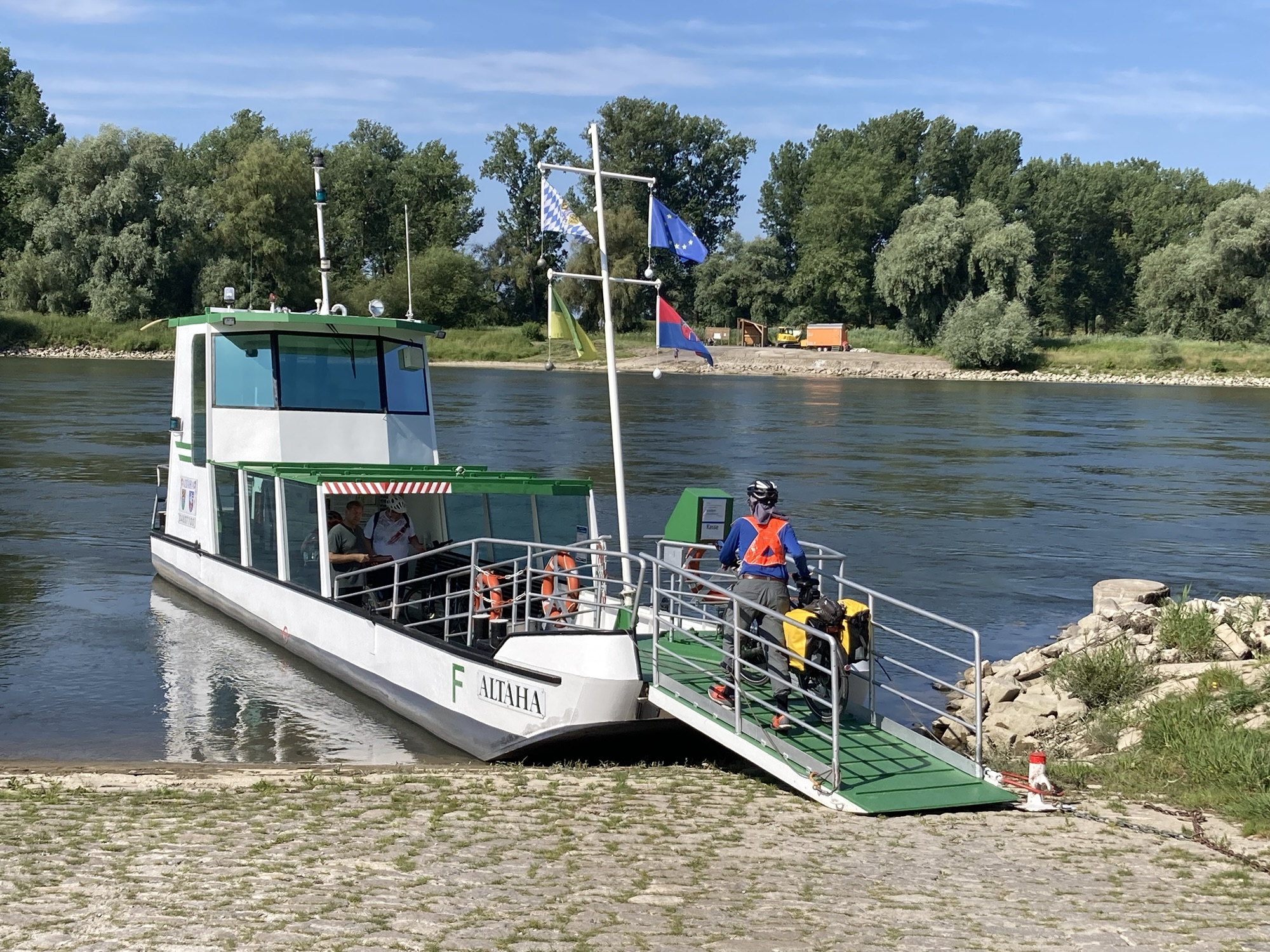
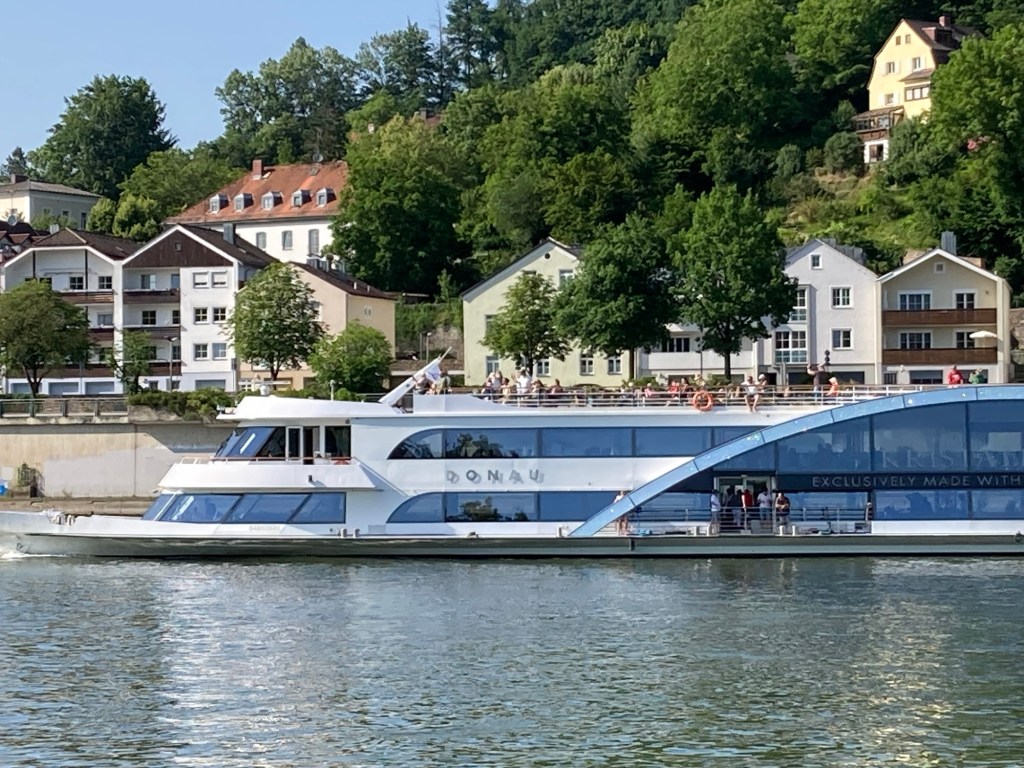
Over the past few weeks, we’ve wobbled, explored towns and villages, videoed, and photographed our way along the Donauradweg, Danube Cycleway, and somehow made it to Passau, which is teeming with tourists who’ve arrived quite literally by the boatload. This is our final stop in Germany.
I’m no great cyclist. Not fast, not strong, and unless “middle-aged” has been recently redefined, I’m well past it. Thus, having pedalled some 600 kilometres across Germany, I feel compelled to offer some totally unsolicited advice to anyone dreaming of their first long-distance ride.
The “Practically Perfect”
First: the Danube Cycleway in Germany is flat, mostly. You’re following the river downstream, so gravity is on your side.
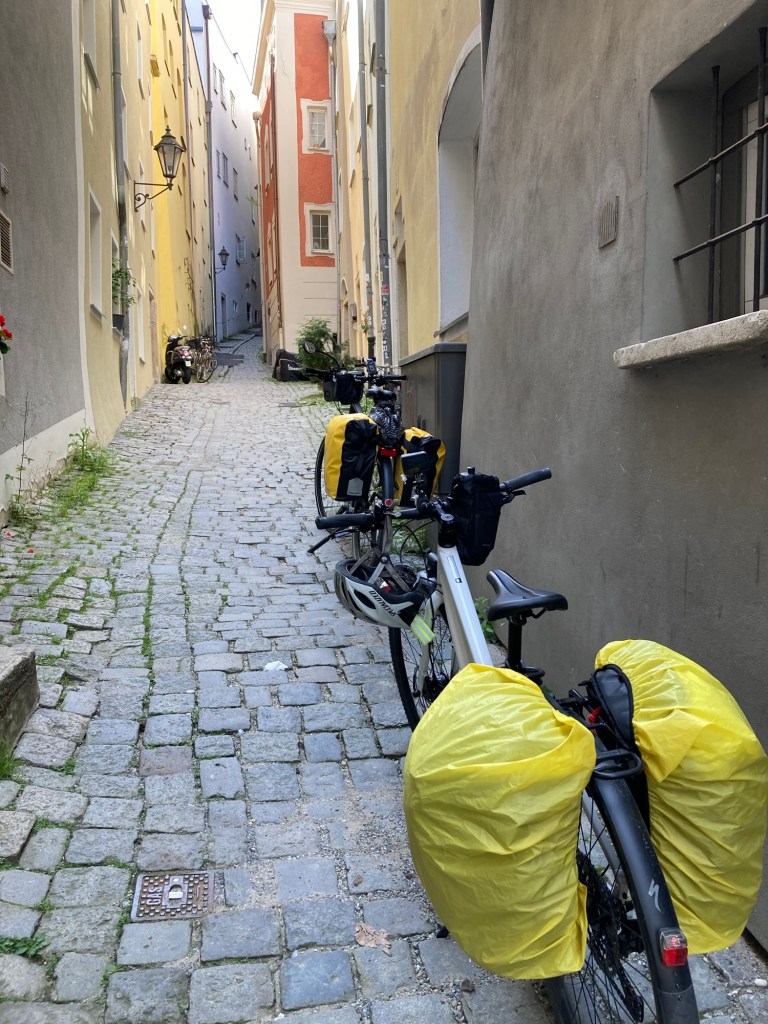
But more importantly — Germany does bike paths like no one else. The country’s National Cycling Plan 3.0 (yes, they really have one) runs until 2030 and backs every kind of riding — weekend leisure, daily commuting, and cycle tourism — with substantial funding. Bavaria, like other regions, benefits big time. Cities like Passau have also poured in their own funding. Add another billion or so from the “Stadt und Land” (Town and Country) program, and what you get is a web of beautifully maintained, mostly signposted paths linking towns, cities, and countryside.

Second: everyone rides. All ages, shapes, and speeds — towing children, with dogs in baskets, carrying a week’s shopping. Lycra is mostly reserved for weekend warriors flexing their calves. For the rest of Germany, cycling seems to be just… normal. You can stop every ten minutes to photograph a duck and no one bats an eyelid. The cars are unfailingly patient and give you space — which I appreciated during my wobblier road crossings.
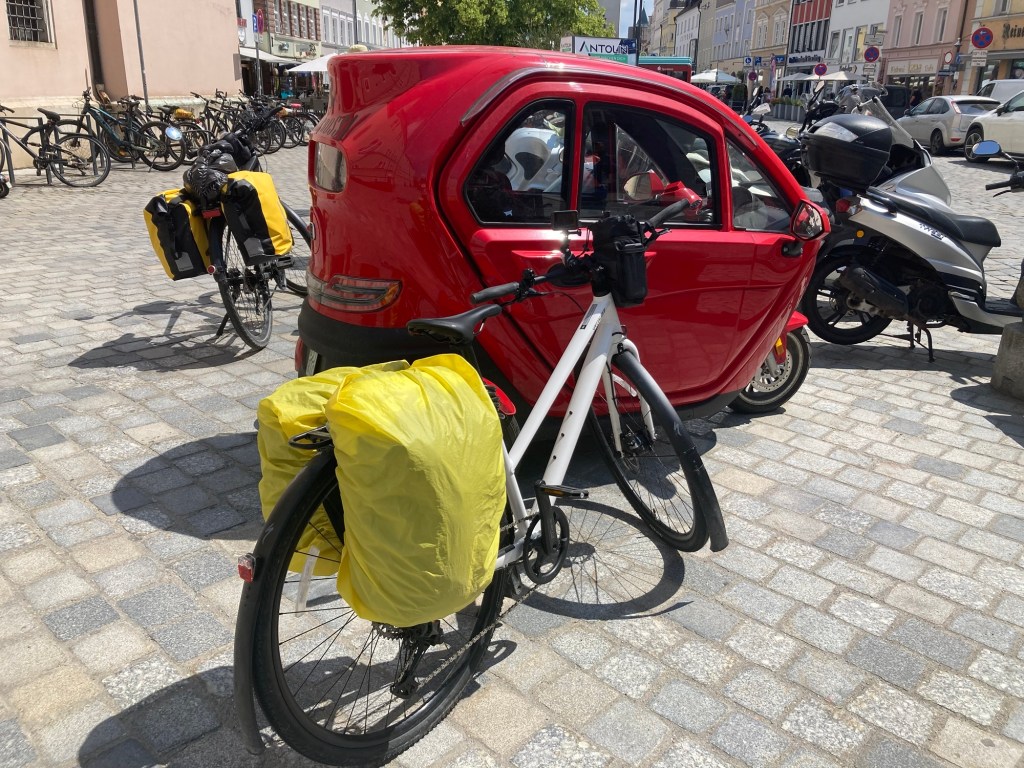
Third: on this route you don’t have to do huge distances each day. There is a lot of accommodation close to the trail — guesthouses, small hotels, campsites, and quirky Airbnbs (with safe bike storage) pop up every 15–20km. You might need to veer off the main trail, but Google Maps will help you get there (and usually warn you about any pesky hills).
And if you do overestimate your fitness, the early sections of the trail, your first 150 kms or so — between Donaueschingen and Ehingen — run close to train lines which provide bail-out options for you and your bike if needed. Later along the way, ferries will help shorten some distances too.
The “Fair Enough”
With great infrastructure comes… roadworks. Lots of them. These can lead to detours, some of which are well signed. Others? Not so much.
Of course, it is your own fault if, like me, you don’t speak German and end up on muddy tracks or winding through industrial zones — not quite the charming riverbank vistas you had in mind.

Also, shops are closed on Sundays, so if you need toothpaste or snacks, plan ahead. Luckily, bakeries seem to transcend these rules and are open even in the smallest towns, along with most cafés and restaurants. You’re unlikely to starve.
The “Hmmm…Really?”
Now, about the price of water.
Tap water in Germany is 100% safe to drink — but good luck getting it in a café. No one, literally no one, will give you free tap water with a meal. In most cafes and restaurants a 250 ml bottle costs €3 (about $5 AUD) or more. And don’t expect public water fountains or bottle refill stations along the path either. You’ll get blank stares if you ask to fill up at a café.
I don’t understand why no one drinks the tap water here. Is it just habit? Or a national conspiracy to keep cyclists thirsty for beer (which costs about the same as water)? Either way, best to bring your own bottle, and fill it at your accommodation before you roll out each day.
Bottom-line?
If you’re one of those people thinking, “Maybe … one day … I’ll try a cycle tour,” let me say this: the 600km I’ve just ridden is as good as “maybe-one-day” gets. It’s gentle, scenic, well-organised. Mostly, you can finish your day’s ride in cities or villages layered with stories, myths, histories and architecture from the past. And on good days, there is free music, in the churches and on the streets. You might be tired but you’ll never be bored.
So get planning with two wheels and a bottle. Or if you are still wondering, follow us into our Austrian wobbles.


I went the other direction, Czechia to Switzerland and found the signposting in Germany time consuming. With density (of cycling paths) comes confusion. In Czechia you have a handful of long-distance trails and you follow your number until it ends… in Germany you have to know the next town you are headed towards and then not miss the turn. I had to check the phone every couple of minutes.
The drinking water situation is annoying. In Switzerland you can, in general, drink from all fountains unless it says otherwise – cross the border and you either buy water or you have to ask, find a public toilet or a cemetary :-)
By default fountains are “Kein Trinkwasser”.
LikeLiked by 1 person
thanks, and i will add some more information about water when I have a chance to edit the piece.🙏🏽
LikeLiked by 1 person
Germans were weird about tap water back when I lived there in the late 80s and 90s. Can’t explain it. And I don’t like carbonated water while they do. I’d say buy water at the supermarket when necessary.
Unlike France, where friends taught me how to find water in the smallest villages … https://exploringbybike.com/2022/09/07/eurovelo-8-montpellier-to-narbonne-in-3-days/
LikeLiked by 1 person
Thanks. And yes. We have walked all over France and Spain and the water situation has got better and easier over the years.
LikeLike
Great to hear you are having such a good time, but yes, the old water drama… given that hospitality profits generally derive from beverages, no one will give away free water. I guess, most Germans would not buy a drink if that was the case… Also, perfectly safe drinking water from taps can taste like you’d rather go to the supermarket in some places… enjoy the next leg!! :-)
LikeLiked by 1 person
Yeah… water… There is a network ‘Refill Deutschland’ signalled by a waterdrop-icon on Cafes and such. Starbucks is part of it. And then there are cemeterys. They always have water and it is almost always drinking water.
Enjoy your ride!
LikeLiked by 1 person
Thanks. I will update the information at some point – for other. But we are crossing into Austria tomorrow. Any advice on water in Austria?☺️
LikeLike