
‘Let’s start at the very beginning/ A very good place to start…’
But how do you tell where a river—or a journey—truly begins?
The Danube, Europe’s second-longest river, winds through ten countries over 2,850 kilometres, from the Black Forest to the Black Sea. It invites walkers, cyclists, and other travellers to trace its curves across the continent. But where, exactly, does it begin?
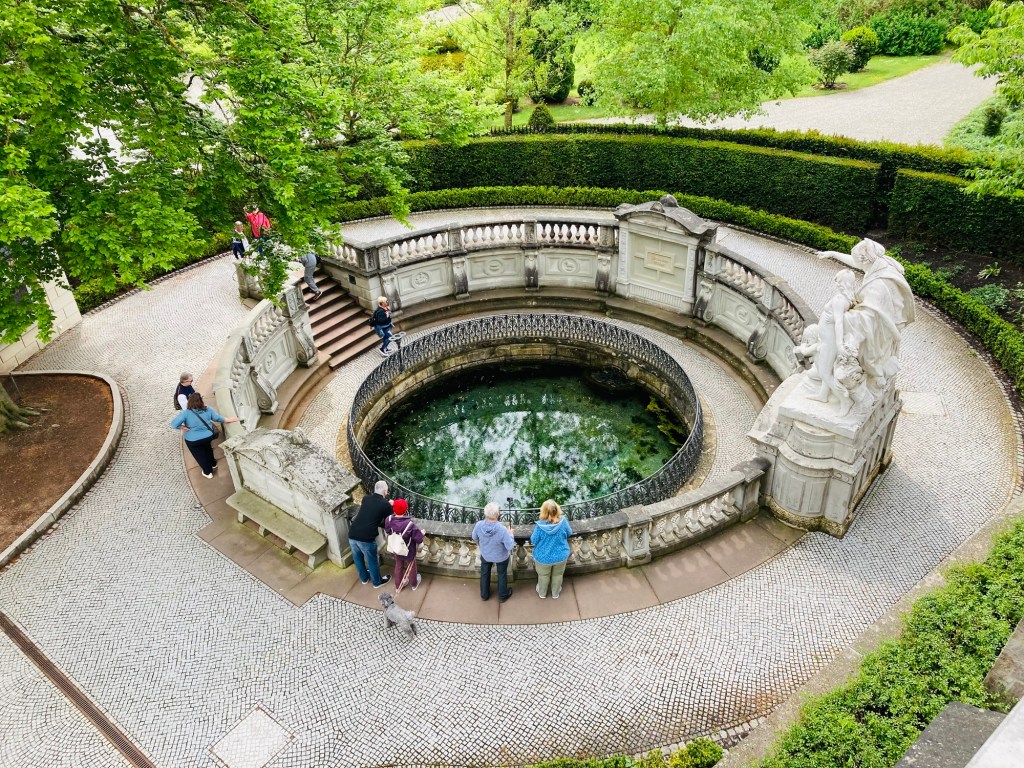
In the town of Donaueschingen, Germany, a small spring bubbles up beneath a castle courtyard. It is encased in stone and watched over by a 19th-century statue depicting the Baar, Germany’s great central plateau as Mother pointing to daughter Danube the course she should take.

This spot is the official (if not the most scientific) “source” of the Danube, the Donauquelle. As a friendly German tourist, pausing for a photo like the rest of us, explained: “It’s all politics—this place won because it was inside the castle.”
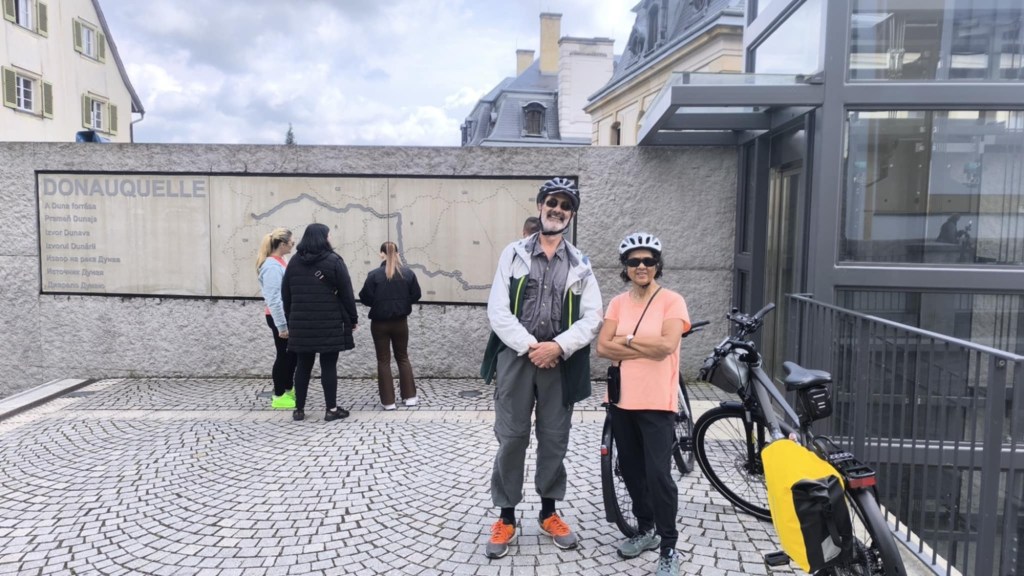
Other places make their own claims to the Danube’s origin. Some say it starts further uphill at the Bregquelle near the Martinskapelle chapel. Others argue it begins downstream, where the Breg and Brigach rivers meet. Official or not, all these stories are part of the river’s charm.
What won us over about Donauquelle was its easy access. You—and your bike—can hop on a train from any number of major cities (we came from Munich) and roll straight into Donaueschingen station. From there, it’s just a short ride to the spring, where you can snap your first triumphant selfie and mark the start of your journey. Best of all for the not-so-bold cyclist: it’s mostly downhill from here.
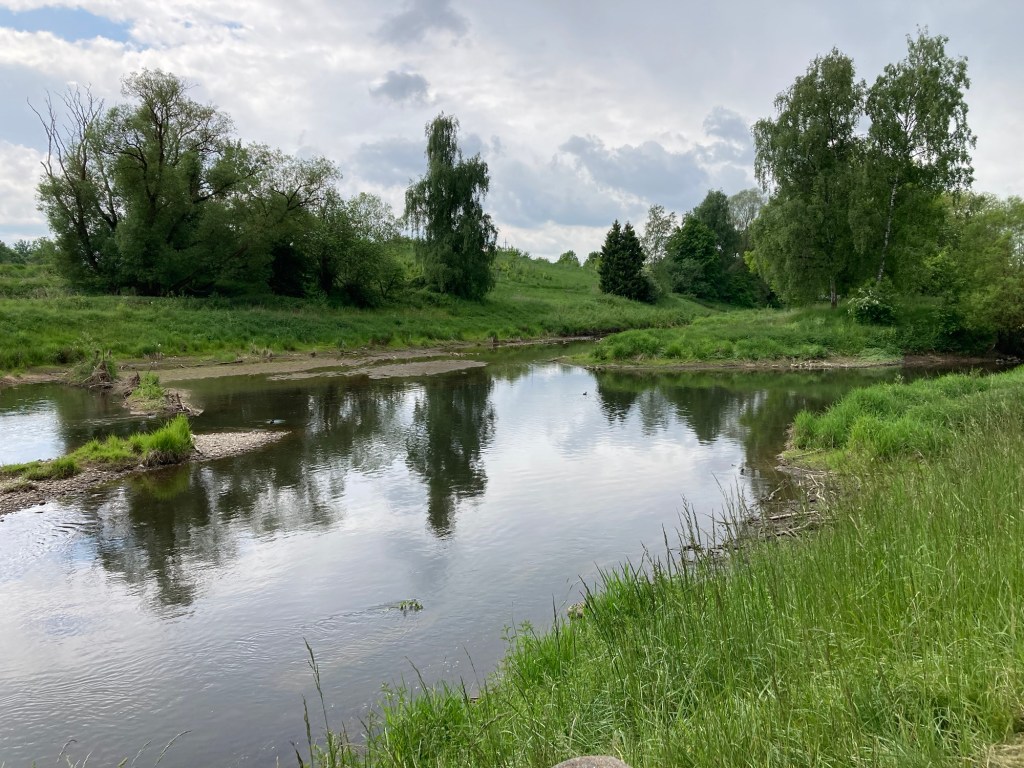
From Donaueschingen, the Danube Cycle Path unfurls gently. About two kilometres of gravel wind through shaded parkland before arriving at the confluence of the Breg and Brigach—two modest rivers whose meeting marks the Danube’s first true appearance. It’s here, without plaque or fanfare, that the great river gets its name: the Danube.
Backtrack a few meters and pick up the cycle route to glide toward Tuttlingen, where the EuroVelo 6 joins the Danube Cycle Path.

The Donaueschingen-to-Tuttlingen leg is especially kind to those who like their rides easy: sealed roads, flat terrain, and picture-postcard views of farmland and red-roofed villages. Not up for the full 35 km? “No worries,” as we Aussies say—the cycle path passes two train stations, and Deutsche Bahn trains here graciously allow bikes on board for free.
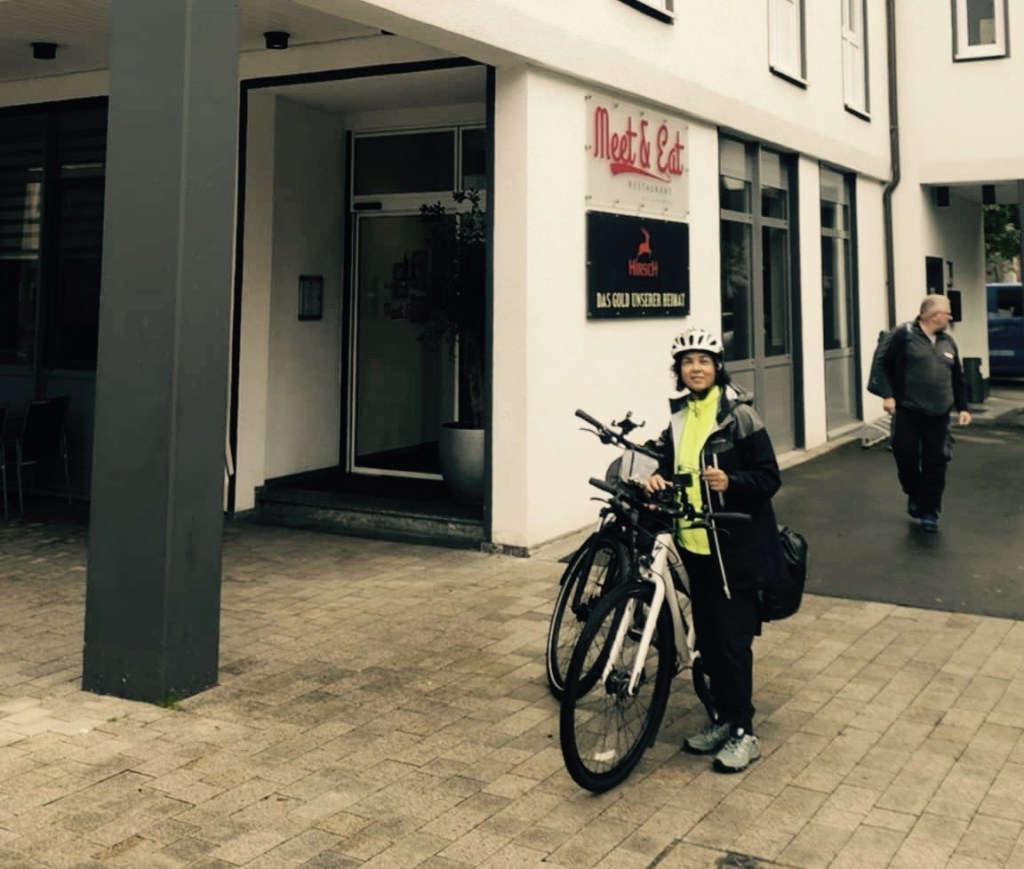
Tuttlingen, an unassuming industrial town with surprising culinary flair, makes an ideal stopping point. For those who like to end a day’s ride with a gourmet flourish, Meet & Eat (open Thursday to Sunday) offers a Michelin-starred experience with a casual twist—a menu that accommodates chilli con carne alongside enoki mushrooms on something fancy. At the posher end of the spectrum, Vinzenz Weinkeller, housed in a moody cellar, flickers with candlelight and sparkles with fashionable diners.
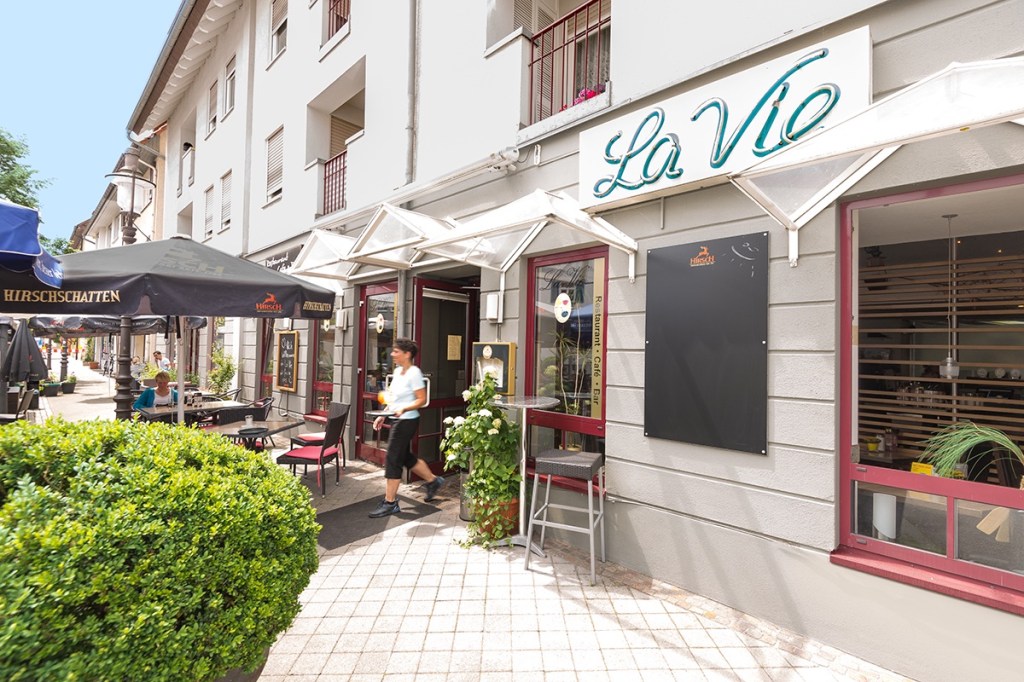
At the end of our own soggy ride, however, the hotel staff directed us to La Vie, a family-run favourite serving Swabian comfort foods, like Maultaschen (a sort of large ravioli) and Spätzle (egg noodles) with lentils and sausage. And they didn’t mind sodden boots.
And so the journey begins—not with a torrent, but with a whisper: slow down, ride easy, and taste the journey one unhurried pedal stroke at a time. Who cares if the river starts in a prince’s fountain or at a monastery on the hill? What matters is that it flows, it’s alive, and it invites.

 Reading the Road
A fabulous description , with just enough detail to tempt other cyclists. I haven’t cycled this section, but I have kayaked it km 0, from here to the Black Sea. I’m looking forward to revisiting the area through your updates. :-)
LikeLike
O, wow. Kayaking would be wonderful! And, Thanks for your encouraging comments🙏🏽
LikeLike