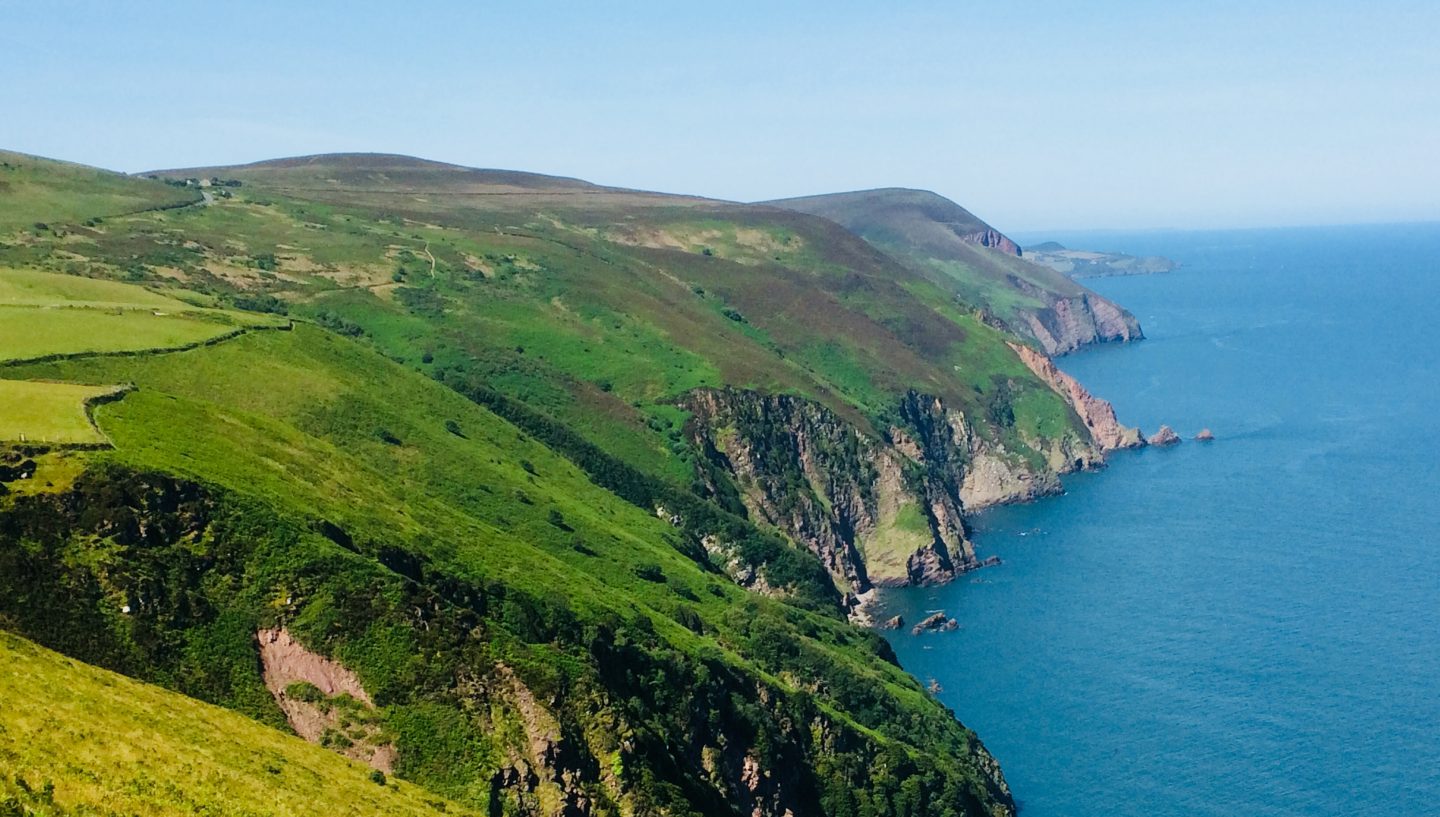

Too much champagne is conducive to all sorts of good things: colour, beauty, fascination…. But not to the kind of clarity that is required for reporting correctly and sequentially about a walk.. So herewith just some images to bring you up-to-date in a summary manner, since that rainy post, which is now nearly ten days and 200 kilometres ago.

Since that rain, we have walked in perfect weather – and how can weather be anything but perfect when it leads to a glass of champagne most afternoons? It is possible that the light takes on a special gentle glow after a half carafe of champagne (which I am forced to drink by myself in Chalon-en-Champagne as WB is a teetotaller) and there is a pot of gold at the end of the half-rainbow.

You have worked out by now that we are in, what most of us think of as, the Champagne Region. Officially, since 2016, it is part of the newly formed region of Grand Est, The average walker (and yours truly, Hurry Krishna, is so called, because she is definitely on the slow side) will probably spend 2 to 3 weeks in this region. At the point of writing this post, we are about two-thirds of our way through the Grand Est.
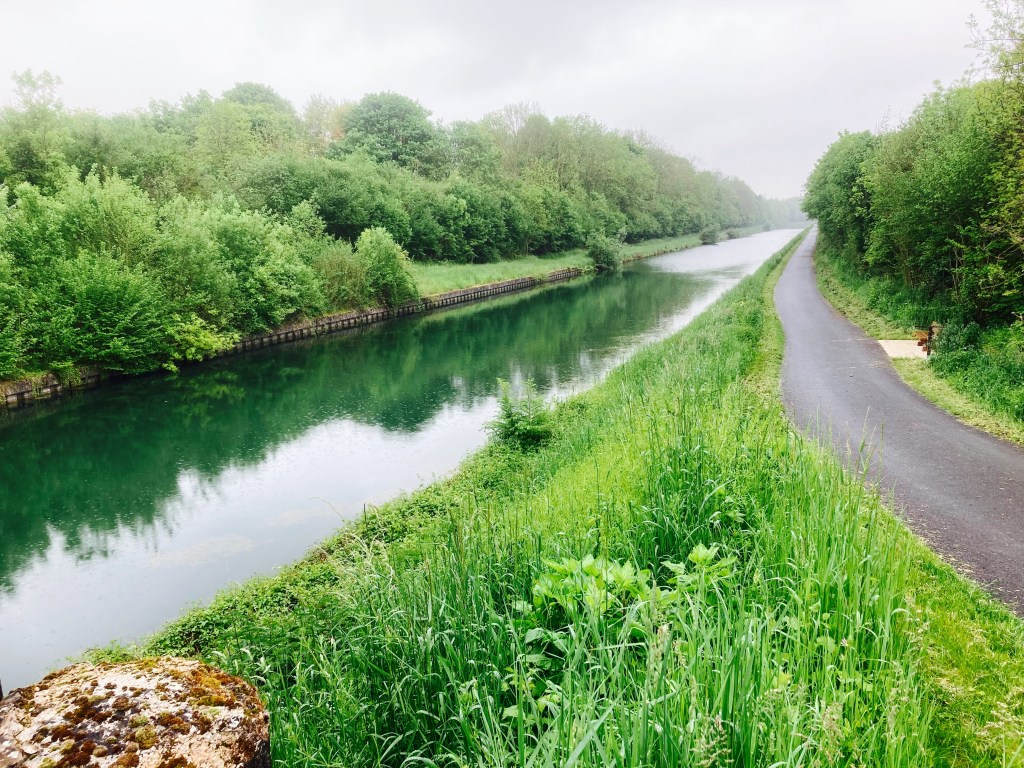
Some paths do leave you wondering whether long-distance hiking is a symptom of mental illness. But not here where Aisne, Marne and Aube rivers and their canals criss-cross your way. If you are like me, you will ignore the official route and spend three days walking along the tow-path of canals, some of it beautifully surfaced to serve as bicycle routes.

At times you are caught between the canal on one side and the river shimmering through the trees on the other, and there is no way an i-phone camera (or even the best wide angle lense, if I had one or knew how to use it) will capture the whole perfect picture that your eyes can see in just that moment and then slide to the ghostly grey buildings on the other bank, without loosing the bigger picture painted in every shade of green, blue and white.

Metres down the road, or may be the next day or the day after, or was it days in a row… white blossoms tumbled like cascades into the water below.

A single tiny bunch on a slender creeper climbing a tree provided a moment’s enchantment.

The canals behind us, and just past the lovely town of Outines with its rather unique church, we are back amongst farms: lentils and barley mostly.

The high winds are turning the sheaves of barley into a green and gold waves.
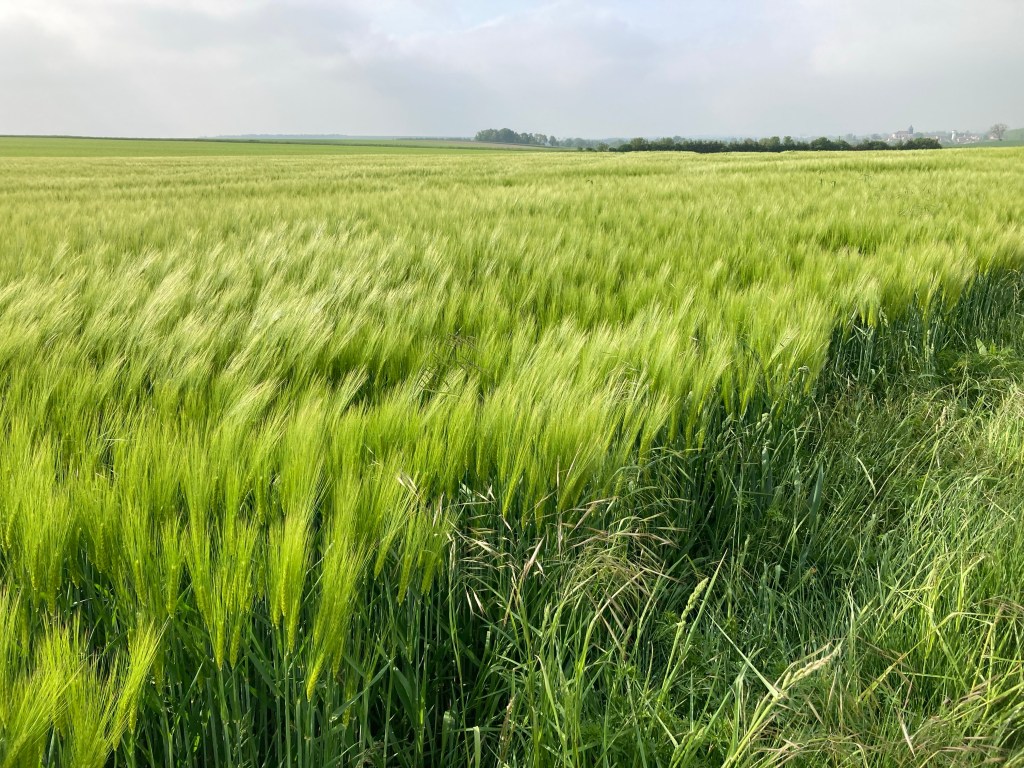
Just as you are getting a little bored with the swaying barley, an elegant shape dances into view, skimming over the feathery plants. The silhouette of a leaping deer in the early afternoon sun disappears before I can get my camera. It rises again – closer now but faster, surfs across our line of vision and is gone.
It is perfect. But ‘picture perfect’ is such a lie. The moment of fascinaton necessarily escapes reproduction.
NB: For any fellow Bengali reading this: of course, the trope of the running deer as figure of enchantment, to be chased but never contained, is so well-known to us from the Sonar Horin song, as to be almost a cliche. And perhaps the song made that kind of deer sighting especially exciting. But for the record, I did not conjure it out of the song in a champagne fuelled haze. I know this, because Walking Buddy saw it too!


Glad to hear that others are going off route – we went to Saint Omer and it was magnificent – both the Library and the Cathedral – I’m hoping to walk along the canals as well !
LikeLike
RtR:
I am posting here because I don’t think posting to your Comments at the foot of your blog is working for me. But let me know
Reverence and irreverence both – as you try to keep track – the haze of those half-carafes of the regions sparkling product – was it the Marne – and which canal – and leaping deer. I did not know of the Bengali understanding of that but I can imagine how struck you both were with its appearance.
I have a slim volume published by US born-and-raised but become Australian playwright, novelist Roger Pulvers – published in Japan in 1982 which I found there in 1991. The Japanese Inside Out. In it he discusses many things re dialects and poetry and so forth which define the unique elements of Japanese language. Among which a concentration on some of the wonders of a Tōhoku poet and teacher MIYAZAWA Kenji – who became a hero of mine. He wrote in his regional dialect – giving dignity to a language sneered at or laughed at by those speaking standard Japanese in the power capital. A decade or so later I got to travel around the places in northern Iwate-ken – in Japan – where MIYAZAWA Kenji had lived and taught. I am getting to the point. Roger P. translated one of M. Kenji’s poems – but because it was in Tōhoku-ben (dialect) – he translated it as if dialect forms of English. The Deer Dance: (1) (a straight translation) I thought it was The sea But, after all, it was the shining mountains. Ho! Hair When the wind blows It’s the deer dance. (You get the idea – but it becomes clearer when he puts it first into a form recognisable as Australian English…) Crikey, I reckoned it was The briney deep … But, strike me if it weren’t The shimmerin’ peaks. Whacko! Me locks is all askew The wind’s blowin’ … An’ if the deer aren’t dancin’! (And then again – into the US dialect of the Ozarks.) Why, I was guessin’ that it was Them shiny waves But I’ll be hogged tied if it ain’t Them shiny hills. Shucks! If my hair ain’t all mussy An’ there’s a powerful wind a-blowin’ Hey, lookee, the buffalo are doin’ a dance! (Roger P explains his translation of buffalo for deer – makes sense – as well as hills for mountains.) And finally – a quaint put-down of upper class British style. It had all the appearances of An ocean But, my word, if it isn’t actually Radiant knolls. I say, My hair is somewhat skew-whiff And the breeze is up as well A few stags are prancing about here and there.
During my 2001 visit to Hanamaki and to the school at which M. Kenji had taught (I had driven there during the summer vacation time) I was lucky enough to see a rehearsal of the very Deer Dance about which he had written – in preparation for an imminent festival performance. So your leaping deer carries other nostalgic – literary and translation resonances for me. Take a sip of your next “champagne” and dedicate it to MIYAZAWA Kenji! Jim KABLE
>
LikeLike
that is a wonderful poem. I LOVE it. can you email me a copy, so that I can see what it actually looks like on paper? kishna.sen1000@outlook.com. Thanks😊
LikeLike
Now you are talking things beyond my competency.
At each capital letter – a new line – for all the versions!
I should have explained that. You can probably do that yourself… as if editing – I was trying to not take up much space… Jim
LikeLike