
In last week’s blog, I mused aloud on the curious reluctance of German cafés and restaurants to serve something the country has in enviable abundance: high-quality tap water. A number of experienced long-distance cyclists responded, and I’ve tried to incorporate their collective wisdom here.
There’s already a torrent (sorry—couldn’t resist the watery metaphor) of online discussion about Germany’s complicated relationship with tap water—cultural, environmental, and economic. I won’t dive into all that, except to say that British journalist Nick Thorpe writes movingly about the ecological consequences of mineral water extraction further downstream along the Danube. If you’re cycling the river, his book is well worth the space in your pannier or on your kindle—more thoughtful and compelling than most in the travel genre.

Back to practicalities. It turns out that a few bold or charming individuals simply ask for tap water—and even receive it. Others report success when requesting a refill after ordering food or drink, particularly in bakeries and smaller cafés. But as a rule, there’s institutional resistance to handing out water for free.
Germany’s hospitality lobby, DEHOGA, has actively opposed any move to make tap water mandatory in eateries. When the EU’s 2021 Drinking Water Directive encouraged countries to improve public access to water, DEHOGA argued that obliging businesses would unfairly burden small operators. So the choice is left to individual owners—and most appear to stick with established practice.
So, if like me, you don’t speak German and would rather avoid social awkwardness, here are some tips from seasoned cyclists for discreet—sometimes even inventive—ways to refill your bottle on a hot ride.
Churchyards and cemeteries (and you pass a LOT of these along your path) – are unexpectedly reliable. Most have taps for watering flowers, and almost all water in Germany is safe to drink. If it isn’t, it must, by law, be marked—look for signs like ‘Kein Trinkwasser’.
Petrol stations and campsites – often have accessible facilities (you don’t pass a lot of these on your way).
Public toilets (paid or unpaid) – anywhere you find a tap, really, seems fair game.

Some cemetery taps require a special key or handle to turn them on. Apparently, these are available in most German hardware stores, and some cyclists carry one in their toolkit. Whether forcing a cemetery tap is strictly legal is, I guess, debatable—but it is definitely more ethical than the bottled water option, since every step in the latter’s supply chain adds to our climate footprint.
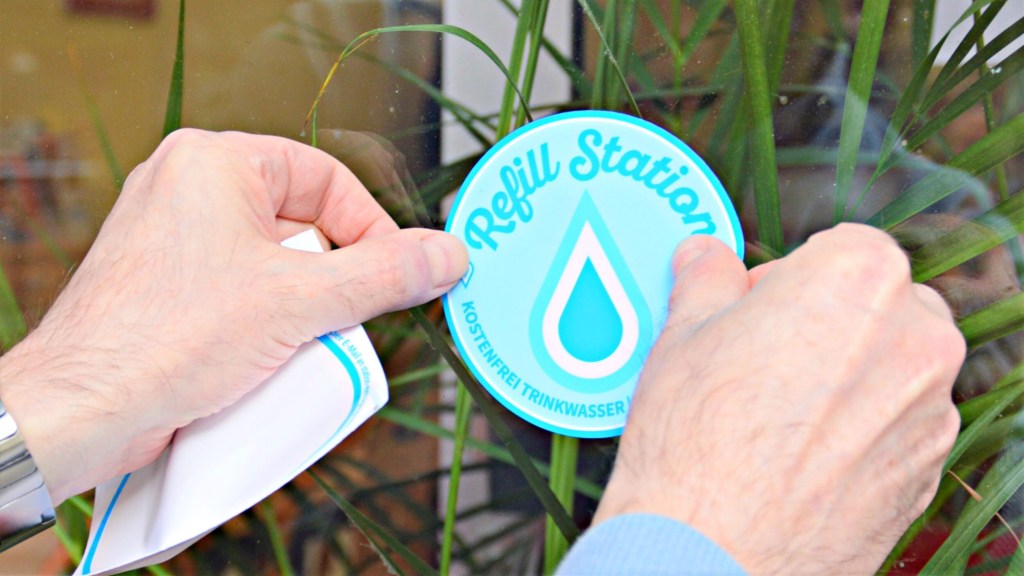
If you prefer to keep things both legal and virtuous, check out Refill Deutschland. Their blue droplet stickers mark cafés and shops happy to refill your bottle. It’s a lovely idea, but we didn’t spot a single sticker along our 600 km route through Germany.

And if all else fails—and you really can’t bring yourself to buy bottled water—there’s always beer. Or Sekt, Germany’s answer to Prosecco, for those who prefer bubbles without hops. But be warned: if you confess to not liking beer, every publican has a local brew they’re sure will change your mind.
Austrian Waters (and Paths) of Change?
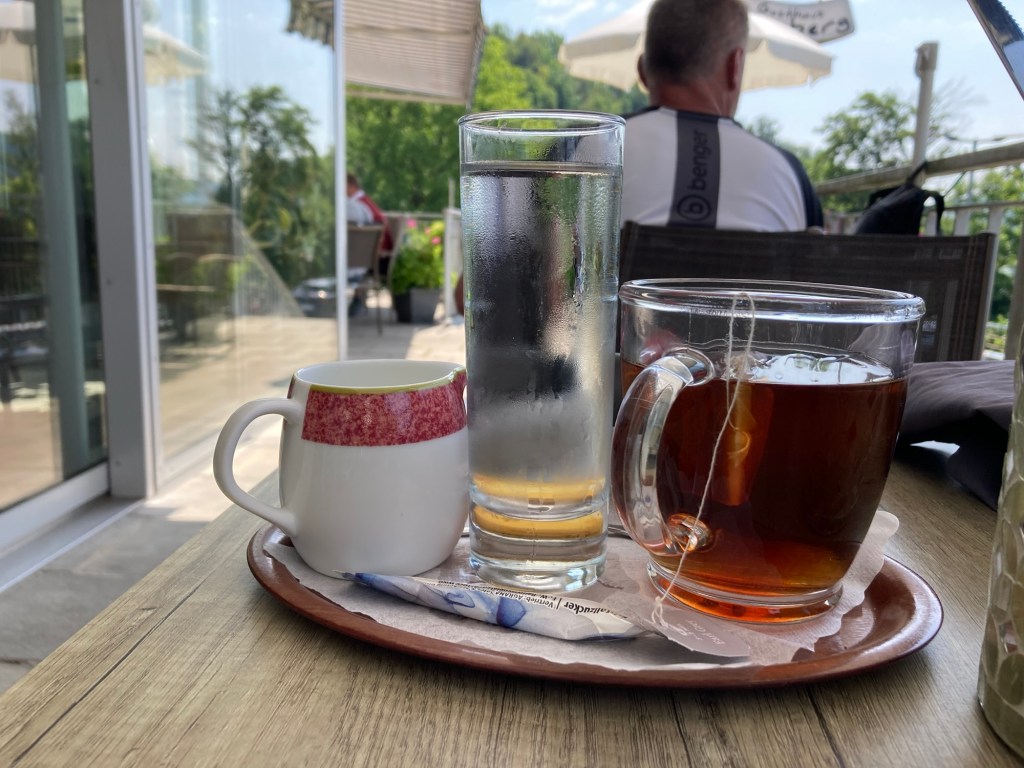
Cross into Austria, and suddenly your coffee comes with a glass of water—unbidden. Ask for tap water with your meal and, often a cool carafe appears with no fuss—sometimes even at no charge. At other times, there’s a modest service fee: we’ve paid between €0.50 and €1.50 over the last couple of days.

A Syrian restaurateur in Linz explained patiently: “Tap water here is high in calcium, so we filter and chill it for our guests.” And so, they charge €1.50 per large glass—perfectly understandable, and refreshingly free of the environmental toll that comes with bottled water.
Now, having cycled about 120 kilometres since crossing the border into Austria—I also find myself starting to revise my previous effusive assessment of Germany’s cycle paths. They are, of course, superb. But Austria… might be even better?
So far, the Austrian path seems free of baffling excess of route options that can some times be too much of a good thing for the novice. We never quite got the hang of road signs in Germany, even after 600 kms. Case in point: leaving Passau (our final German town), we aimed for the popular ‘Austrian’ side of the Danube—only to find ourselves on what looked like a prehistoric staircase, not a cycle path.

Cycle Sidekick (CS), who is this team’s official map-whisperer, swears blind he didn’t make a wrong turn. You can make your own judgment from the visual evidence provided.
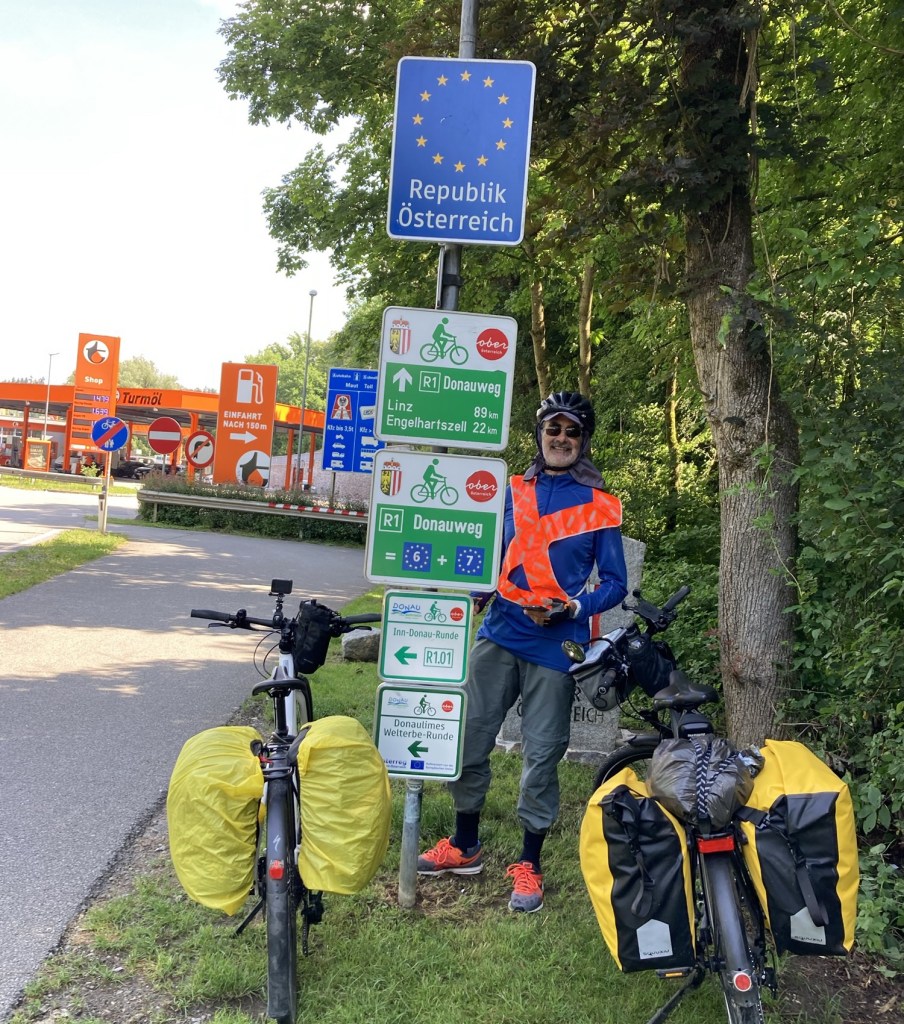
Happily, ten minutes later we were on the official route— less happily, we were almost immediately swamped by a blur of super fast road cyclists in full flight and determined packs of tourists on rented e-bikes, who seemed more aware of their rights then their responsibility (I will restrain myself from speculating on their nationality). If you can survive the next 20 minutes while everyone overtakes you, you are in Austria.
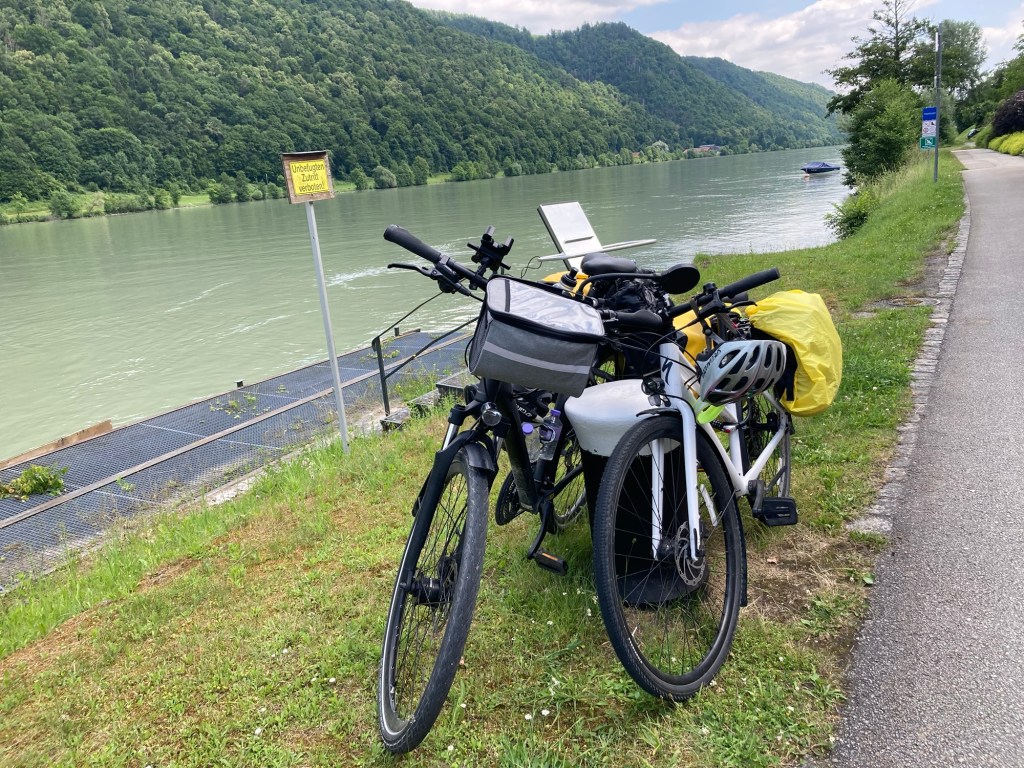
From the border to Linz, the EuroVelo 6 has been gloriously smooth, immaculately signposted (with R1 and arrows), and so far no diversions, and not a single patch of path dug up in the name of improvement. The Passau to Vienna section is said to be the most popular long-distance bike path in Europe, and I can absolutely see why.
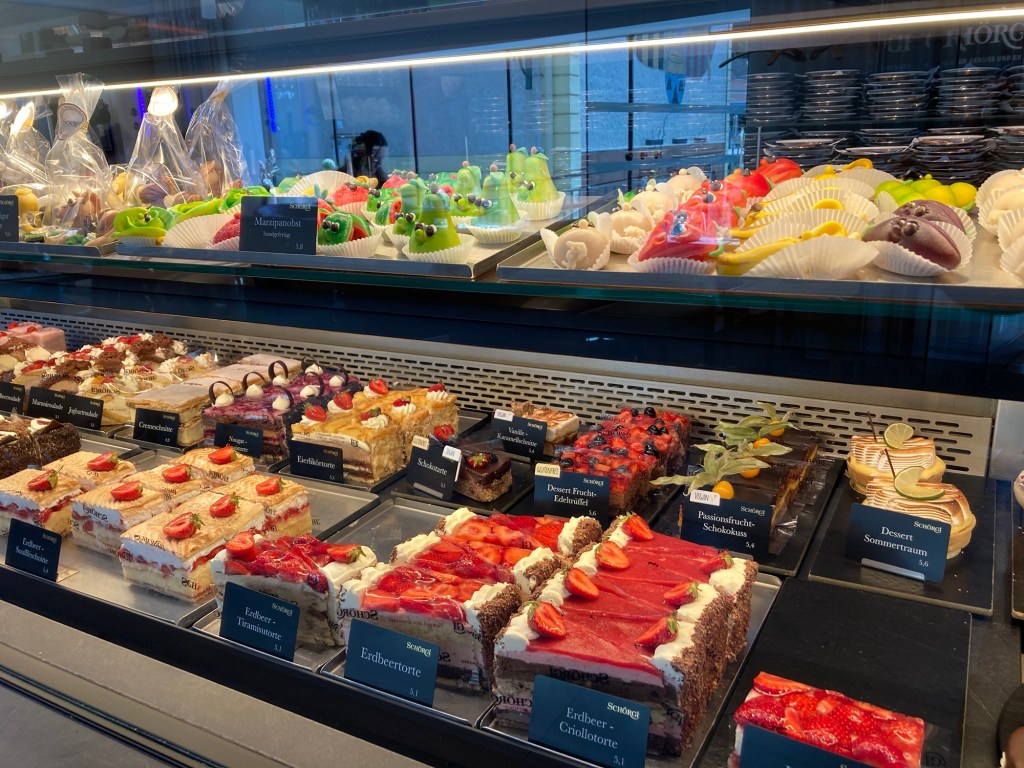
So, as we ride toward Vienna, the “City of Dreams,” through the land of schnitzel, strudel, and Sachertorte, I wonder—could this be the best country to start baking your cycle-touring dreams into a sweet reality?
 Reading the Road