
Having waxed lyrical (perhaps a touch prematurely) about the sublime cycling infrastructure in Austria, I feel obliged to offer a gentle coda from the country’s eastern frontier. Austria still ranks as a cycling paradise—but as we pedalled east out of Vienna toward Slovakia, a few cracks appeared. Some metaphorical. Some distinctly under our wheels.
The exit from Vienna, heading east, along the north bank of the Danube, is mostly pretty, but less poetic than the approach to the city from the west. At one point the paths through leafy parklands and mellow suburbs fall away and the official cycle route marches you out through a couple of kilometres of industrial estate.
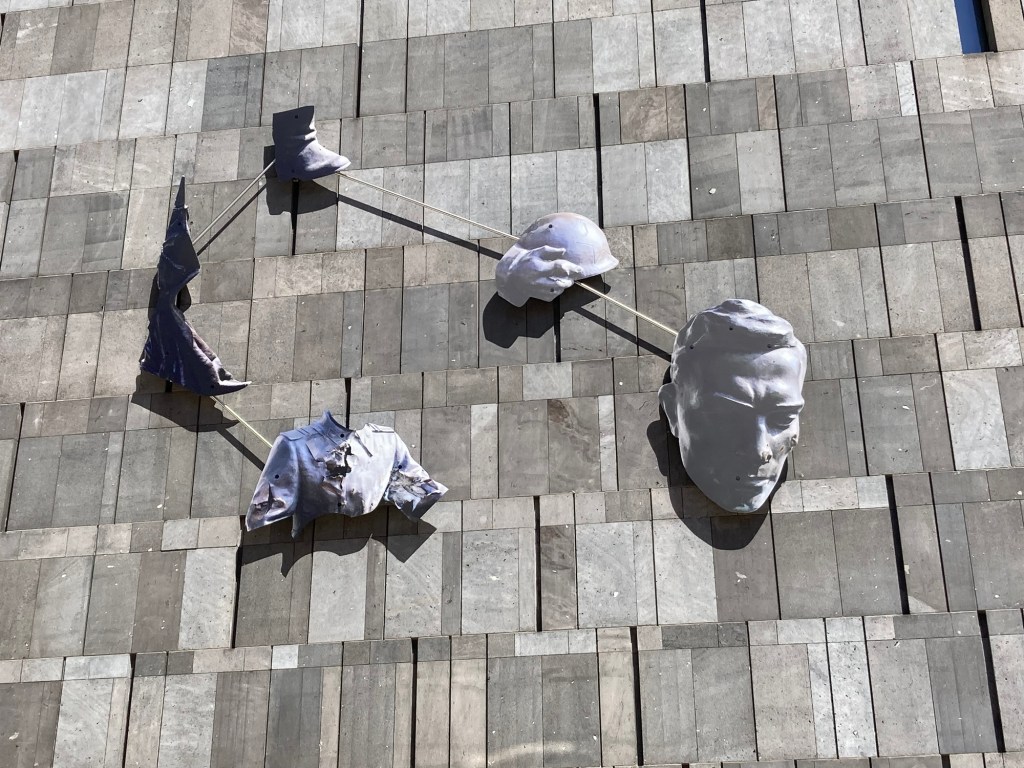
After Vienna, the path was quiet. The tour groups on bicycles completely vanished. In some ten kilometres through the Donau-Auen’s picture-postcard scenery we counted just three cyclists.

Our plan was to cross to the southern bank by ferry at Orth and overnight in Petronell. Why Petronell? Because the stretch from there to Hainburg is lined with Roman ruins—and Cycling Sidekick (CS) has a thing for antiquity.
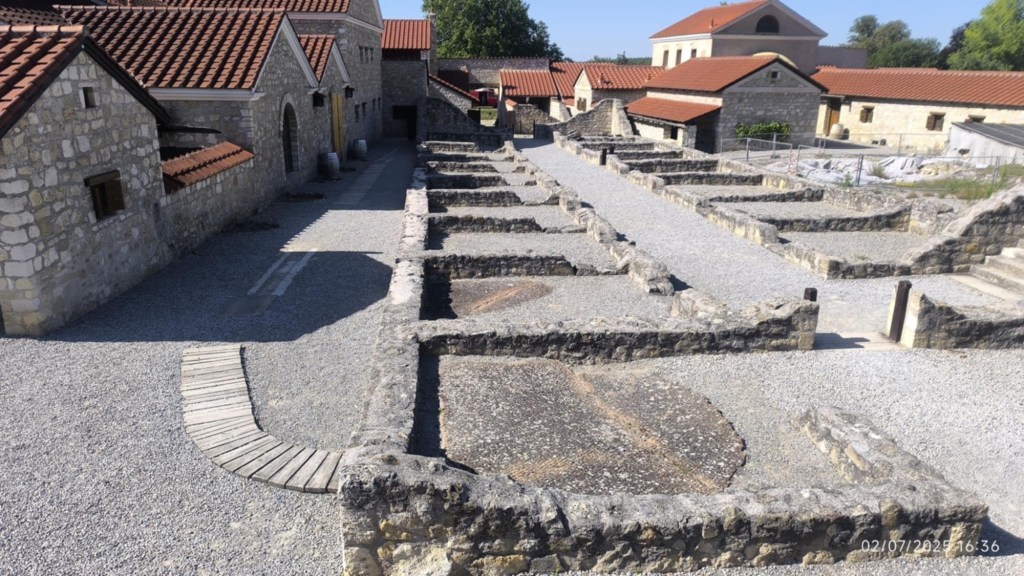
This stretch is home to Carnuntum, once the capital of the Roman province of Pannonia Superior. A few kilometres further, there’s a museum at Bad Deutsch-Altenburg and, just beyond that, a medieval castle perched on a hill above Hainburg.

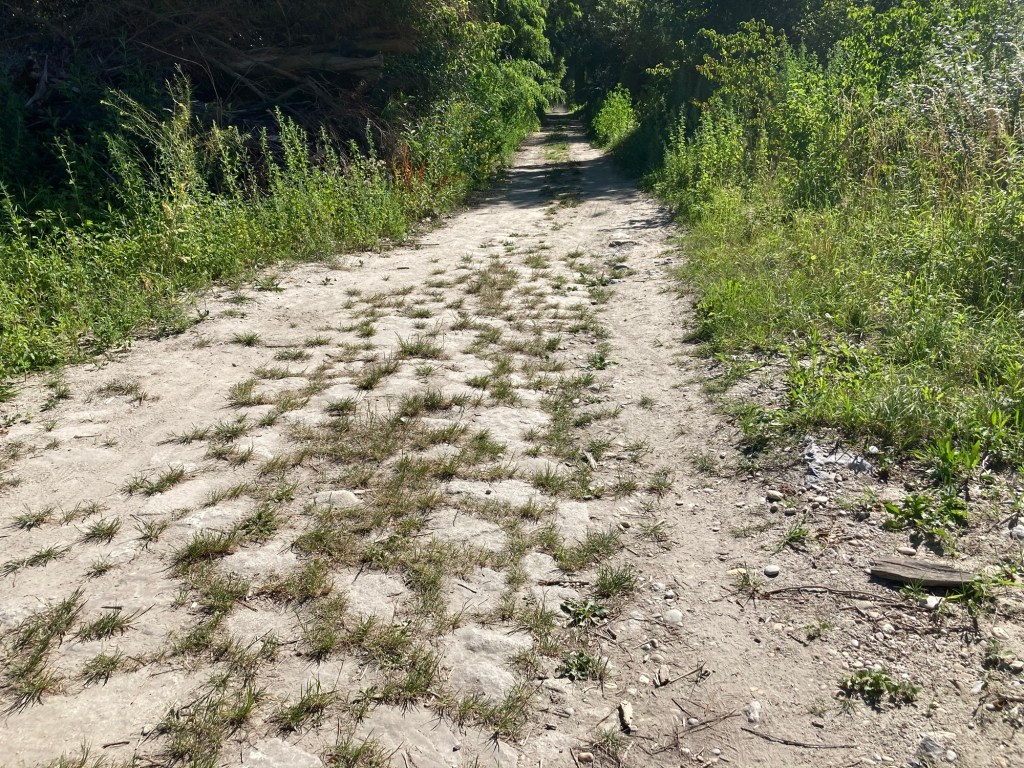
It was a good plan. But then came the ferry crossing, which dropped us off on a pile of pebbles, which was followed by mud, then broken cobblestones bedded into yet more mud (see photo of muddy track above). No signposts. No tarmac. No clue about how to reach the nearby village of Haslau, where we hoped to reunite with EV6 signage and a decent road surface.
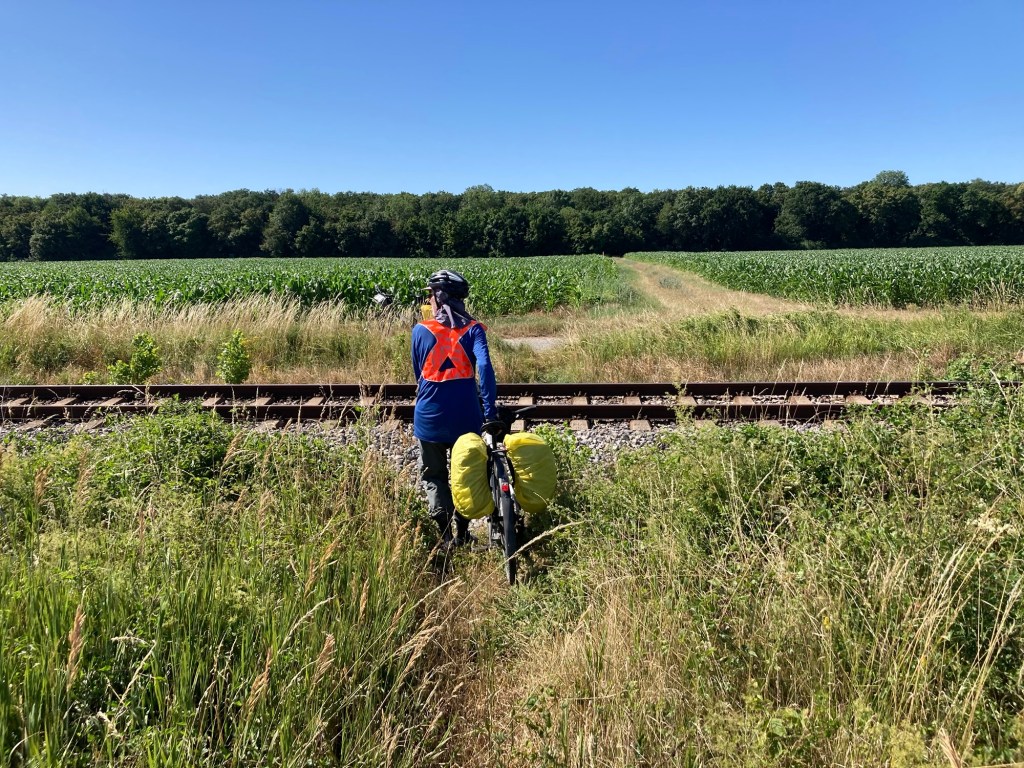
We did find Haslau soon enough. But only after dodging highway traffic, leaping over railway tracks, and a good dose of guesswork did we finally rejoin the EuroVelo 6, just when it appeared to be doubling as a tractor road.

Eventually, after a few more missed steps through grassy tracks, the familiar signage reappeared, assuring us that yes, this really was still the EV6—and yes, we were still in Austria. But this part of the track was not the silky-smooth ribbons of asphalt we’d come to expect all the way from Passau to Vienna.

Patchy surfaces continued until just past Hainburg, where the cycle path was restored to its high Austrian standard, eventually delivering us smoothly across the almost invisible border into Slovakia.
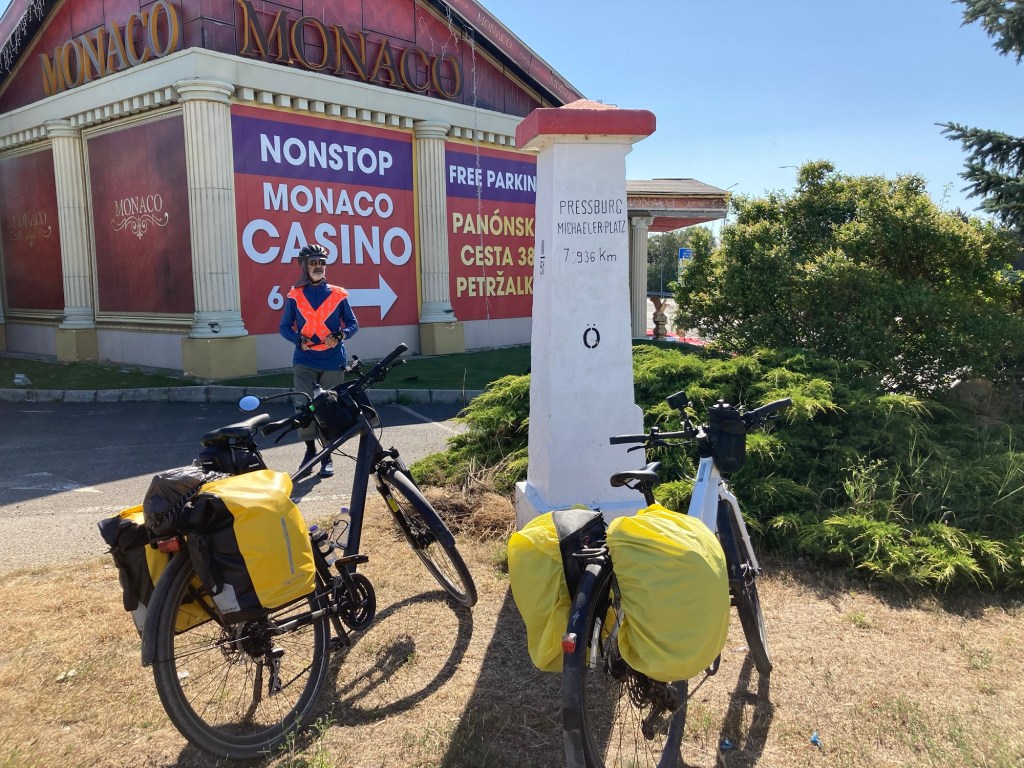
Bratislava shimmered in the distance, and with it the promise of an air-conditioned hotel room—before the mercury hit the forecast 37°C.
Austria may still wear the crown for top-tier cycling infrastructure, but summer riding here isn’t for those of us who get easily overheated. Much as I love being out on my bike, I also like to end the day in a room where the air moves—preferably on demand. That’s not something to take for granted in rural Austria, where charming small inns in historic buildings lack air conditioning and no one has heard of an electric fan. Even in our Vienna hotel, the cooling system seemed less than a match for the afternoon heat.

Historically, Austria probably hasn’t needed much indoor cooling. But temperatures here have risen by as much as three degrees since 1900—and they are rising faster than in much of the rest of Europe. Understandably, most hotels weren’t built for this new heat.

However, an Irish friend who’s lived in Vienna for over a decade offered a more culturally nuanced explanation for the lack of even a table fan in most places. “You can’t have fans,” he said, “because they create Luftzug—a draft that invades your body, causing aches, pains, colds….”
Growing up in urban India, where ceiling fans are ubiquitous, I first encountered draft-anxiety 45 years ago, in tropical Indonesia, of all places! All over sweltering Java turning on an electric fan or opening the window of a packed bus, brought howls of protest—“kena masuk angin, loh!” “The wind will get into you.” (Though these days, urban Indonesia has fully embraced air-conditioning.)
As a young researcher, I learnt to respect cultural codes. But as a mature-aged sweaty cyclist I prefer room-ventilation to be unconstrained by cultural considerations.
So, Slovakia came as a relief, just as summer heat reached into the high-30s. Four hotels booked ahead, including two in tiny hamlets—and every single one has promised either air conditioning or a functional fan!
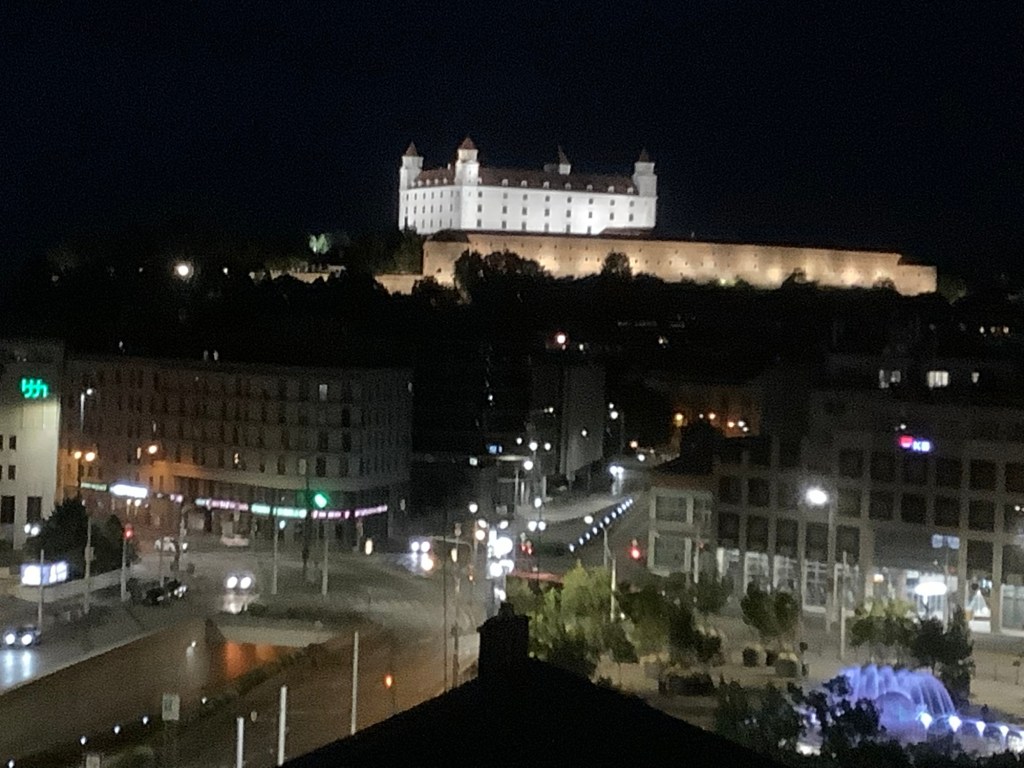
In the end, my affection for Austria remains. But let’s just say we’ve entered into a more realistic understanding. I’ve seen the mud and felt the sweat, and decided that we can only be fair-weather friends.
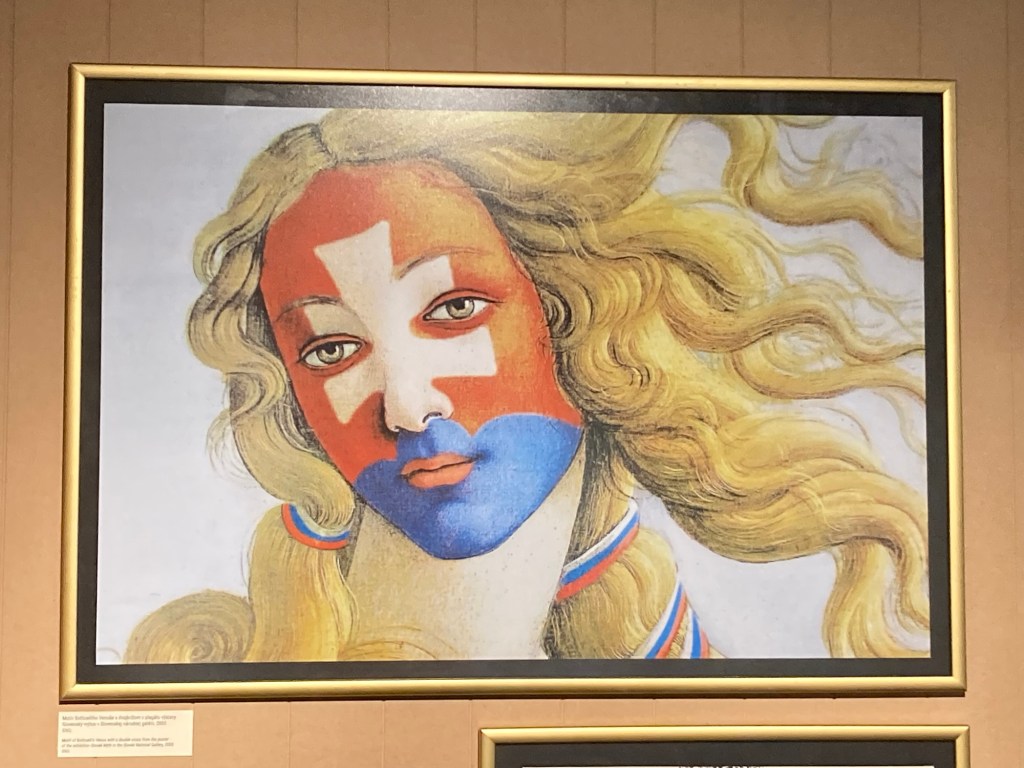
So far, Slovakia is looking cool and refreshing, with a few additional bonuses like much cheaper food and accommodation. Best of all, entry to the charming Museum of History in Bratislava is FREE for those who remember times when travel meant paper tickets and post-cards not google maps and selfies!
And now, we pedal east, out of the capital Bratislava, into the countryside, wondering how smooth the ride will be…
 Reading the Road