There are Champagne party signs all over Bar-sur-Aube and neighbouring villages.

But your senses can feel a change on the way. Jacques (henceforth J) with whom a friendship was forged on another long walk, in the south of France (Camino Le Puy) has joined us in Bar-sur-Aube. He says the best champagnes are already behind us.
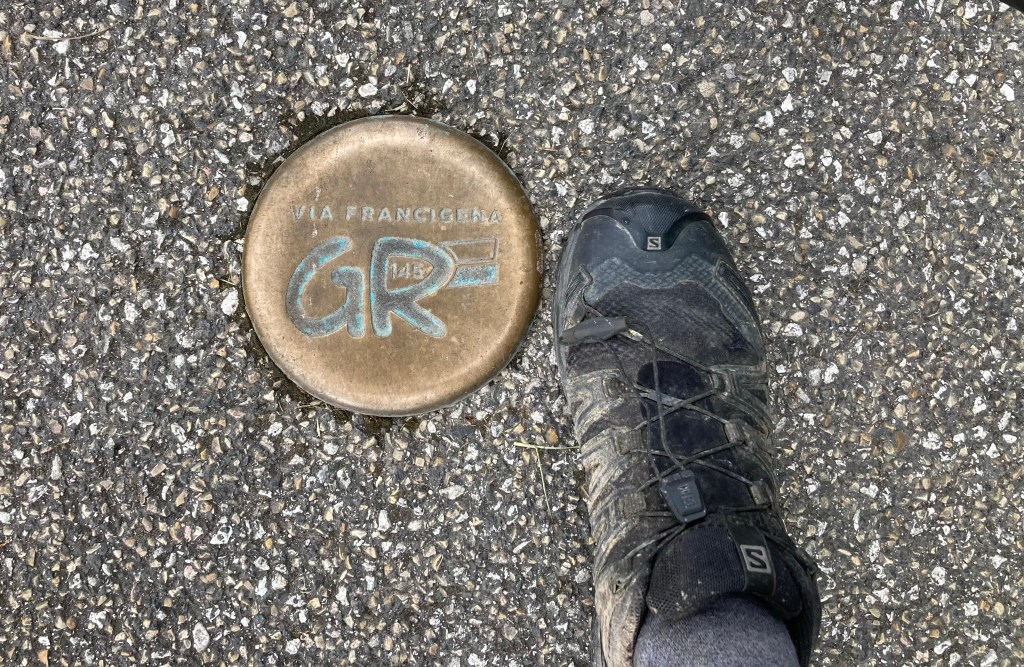
Even to my untrained pallet, the local wines and bubblies (and I try at least one local product daily, out of a sense of political correctness of course!) from around Bar-sur-Aube feel a little heavier while under my well-worn boots the roads are getting hillier.
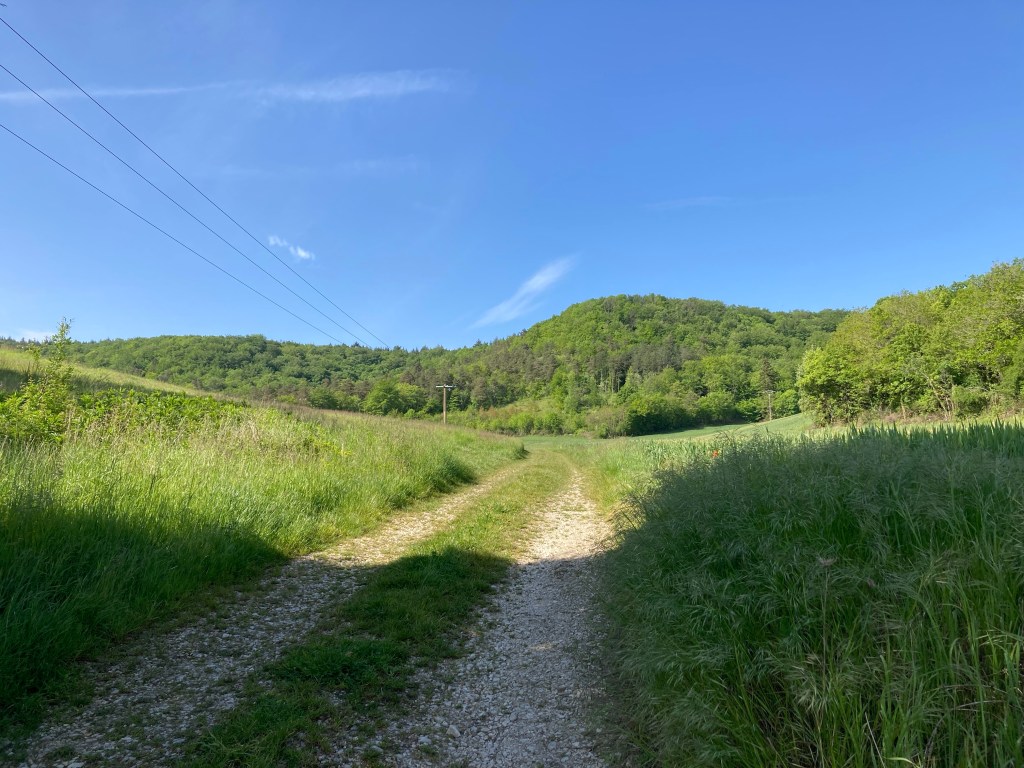
In inept hands such as mine, the camera fails to record these ups and downs as little more than molehills. But at the end of a day, after 20 kms or so, a 100 meter climb across that final half kilometre, off-track into your night’s accommodation in Saint-Ciergues, definitely feels like a mountain.
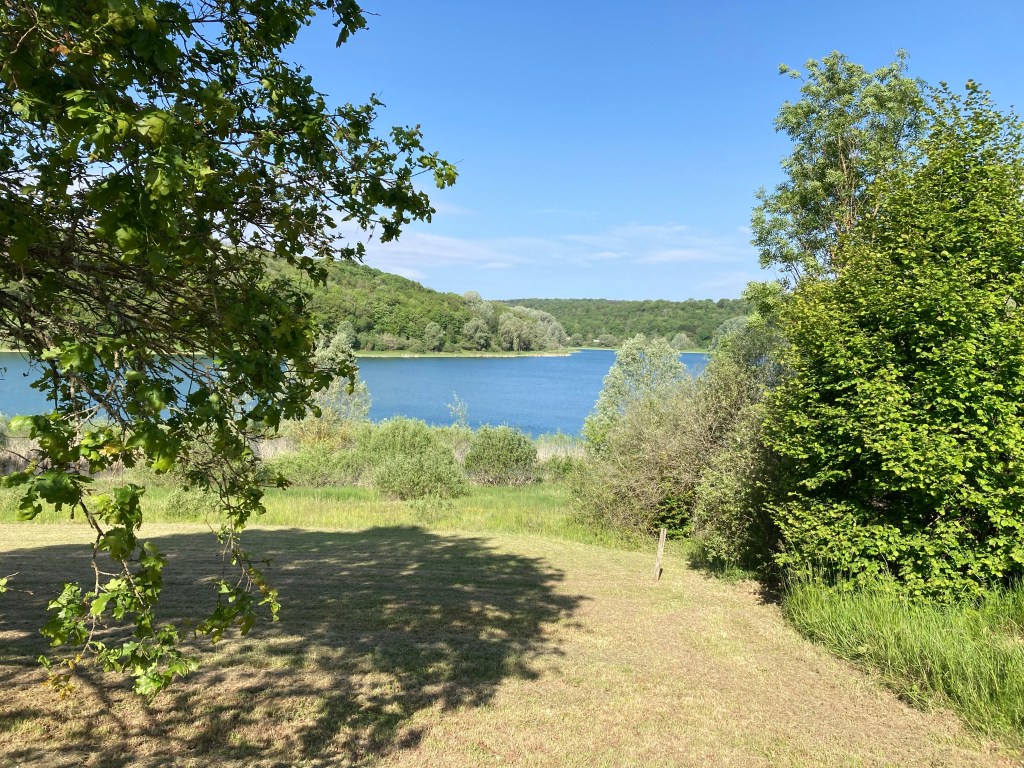
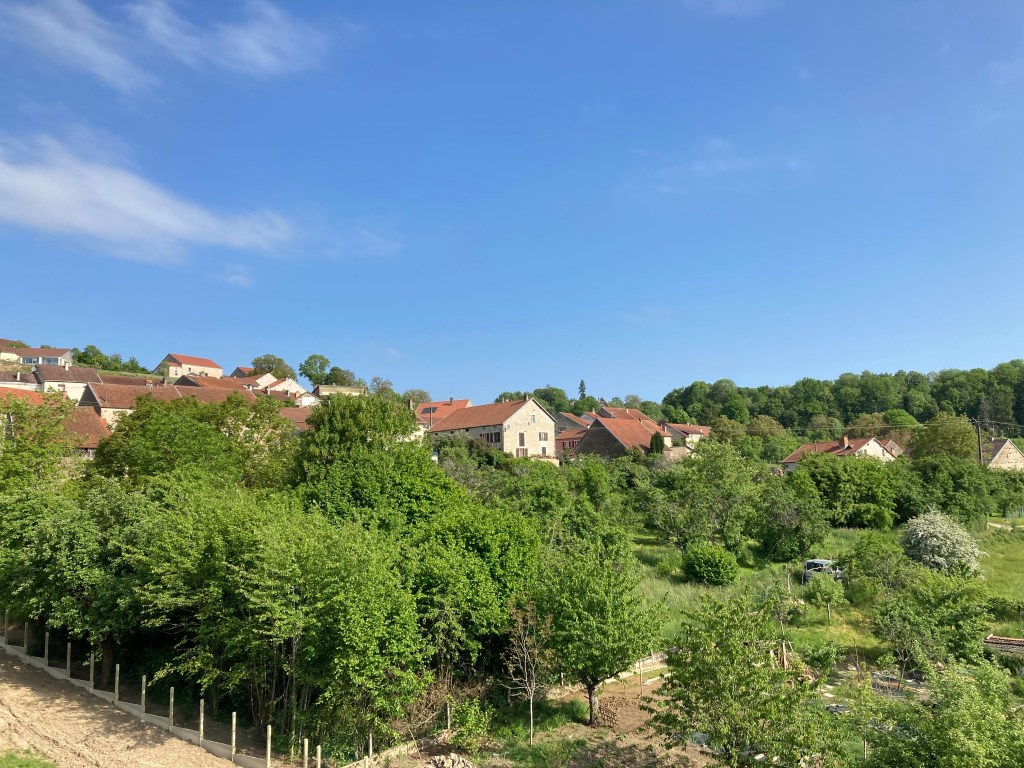
From Saint-Ciergues down to the Reservoir La Mouche, which supplies drinking water to the surrounding districts and up the next rise, the views are just as breath-taking.

Fortunately, from Saint-Ciergues to the walled city of Langres is a very short walk, but its’ picture-postcard appeal slows down our progress considerably by forcing yours truly to stop every few steps (how else is she going to share all this with you?).

A final heart-stopping climb (mercifully short) brings you to the magnificent city of Langres, with three and a half kilometres of ramparts, opening out with 7 gates, one of them from the first century BC.

Its’ cathedral roof is like nothing we have ever seen in the hundreds of buildings we have photographed over the years, on our more than one thousand kilometres of pilgrim walks in France.

French fellow-walker, the extremely erudite J, explains it is a kind of tile roofing common in Bourgogne/Burgundy.
In Langres, we are indeed at the cross-roads. We are still in Champagne but edging into Bourgogne. Over the last few days the vineyards have given way to dairy farms – Fromage Langres is on the menu.
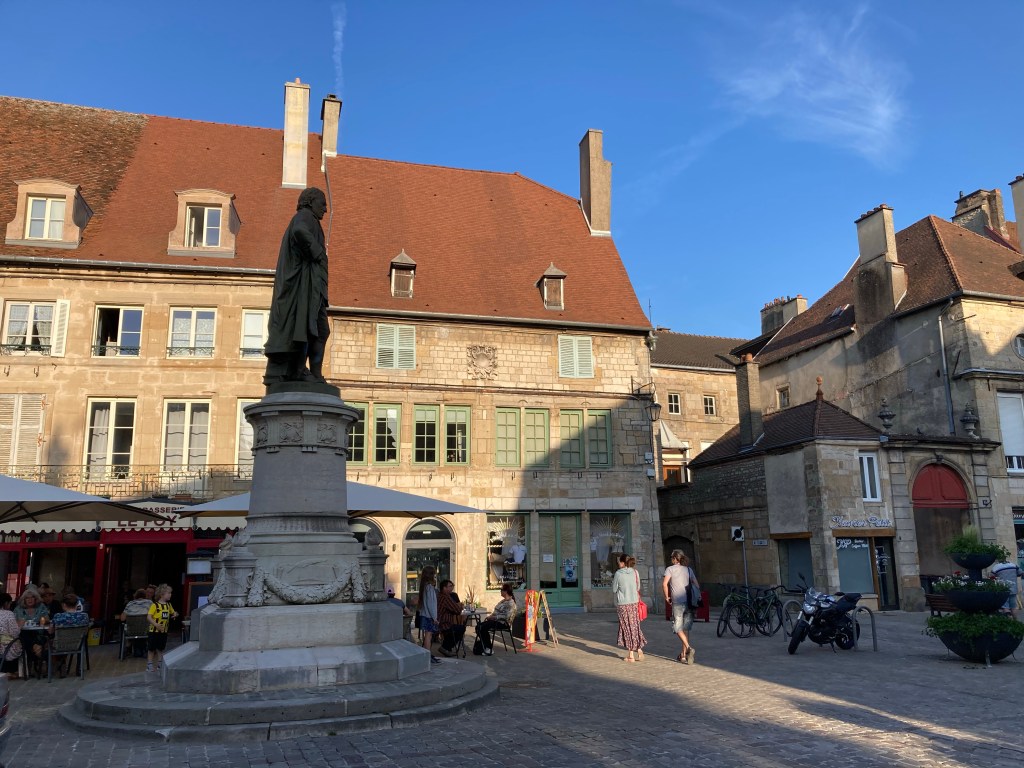
The city is the birthplace of Diderot, one of the most radical 18th century philosophers, who argued vociferously against the church. His name everywhere, from streets to boulangeries. So J is a little mystified to find that the city has more than usual number of Catholic schools.
Most famously, the city contains the intersection of 12 Roman roads, some leading to that other destination of the modern pilgrim, Santiago de Compostela.
For a week now, roads to Santiago have crossed our path, tormenting me with a nostalgia for that past-perfect hike – reminding me of all the highs, the warmth, the laughter, tempting me to take one wrong turn and head for that other place – somewhere you have been before, a place that in your memory has become a comfort-zone.
But the Jura mountains, the mountains of the Jurassic times, are just ahead of us. You would not have walked 700 kilometres on a new road (well, new to you) to trade in the possibility of the new and the ‘might-be’ for what your mind has retrospectively remade as warm and fuzzy. As every hiker knows (or at least has to believe😊) the challenge of a climb, the surprise at every turn, the adrenaline when you reach the top, is the miracle that makes your water taste just as good as the finest wine!
 Reading the Road