Danube Cycle: the final spin

Budapest is the perfect place to end your Danube ride — scenic, grand, and with the Buda Castle practically built for selfies. But cycling into the city in the middle of a weekday feels more like a survival challenge: dodging potholes, trucks, and a variety of other motorised machines.

Buda Castle: Fisherman’s Bastian selfie-setting

Let’s backtrack to Bratislava, where the last blog left off.
Gabcikovo Dam: Cruising times on Slovak cycle paths

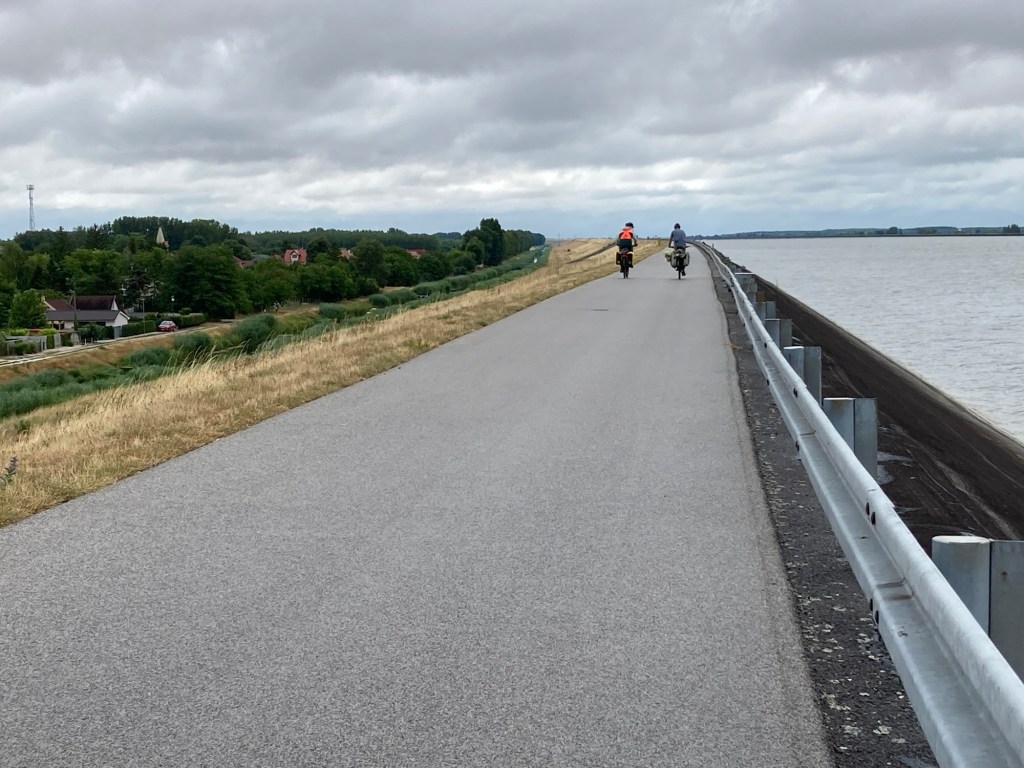
The collective wisdom of the cycling community says that as you head east of Bratislava on the EuroVelo 6, both the path and the traffic get worse. While broadly true, the experience is less a steady slide into chaos and more of an erratic patchwork — mostly you’re cruising, interspersed with (thankfully, brief) periods of handle-bar clenching anxiety.

No, we are not lost or off-track

Choosing your route is part strategy, part luck as any guidebook or route map becomes outdated quickly, as upgrades and diversions happen on both sides of the Danube — in Slovakia and Hungary.
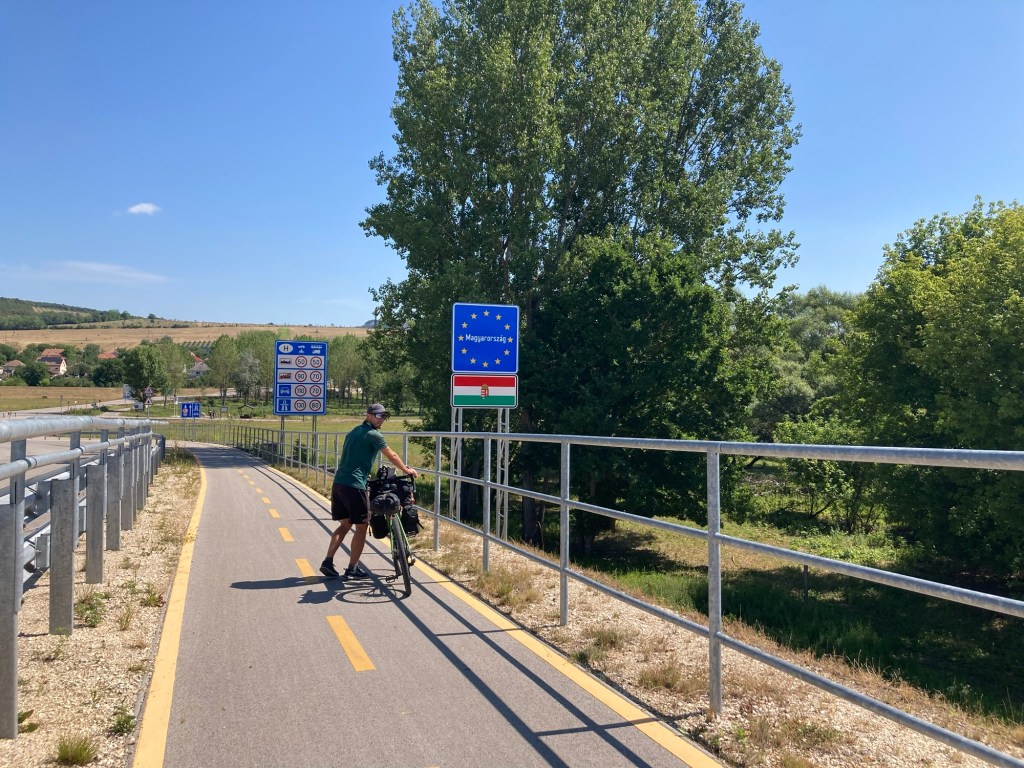
Ipoly bridge with a perfect cycle path was only opened in 2024

Our first foray into Hungary — across the bridge from Komárno (Slovakia) to Komárom (Hungary) — was brief and traumatic. That bridge was not built with cyclists in mind, unless the goal was to weed out the faint-hearted. We promptly retreated and stayed on the Slovak side for as long as we could.
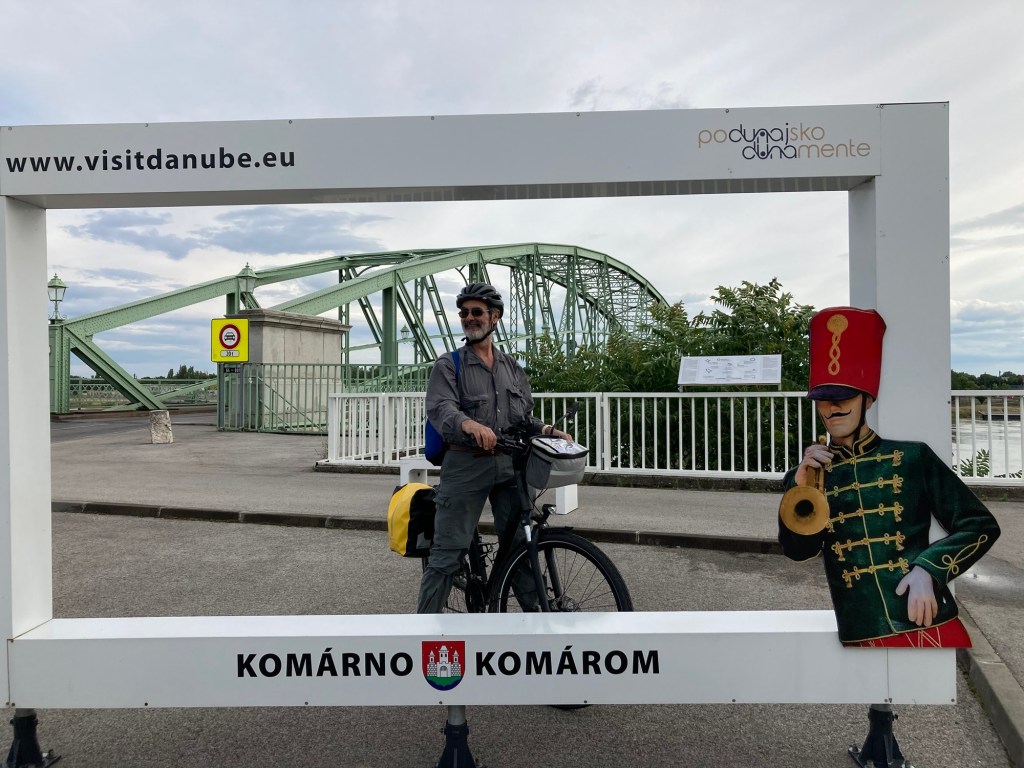
Komarno: On the Slovak side of the Bridge
The bridge from the Hungarian side

The route we followed — over 300 kilometres through Slovakia — was mostly on flood levees: easy riding, low traffic. Signage is minimal, but there’s little risk of getting lost. There isn’t much spectacular scenery to distract you, and any deviation from the levee quickly lands you on potholed back roads or highways crammed with impatient motor vehicles. Self-preservation has a way of focusing the mind.

Smooth and pleasant, but hardly spectacular

Štúrovo, our final stop in Slovakia, is unlikely to feature in many tourist brochures. Just across the Danube, its glamorous Hungarian twin, Esztergom, boasts domes, spires, and postcard charm. The vast grey-green dome of the basilica (colour-matched to the Danube?) pulls in tourists on riverboats named after English poets!

The magnificent Esztergom basilica

Štúrovo’s only drawcards are its budget hotels and the wonderful view of Esztergom castle as you cycle in — though the town could be vastly improved if it simply learnt to put its skeletons in cupboards, instead of leaving them strewn along the main street.

Sturovo: death by street art?

Shortly after Štúrovo, the EV6 veers onto main roads for several tense kilometres. And then — miraculously — a perfectly sealed cycleway reappears just before the new Ipolydamásd Bridge, marking the border into Hungary. We missed the cycleway on the bridge, as did the bemused Frenchman on his way to the Black Sea, whom I ran into while backtracking to photograph the “Hungary” sign.
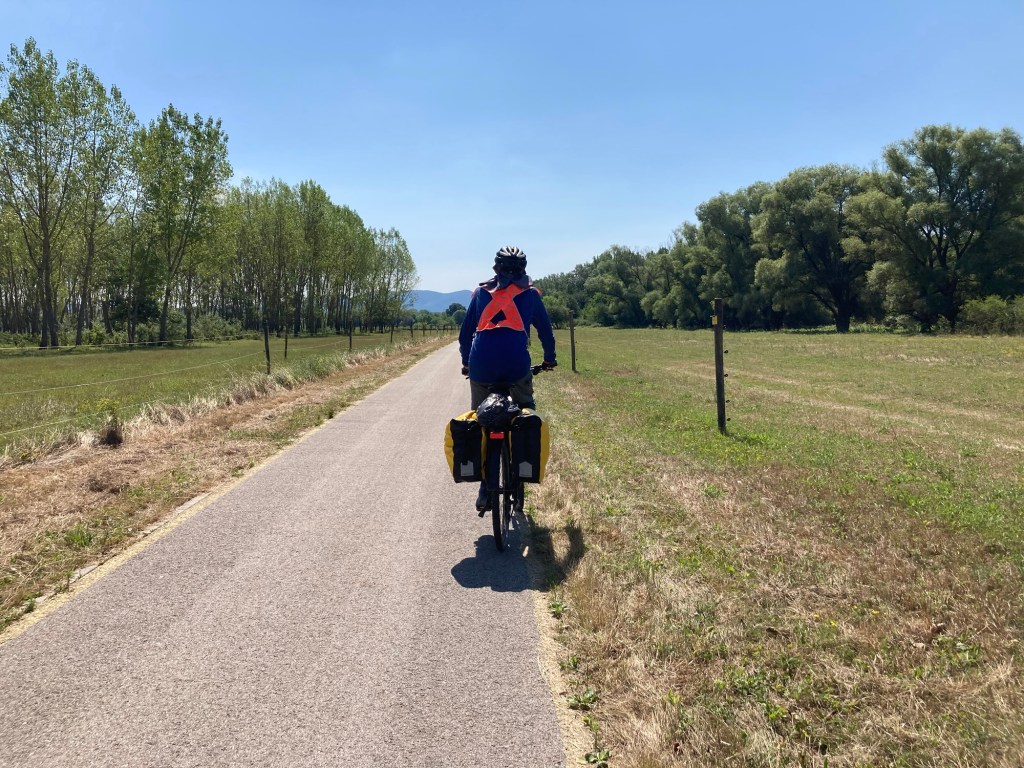
Perfect! Could it possibly go all the way, nearly 70 kms, to Budapest?

While we were fumbling with phone maps, the Swedish Cyclist swung in, oozing local knowledge. Yes, he assured us, we were on the right path, and yes, it would take us straight into Budapest.
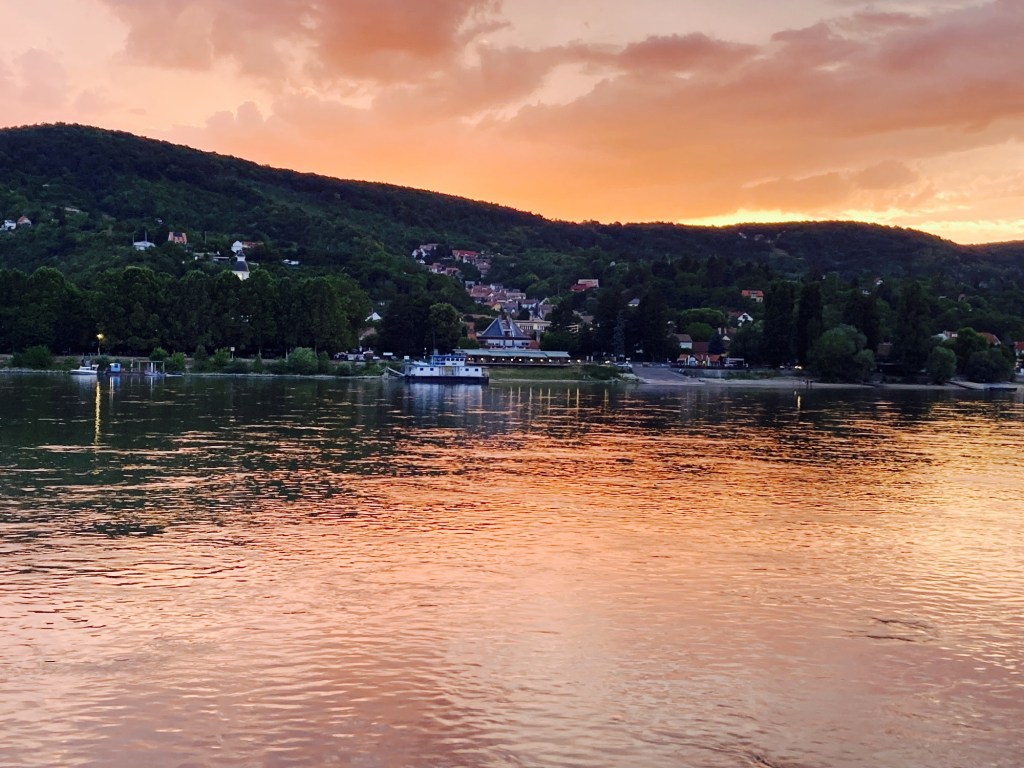
Visegrad: sunset on the Danube

We didn’t quite follow his advice. Instead, we crossed the river again to visit the historic town of Visegrád – our first overnight stop in Hungary. It has the works: river, hilltop castle, stunning views from our boat-hotel.

Ferry crossing from Visegrad to Nagymaros

Next day, we missed a turn and got lost on Szentendre Island. Luckily, it turned out to be the perfect place to get lost: we met an English-speaking chef who not only guided us to the ferry but also gave us a list of must-try Hungarian foods, which we dutifully did as soon as we got into town!

Trying our first Langos in Szentendre

Eventually, trusting in the Swedish cyclist’s ‘local knowledge’ of Hungary, we rejoined the smooth, well-marked path toward Budapest. It was perfect — until it wasn’t. About 10 kilometres before the city, the route dissolved into an industrial hinterland where potholes ruled both road and pavement, and trucks roared by uncomfortably close. The “cycle path” seemed to be whatever flat surface you could ride on. We saw just two other cyclists in this stretch, both carrying what appeared to be the detritus of their lives: bikes festooned with ripped plastic bags, bulging with cans, bottles and rags. It was a throwback to my childhood in Delhi, where adults cycled only if they had no other choice.

Margaret Island: perfectly manicured bushland

The cycle route into Budapest is not well marked. Wth various electronic maps CS (Sidekick) — somewhat miraculously — got us into the peace and shade of Margaret Island, which fully earns its title as the Lungs of Budapest. Our sigh of relief was short-lived. A final dash through traffic on busy main roads, where some drivers seemed unaware that cycle lanes are meant only for cycles, brought us to Budapest city centre— and the end of our journey.

Budapest traffic: shot from the security of our hotel window

1,300 kilometres from the source of the Danube, in 38 cycling days — more if you count sightseeing on rest days, and more still if you count the times we got lost and had to retrace our steps. But who’s counting?
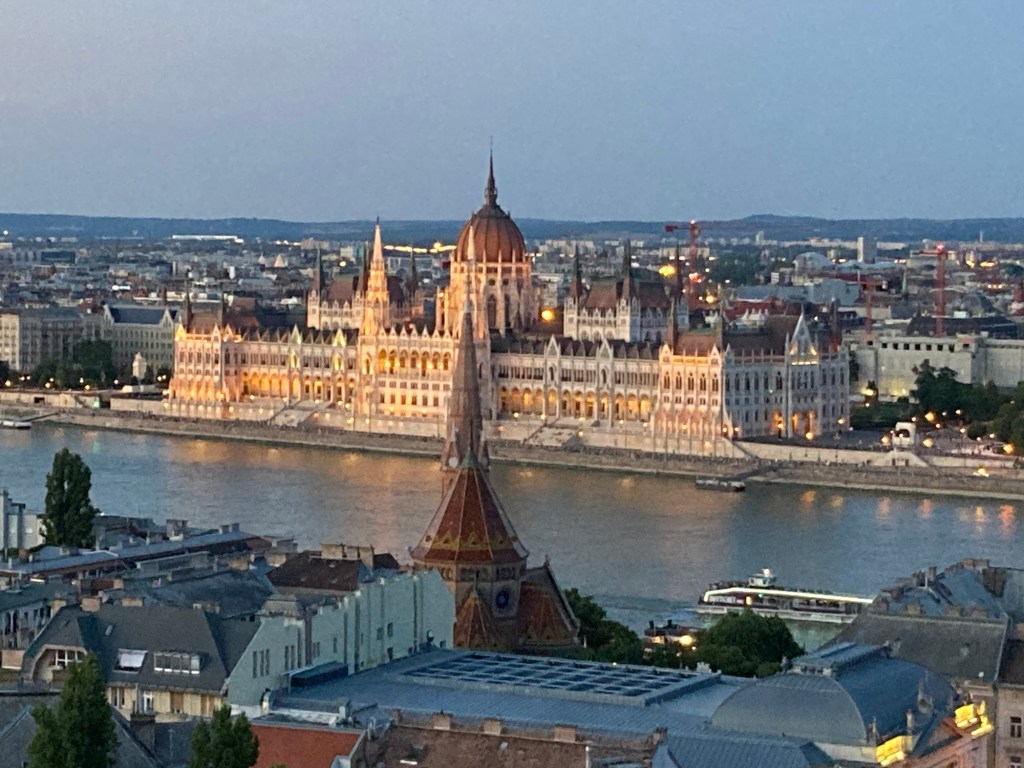
Budapest parliament building: largest in Europe

It feels good to have completed our first-ever long-distance ride at 70. Proves you can indeed teach old dogs new tricks.

And now, the Awards:

BEST WILDLIFE: Germany
EASIEST PLACE TO CYCLE: Austria
BEST FOR 70+ TRAVELLERS: Slovakia (free museum entry)
BEST FOOD FOR HOT CYCLISTS: Hungary (Fruit soup)

And we have just started planning our next cycle trip… all suggestions welcome!

Out of Austria, Into Slovakia: More Sweat Than Tears

Having waxed lyrical (perhaps a touch prematurely) about the sublime cycling infrastructure in Austria, I feel obliged to offer a gentle coda from the country’s eastern frontier. Austria still ranks as a cycling paradise—but as we pedalled east out of Vienna toward Slovakia, a few cracks appeared. Some metaphorical. Some distinctly under our wheels.

Cracks on road after river crossing: story below

The exit from Vienna, heading east, along the north bank of the Danube, is mostly pretty, but less poetic than the approach to the city from the west. At one point the paths through leafy parklands and mellow suburbs fall away and the official cycle route marches you out through a couple of kilometres of industrial estate.

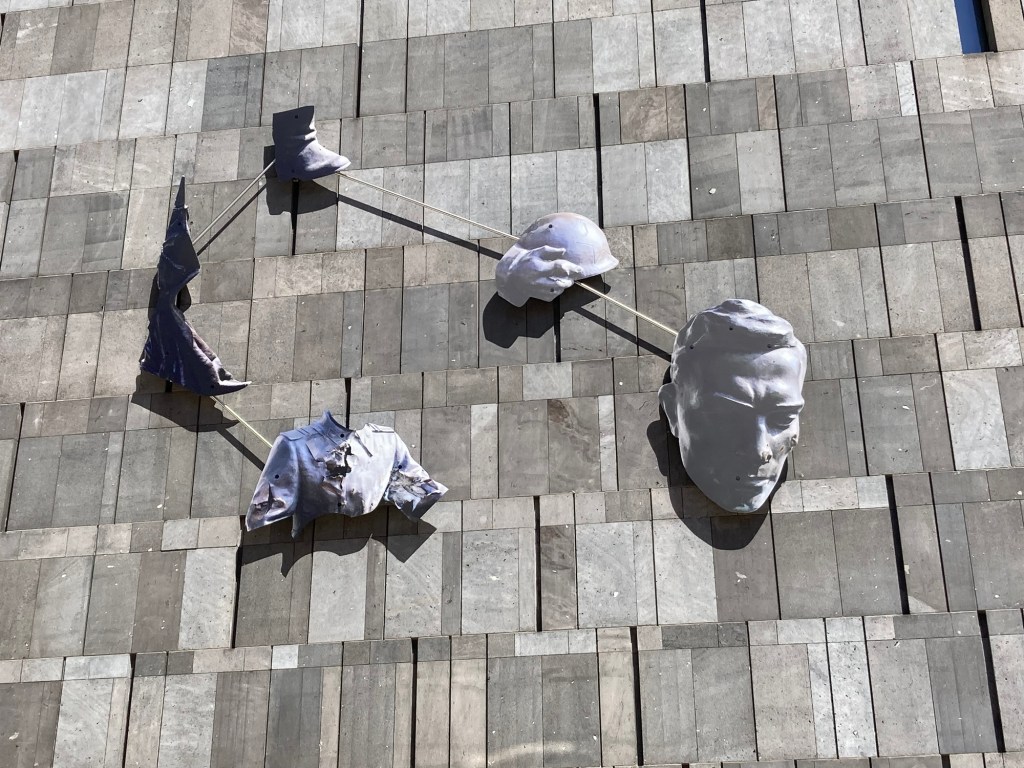
Museum Quarter, Vienna, could have spent many more days there

After Vienna, the path was quiet. The tour groups on bicycles completely vanished. In some ten kilometres through the Donau-Auen’s picture-postcard scenery we counted just three cyclists.

Donau-Auen National Park: not one tour group in sight

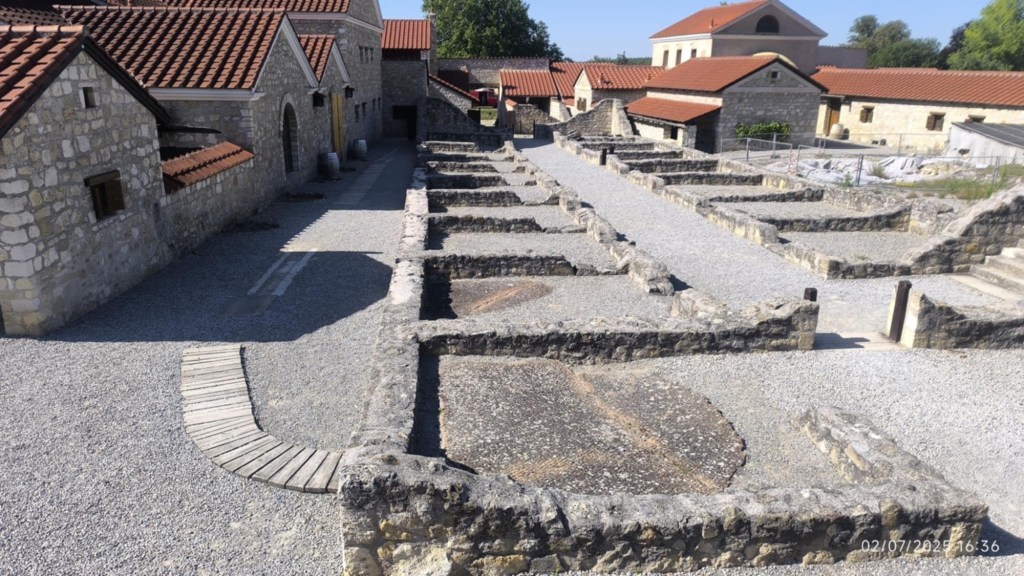
Our plan was to cross to the southern bank by ferry at Orth and overnight in Petronell. Why Petronell? Because the stretch from there to Hainburg is lined with Roman ruins—and Cycling Sidekick (CS) has a thing for antiquity.

Reconstructed Roman village in Petronell: photo by CS

This stretch is home to Carnuntum, once the capital of the Roman province of Pannonia Superior. A few kilometres further, there’s a museum at Bad Deutsch-Altenburg and, just beyond that, a medieval castle perched on a hill above Hainburg.

The ferry: neither formal nor fancy😅

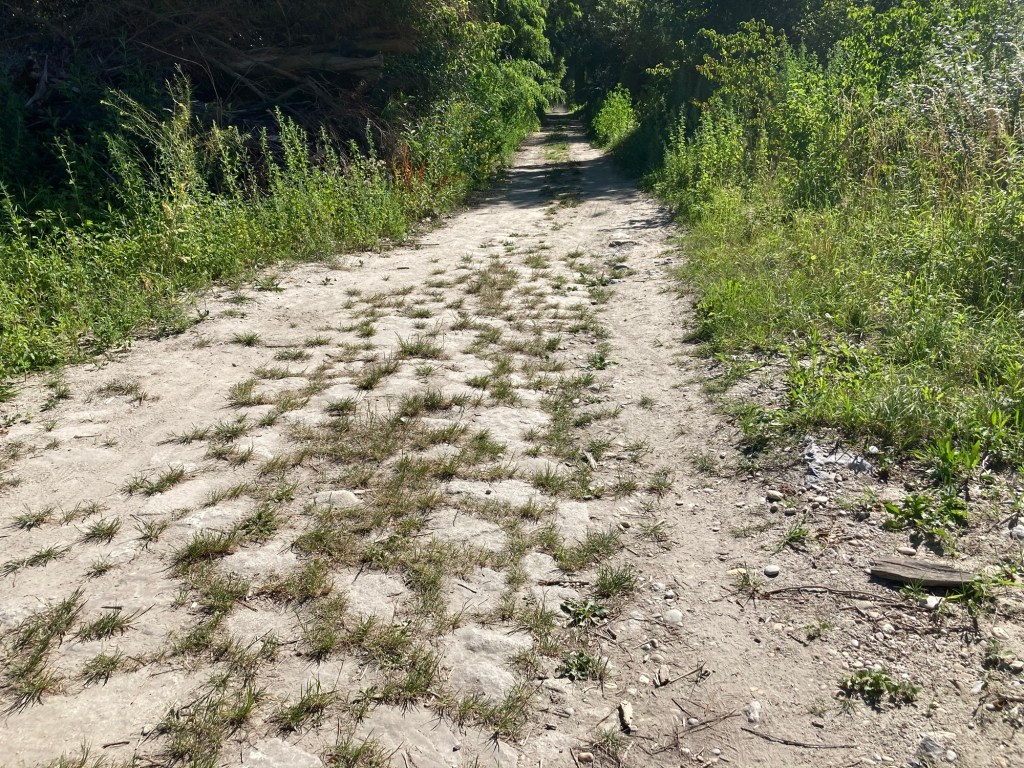
It was a good plan. But then came the ferry crossing, which dropped us off on a pile of pebbles, which was followed by mud, then broken cobblestones bedded into yet more mud (see photo of muddy track above). No signposts. No tarmac. No clue about how to reach the nearby village of Haslau, where we hoped to reunite with EV6 signage and a decent road surface.

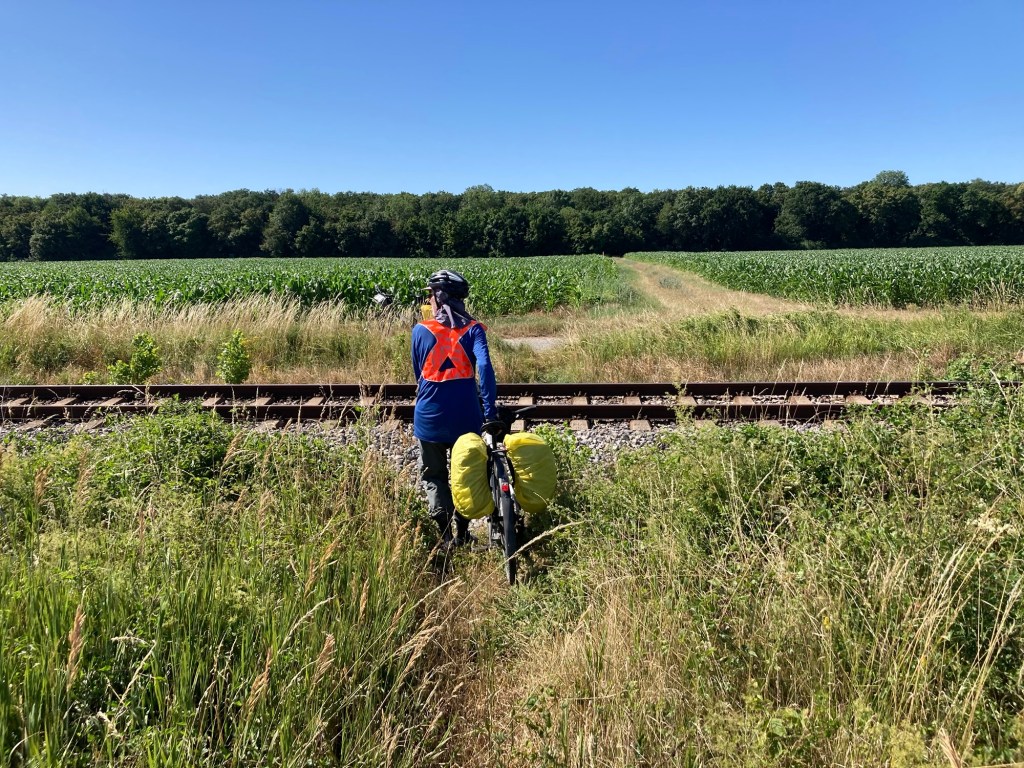
‘To cross or not to cross’

We did find Haslau soon enough. But only after dodging highway traffic, leaping over railway tracks, and a good dose of guesswork did we finally rejoin the EuroVelo 6, just when it appeared to be doubling as a tractor road.

Where EV 6 accommodates tractors?

Eventually, after a few more missed steps through grassy tracks, the familiar signage reappeared, assuring us that yes, this really was still the EV6—and yes, we were still in Austria. But this part of the track was not the silky-smooth ribbons of asphalt we’d come to expect all the way from Passau to Vienna.

Definitely off-track here

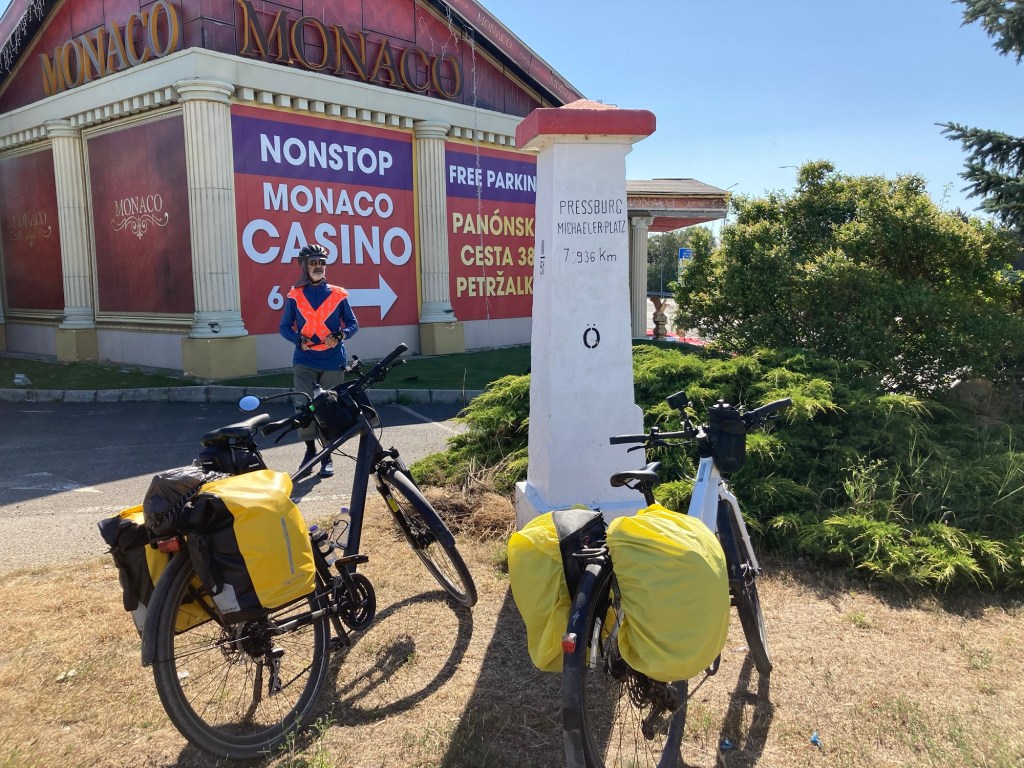
Patchy surfaces continued until just past Hainburg, where the cycle path was restored to its high Austrian standard, eventually delivering us smoothly across the almost invisible border into Slovakia.

Border?

Bratislava shimmered in the distance, and with it the promise of an air-conditioned hotel room—before the mercury hit the forecast 37°C.

Austria may still wear the crown for top-tier cycling infrastructure, but summer riding here isn’t for those of us who get easily overheated. Much as I love being out on my bike, I also like to end the day in a room where the air moves—preferably on demand. That’s not something to take for granted in rural Austria, where charming small inns in historic buildings lack air conditioning and no one has heard of an electric fan. Even in our Vienna hotel, the cooling system seemed less than a match for the afternoon heat.

But kaiserschmarrn at Cafe Mozart, Vienna, is pretty good in any temperature

Historically, Austria probably hasn’t needed much indoor cooling. But temperatures here have risen by as much as three degrees since 1900—and they are rising faster than in much of the rest of Europe. Understandably, most hotels weren’t built for this new heat.

More signs of climate change: flood levels chart, near Hainburg an der Donau

However, an Irish friend who’s lived in Vienna for over a decade offered a more culturally nuanced explanation for the lack of even a table fan in most places. “You can’t have fans,” he said, “because they create Luftzug—a draft that invades your body, causing aches, pains, colds….”

Growing up in urban India, where ceiling fans are ubiquitous, I first encountered draft-anxiety 45 years ago, in tropical Indonesia, of all places! All over sweltering Java turning on an electric fan or opening the window of a packed bus, brought howls of protest—“kena masuk angin, loh!” “The wind will get into you.” (Though these days, urban Indonesia has fully embraced air-conditioning.)

As a young researcher, I learnt to respect cultural codes. But as a mature-aged sweaty cyclist I prefer room-ventilation to be unconstrained by cultural considerations.

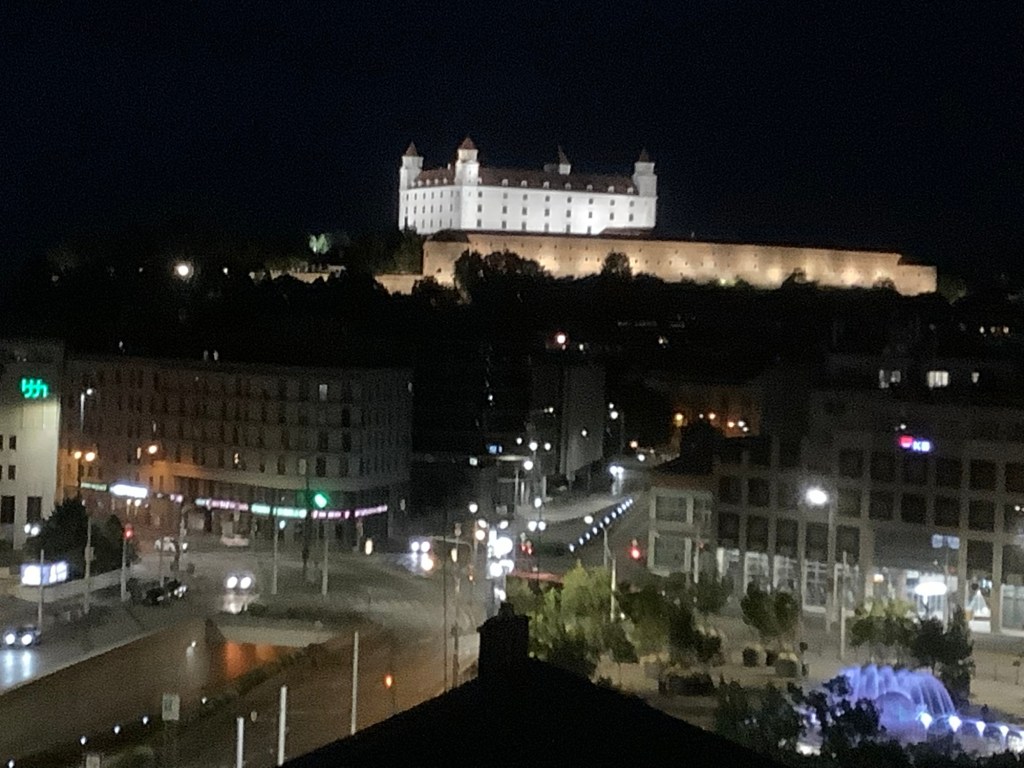
So, Slovakia came as a relief, just as summer heat reached into the high-30s. Four hotels booked ahead, including two in tiny hamlets—and every single one has promised either air conditioning or a functional fan!

Bratislava by night: from hotel room in air-conditioned comfort

In the end, my affection for Austria remains. But let’s just say we’ve entered into a more realistic understanding. I’ve seen the mud and felt the sweat, and decided that we can only be fair-weather friends.

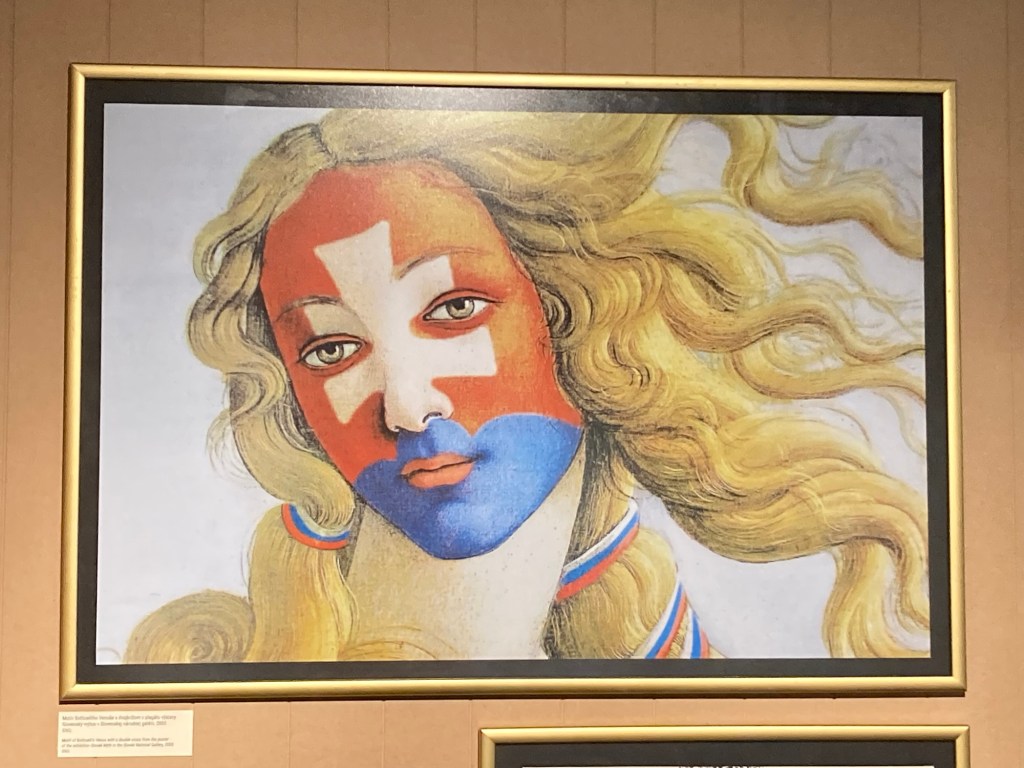
Some very cool poster art at Museum of History, Bratislava

So far, Slovakia is looking cool and refreshing, with a few additional bonuses like much cheaper food and accommodation. Best of all, entry to the charming Museum of History in Bratislava is FREE for those who remember times when travel meant paper tickets and post-cards not google maps and selfies!

And now, we pedal east, out of the capital Bratislava, into the countryside, wondering how smooth the ride will be…

How to Lose and Find: on the Way to Ulm

For those of us with zero German, “Ulm” is a gift of a name. One crisp syllable. Easy to say, easy to remember. But—if you’re arriving by bicycle—may be not quite so easy to get in.

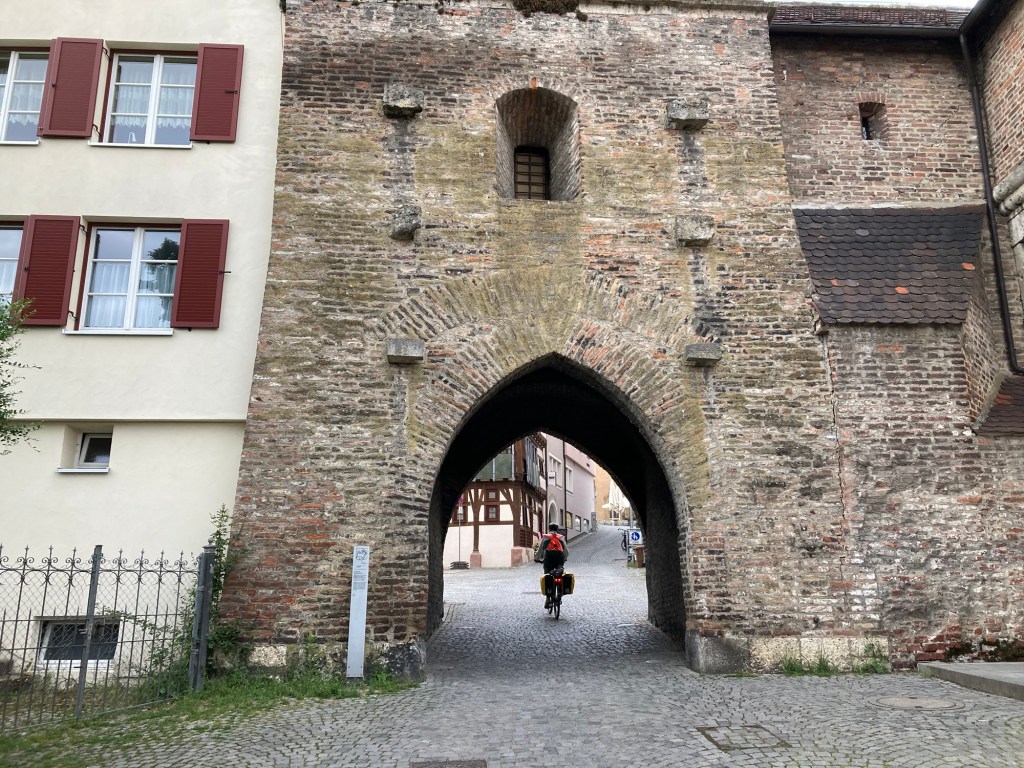
We found the gateway to Ulm! Eventually…

Our guidebook, published five years ago, helpfully warned of major construction works along the approach to Ulm. We assumed they’d be long finished.

We had not done our homework.

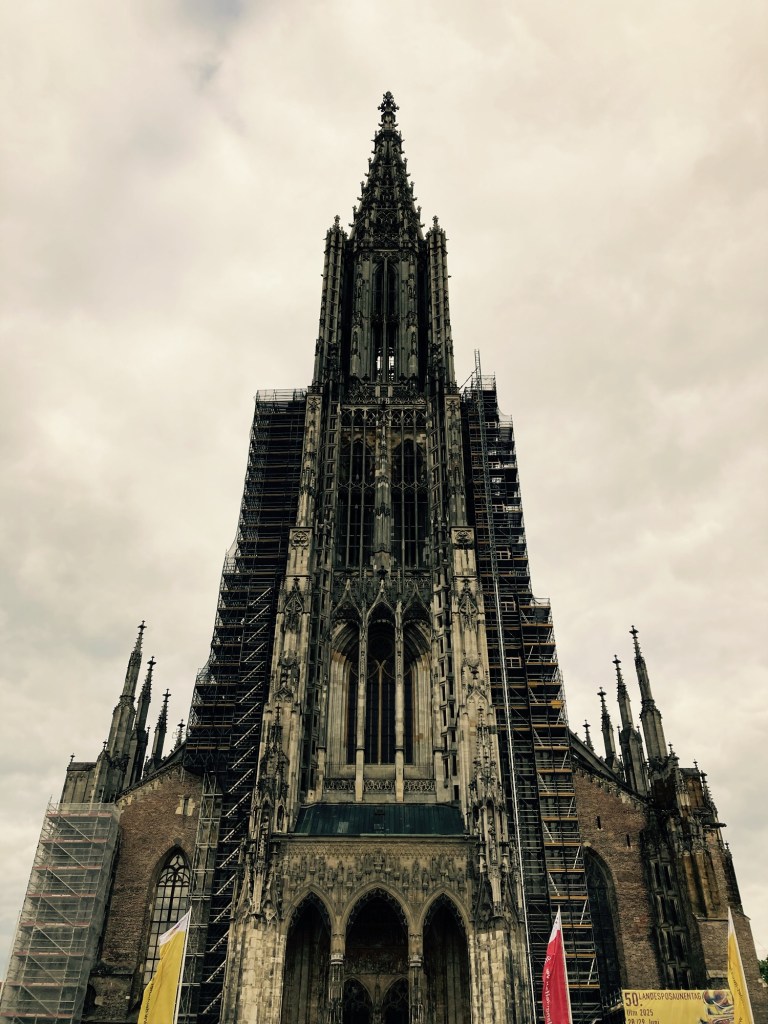
Impressive height: Minster and the scaffolding!

Ulm’s world-famous Minster, boasting the tallest church steeple in Christendom, took over 500 years to build. Construction began in 1381 and wrapped up in 1890, with a casual two-century pause somewhere in the middle while it transitioned from Catholic cathedral to Protestant minster. Renovations, which started in 2015, are scheduled to continue until 2030. Clearly, Ulm takes the long view.

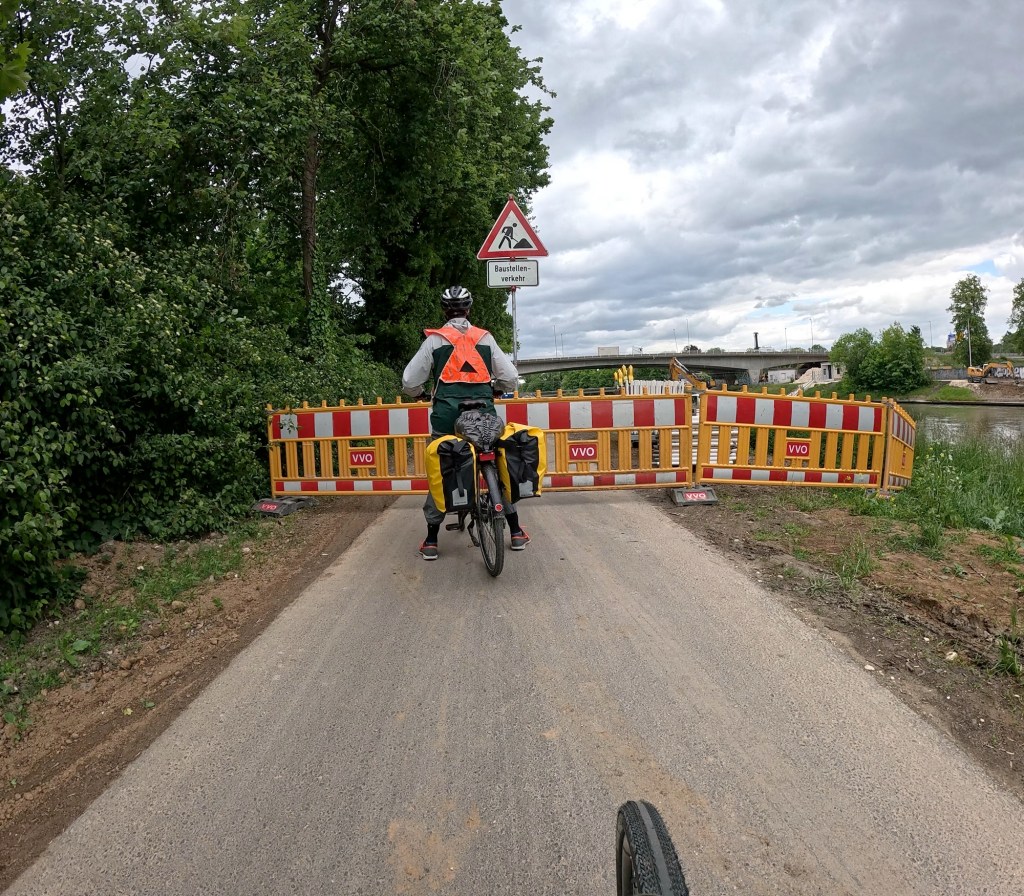
So we shouldn’t have been surprised when, on the outskirts of town—with that soaring steeple within sight—the Danube Cycle Path ran into a literal wall of red road signs, metal fencing, and firm authority.

NO GO!! Road works ahead for the next several years???

We tried the usual tourist tactics—confused pointing, hopeful shrugging, miming alternative routes—but were met with a firm “NEIN” and some impressive hand gestures that strongly suggested, go away.

So we turned around. Slowly.

Looking for… anything, really. A path. A clue. Divine intervention.

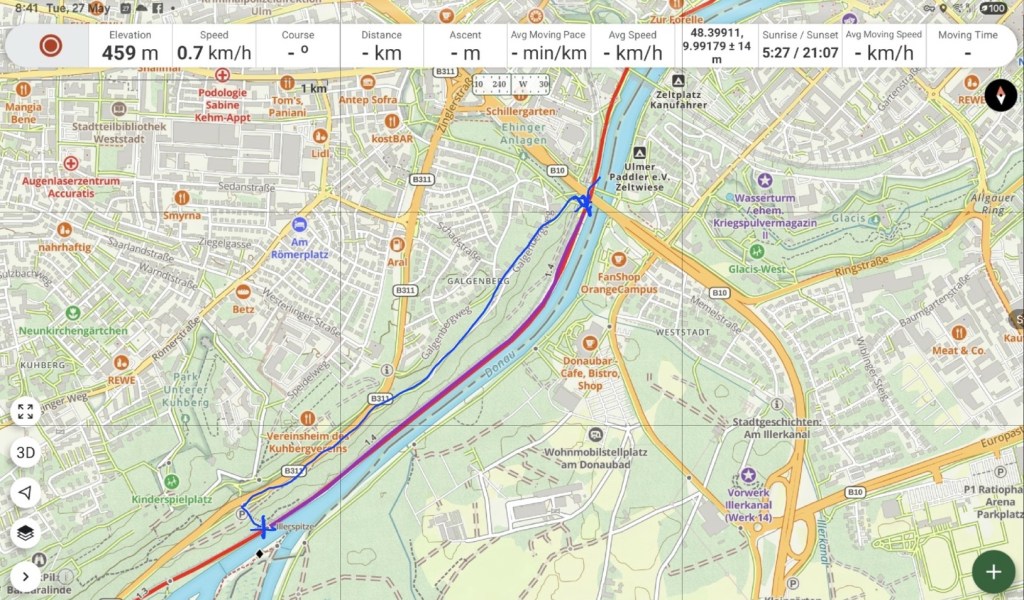
Detour map by CS: stop sign to hole in the ground

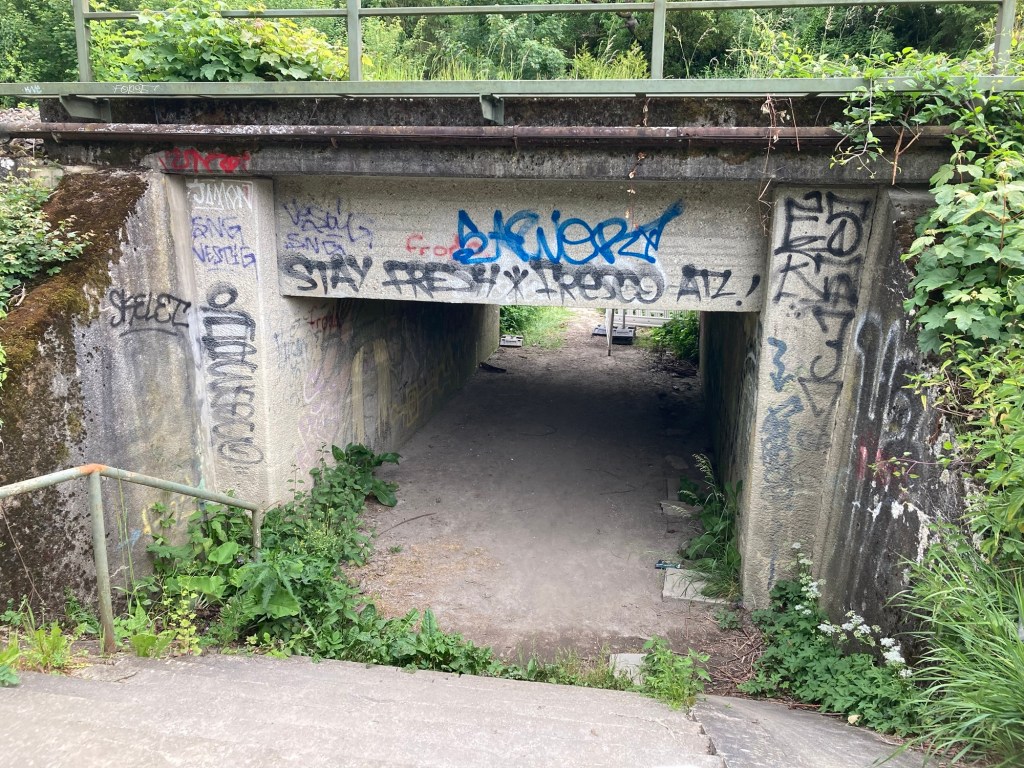
About a kilometre back, we spotted what might once have been a railway underpass, now reclaimed by moss and mystery. It didn’t appear on any map. It could lead to the road which we could hear somewhere overhead, or to Narnia. CS (Cycle Sidekick, not Lewis) went to investigate on foot. I stayed back with the bikes and a brave face.

Moments later, three Germans on sturdy electric bikes rolled up. I launched into an impromptu game of charades:

Lost Tourist 😞 → Blocked Road ✋🤚 → Detour? 🧐

The man in the group nodded in quiet understanding and, without a word, disappeared into the same tunnel where CS had vanished minutes earlier. We three not-so-young women looked at one another. New to the etiquette of cycle touring, I wondered if this is how route-finding works here: when in doubt, follow the most recent person who disappeared.

The hole in the earth

Just then, a much younger man emerged from the same underground passage where two older ones had disappeared, and began speaking to one of the German women in gestures scattered with sort-of English words. She looked puzzled: why would this man think she was married to a lost Australian on the other side of the rail track?

Thankfully, pretty soon, both husbands (hers and mine) reappeared. Mistaken identities were sorted and better still, we now appeared to have a way forward.

With no more ceremony, the young man grabbed my bike, still laden with two panniers and hauled it up some 30 crumbling steps of the underpass and onto a back lane somewhere above ground.

The rattle and shake of our way forward

We barely had time to thank him before he zipped back down to help the two other women with their far heavier e-bikes. Three lifts, three zips, and he was gone—vanished back into the tunnel like a character from a cycling fairy tale.

Obviously he was a ‘track angel’: those miraculous creatures who appear whenever you are faced with insurmountable problems, on a long road (whether hiking or riding) and disappear before you can whip out your camera and take a photo. If you have not met one, that is only because you have not needed one yet.

The river by our side

But it wasn’t just him. All week, cycling through Bavaria and Baden-Württemberg, we’ve been met by unexpected kindness. The sort that steadily dismantles the cliché you’ve learnt about German formality.

Unexpected, perhaps because the stereotypes are so deeply embedded. Germans, you are told, are efficient, punctual, law-abiding…no one said they were funny, warm, generous.

Early in the week, a young German cyclist had said to me wistfully, “I really want to visit Australia. Everyone there is so friendly.”

“Germans are friendly too!” I protested.

He remained unconvinced: “Maybe to foreigners. But to each other? We are… quite strict.”

Baker and friends, Fridingen

We all know, of course, that such generalisations can only be wrong. That the real story is told in individual moments of engagement, in snippets of conversation. Like when the owner of Fridingen’s Donauback Bakery, insists on giving us a bag of rolls—“German bread, to try!”—and refuses every attempt to pay. When the youngest monk in Beuron’s ancient monastery shares his passion for the art movement born within the walls of the cloister. Or the retired linguist who once cycled this same path we are on, gently unravels the highs and lows of our own upcoming route. And all the faster cyclists who stopped to explain a sign, translate a menu, or point us gently on our way.

And just when we thought the surprises were done for the day, the woman at Ulm’s tourist centre beamed and said, “Oh, but you must stay extra day! Deutsches Musikfest starts tomorrow.”

Organ in the Ulm Minster

There was free music, everywhere—from the ethereal organ concert under the soaring ceiling of the Minster to brass bands bouncing off the cobbled streets round the old city square. You can’t say no to such gifts: from the river, its shores and its people!!

Moop Mama, band from Munich

The Danube has carried us through more than towns and meadows—it has been a river of goodwill.

The Danube way: practically perfect despite a few challenges

So, with full panniers and bellies full of bread, we wobbled out of Ulm—serenaded by good memory, and carried by hearts full of kind vibes, a little pedal power and just a dash of curiousity about what we might loose and gain around the next bend of this river.

Beginning: A very good place to start…

‘Let’s start at the very beginning/ A very good place to start…’

But how do you tell where a river—or a journey—truly begins?

The Danube, Europe’s second-longest river, winds through ten countries over 2,850 kilometres, from the Black Forest to the Black Sea. It invites walkers, cyclists, and other travellers to trace its curves across the continent. But where, exactly, does it begin?

Donauquelle

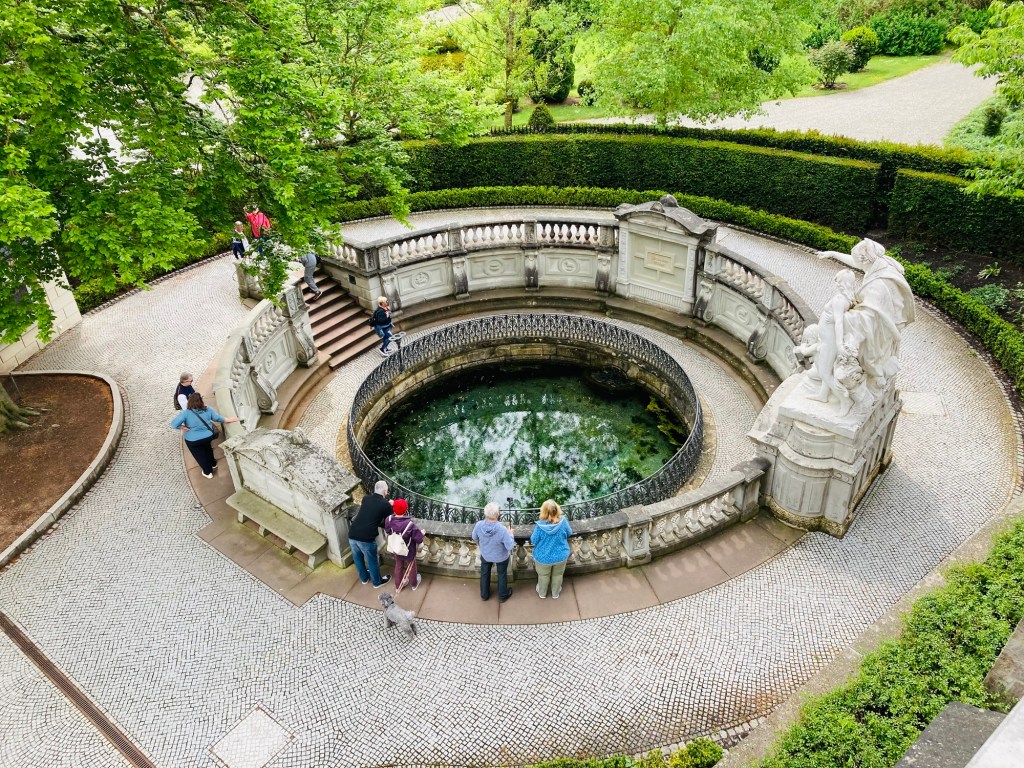
In the town of Donaueschingen, Germany, a small spring bubbles up beneath a castle courtyard. It is encased in stone and watched over by a 19th-century statue depicting the Baar, Germany’s great central plateau as Mother pointing to daughter Danube the course she should take.

Mother Baar with daughter Danube

This spot is the official (if not the most scientific) “source” of the Danube, the Donauquelle. As a friendly German tourist, pausing for a photo like the rest of us, explained: “It’s all politics—this place won because it was inside the castle.”

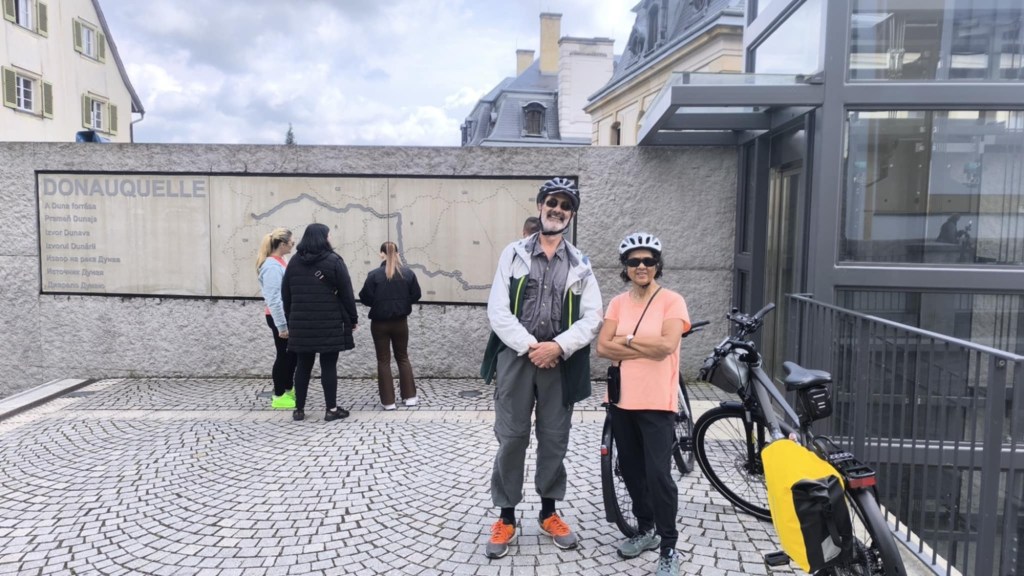
Us with bikes getting ready to start

Other places make their own claims to the Danube’s origin. Some say it starts further uphill at the Bregquelle near the Martinskapelle chapel. Others argue it begins downstream, where the Breg and Brigach rivers meet. Official or not, all these stories are part of the river’s charm.

What won us over about Donauquelle was its easy access. You—and your bike—can hop on a train from any number of major cities (we came from Munich) and roll straight into Donaueschingen station. From there, it’s just a short ride to the spring, where you can snap your first triumphant selfie and mark the start of your journey. Best of all for the not-so-bold cyclist: it’s mostly downhill from here.

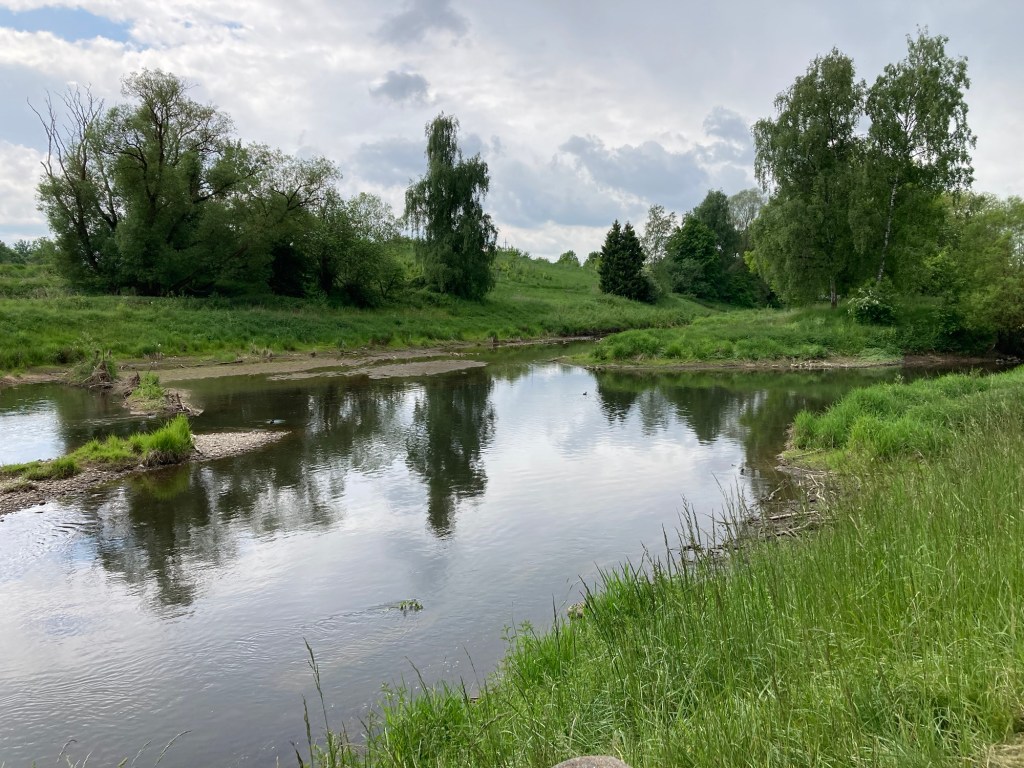
Where Breg and Brigach meet

From Donaueschingen, the Danube Cycle Path unfurls gently. About two kilometres of gravel wind through shaded parkland before arriving at the confluence of the Breg and Brigach—two modest rivers whose meeting marks the Danube’s first true appearance. It’s here, without plaque or fanfare, that the great river gets its name: the Danube.

Backtrack a few meters and pick up the cycle route to glide toward Tuttlingen, where the EuroVelo 6 joins the Danube Cycle Path.

Riding into Tuttlingen

The Donaueschingen-to-Tuttlingen leg is especially kind to those who like their rides easy: sealed roads, flat terrain, and picture-postcard views of farmland and red-roofed villages. Not up for the full 35 km? “No worries,” as we Aussies say—the cycle path passes two train stations, and Deutsche Bahn trains here graciously allow bikes on board for free.

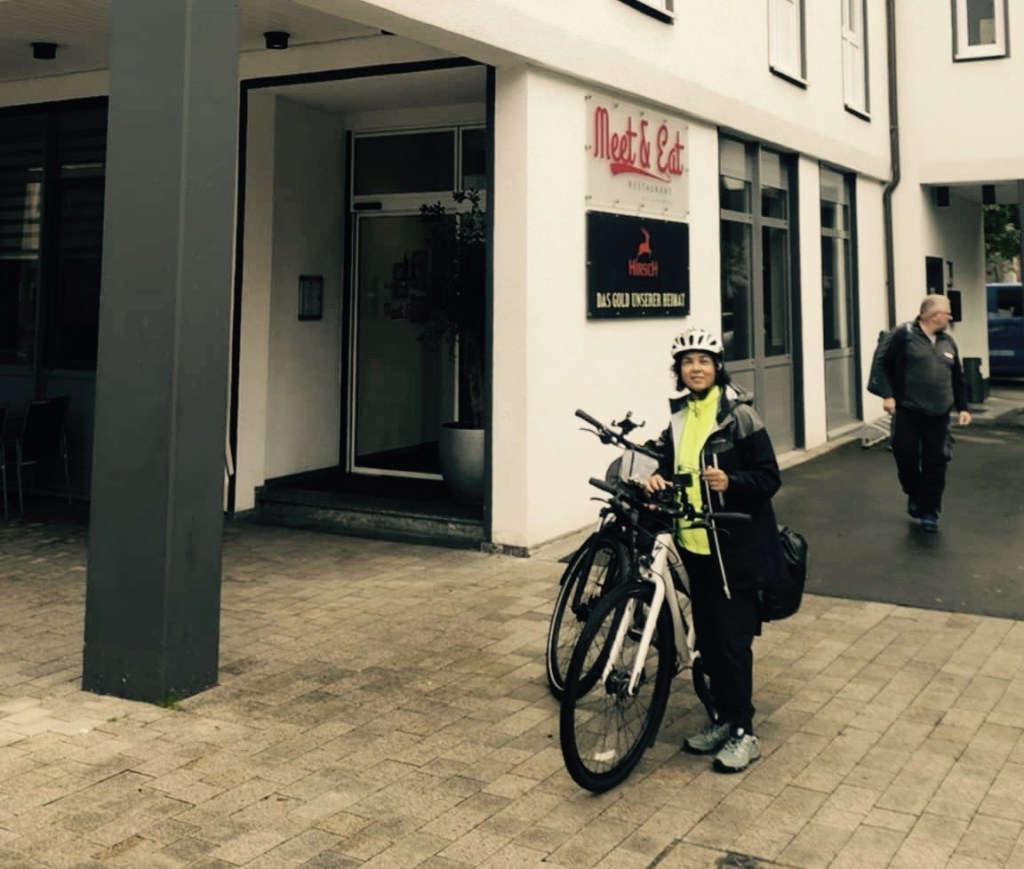
In front of the Michelin-starred Meet&Eat

Tuttlingen, an unassuming industrial town with surprising culinary flair, makes an ideal stopping point. For those who like to end a day’s ride with a gourmet flourish, Meet & Eat (open Thursday to Sunday) offers a Michelin-starred experience with a casual twist—a menu that accommodates chilli con carne alongside enoki mushrooms on something fancy. At the posher end of the spectrum, Vinzenz Weinkeller, housed in a moody cellar, flickers with candlelight and sparkles with fashionable diners.

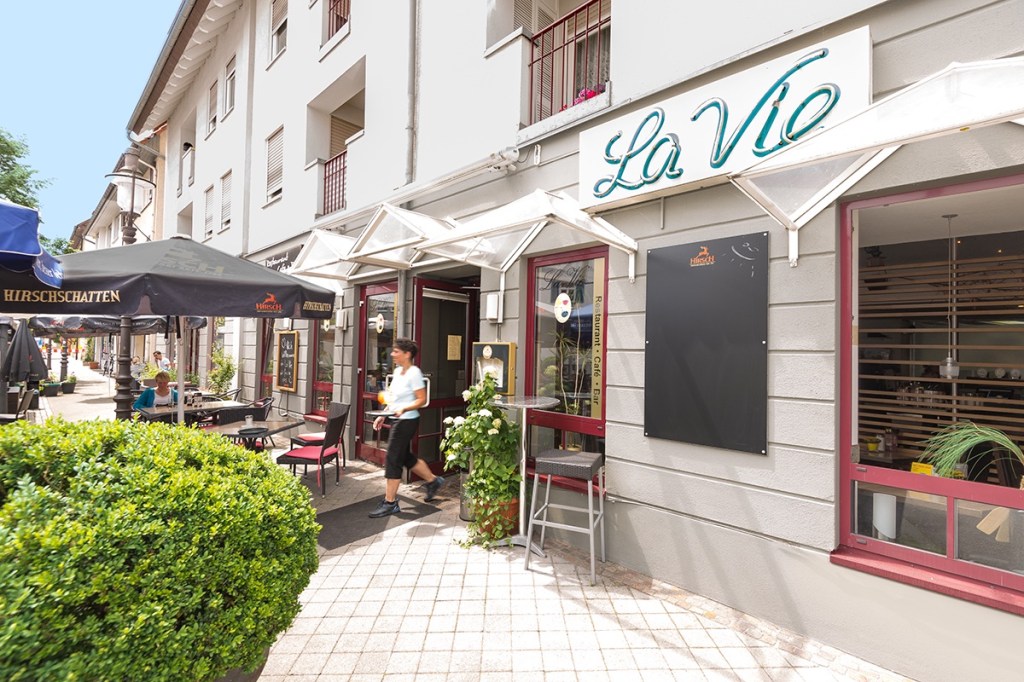
At the end of our own soggy ride, however, the hotel staff directed us to La Vie, a family-run favourite serving Swabian comfort foods, like Maultaschen (a sort of large ravioli) and Spätzle (egg noodles) with lentils and sausage. And they didn’t mind sodden boots.

So hungry, we forgot to take photos!

And so the journey begins—not with a torrent, but with a whisper: slow down, ride easy, and taste the journey one unhurried pedal stroke at a time. Who cares if the river starts in a prince’s fountain or at a monastery on the hill? What matters is that it flows, it’s alive, and it invites.

Bike-sized puzzle for a river-side ride

We are off! Our first big cycle touring experience is about to begin: plan is to ride on the famous Danube Cycleway from the source of the river in Germany, through Austria and Slovakia all the way to Budapest in Hungary.

Google says this is cycleway signage in Europe: we’ll soon find out

First step? Get a bike. Big question? Do I haul one all the way from Australia (yes, Australia, not Austria) or buy one somewhere in Europe. Turns out that long-distance cyclists are passionately divided on this. Some swear by bringing their trusty two-wheeled steed from home. Others say, “Packing and unpacking bikes for airline travel is for mugs. Just buy one when you land.”

Tempting logic. But bikes are cheaper in Oz—easily 30% less for a new one—so I was firmly in Team BYO.

Then I imagined myself in Munich airport, jet-lagged after a 24-hour flight from Perth, surrounded by a deconstructed bike, trying to reassemble mysterious bits with all the mechanical skill of … I was going to say a donkey, but that seems unfair to the beast.

My life-partner and Cycle Sidekick (CS for the purposes of this series), is definitely much techier. But when I point to the bike I’m eyeing—with its futuristic hydraulic disc brakes—he gives it a look usually reserved for malfunctioning software on alien spacecraft in Bollywood movies.

Bollywood movie hero, not Cycle Sidekick

That settled it: transporting a DIY bike-size puzzle across continents is not the dream. We will buy our bikes in Munich, because nothing says “well-planned bike-touring” like landing on foreign soil with no wheels, no language skills and a mission to buy a bicycle before the jet lag hits!

In preparation, we dive into the on-line maze of new and second-hand bike sellers, plus rental sites, hoping for the miracle of a perfect bike. The options are endless if, like CS, you are 6-foot tall and built to default settings. But there is a small problem…me – a towering 156 cm, or 5 foot 1 and a bit.

On one promising rental site, I optimistically click through buttons labeled in what might be German (or may be hieroglyph) and land on an enquiry form. First question: height, with a menu of tick boxes that begin at 160 cm. Apparently, short people don’t ride bikes in Germany. (What are we riding instead? Rats? Like that fat Indian god called Ganesh?)

Ganesh on his trustee steed, the Rat

Eventually, after trawling through enough listings to qualify for a job in bike sales, I strike gold: a modern version of a bike I used to own early this century— Specialized brand, sleek and familiar. Better still, the company’s website says it comes in XS. Cue: cautious optimism.

I try the Munich shop officially listed as a Specialized agent. They have a recorded message in German. Then four words in English ‘press 2 for English’. I do; again; and again and again. And the message loops – over, and over and again. I give up after a week or so on hold, still unsure whether it was a customer service line or an immersive performance piece by the Hairy Godmothers (Declaration of interest: I am the biological mother of one of the creatives in the group. So ignore/forgive this PR exercise.)

Then – finally – a breakthrough! I find another shop—and miraculously, a human — Tobi. “I speak a little English,” he says modestly, then proceeds with perfect clarity.

He checks the stock. Yes, he has a small frame of the model I want. “It is very small,” he warns.

“Yes, but I think I need the XS,” I reply.

There’s a pause. “Really? No! That is … almost …like for children!”

Never mind the indignity. “Could you get me one by the 15th? Yes May, yes this year, in a week, in fact…”

Tobi hesitates, weighing up the logistical problems and then, with the air of a man resigned to doing something mildly ridiculous, he says “Okay. Let me see if we can make it happen.”

And just like that, the wheels of my adventure crank into gear – still slow (always slow as the reader of this blog knows), still tentative. But, there is movement in the air!

Stay tuned if you like your travels scenic and serene—with the occasional wobbles from Yours Truly, a latecomer (age politely withheld) to the fine art and eccentric science of bike-trekking.

Bike I’m hoping to get: picture perfect, but size matters