Just after leaving the tiny settlement of Eining, on a perfectly sealed minor road, my front wheel clipped a kerb, and I fell—gracelessly—onto my hands and knees. But perhaps a tumble off a bike is good karma.
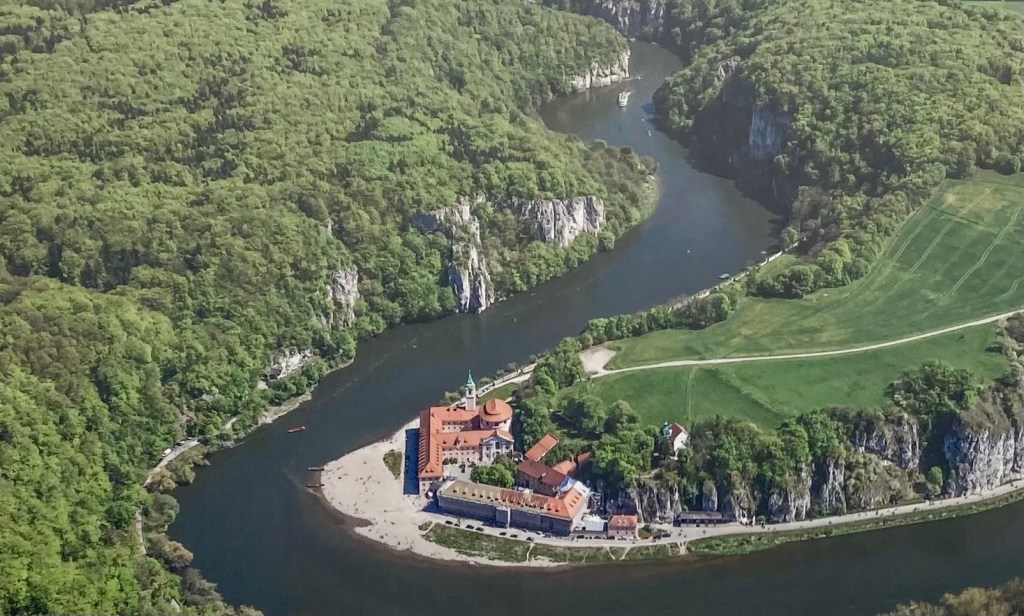
Because, the next thing I remember is Weltenburg Abbey rising where the river cleaves the hills—a benediction in stone. These days, the historic abbey doubles as a 57-room guesthouse. We get a room with a view.

Roughly 200 km earlier, we had departed Ulm—thankfully without any of the drama that had accompanied our arrival (see previous blog). A kind woman at the tourist office had redrawn our route out of the city, avoiding all roadblocks, and set us gently on our way east.
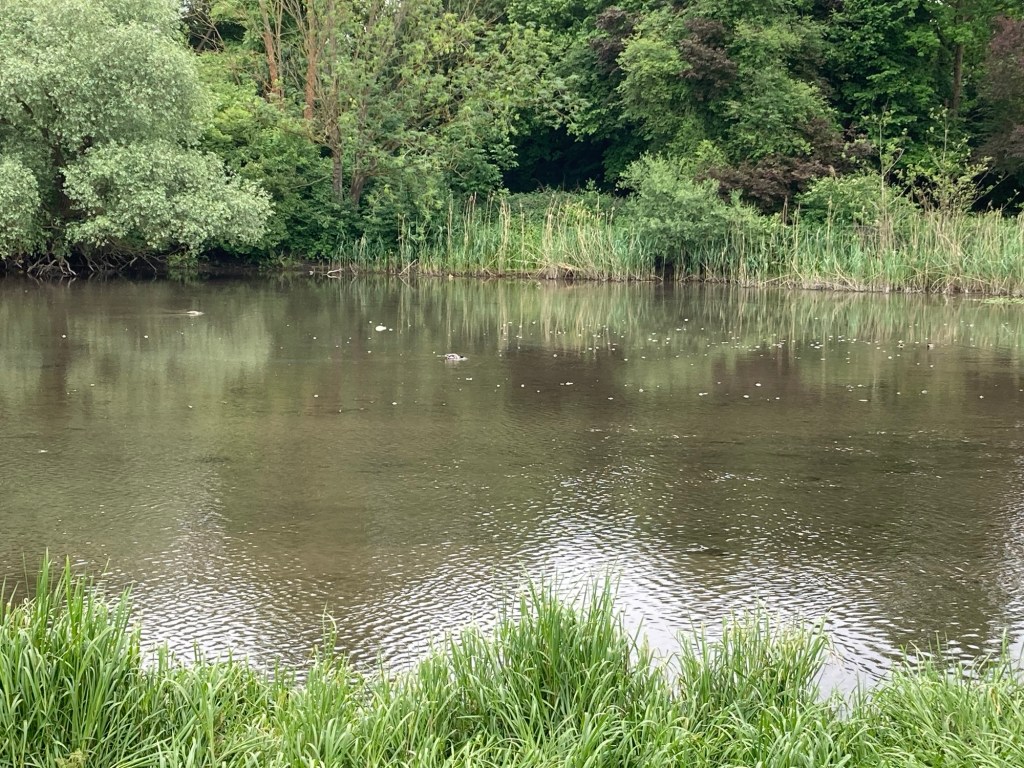
Past Ulm, both river and road settled into an easy rhythm. The Danube widens a little each day as it threads through a landscape that feels increasingly open and productive. Our road, whether hugging the river or veering slightly inland, is mostly flat and often sealed—running through parks, small settlements, floodplains, and along levees between the river and its many canals, branches, and tributaries.

Evenings bring feasts of asparagus and strawberries. By day, we ride past freshly harvested fields—true farm-to-table territory. In early summer, poppies hedge the meadows, and water lilies bloom wherever the river pools.

The waterways teem with birdlife: swans showing off for the camera, ducks and geese in every variety and pose. Cycling here could be meditative—if only you weren’t constantly braking for the fleeting silhouettes of herons and storks, who’ve eluded your camera for days.
The Danube and its surrounds are never quite still—but quietly picturesque. It’s easy to forget how many days or miles or towns you’ve traversed, all the cobbled streets and quaint church spires slipping by. You daydream yourself into some hazy, indefinite past—until a passing tractor jolts you out of it. Or more dramatically, when one of Germany’s abandoned nuclear power stations heaves into view, reminding you that some available paths are best not taken!

I believe I was trying to recall whether it was at Staubing—the next small town—or at Straubing, a larger one further east, that the unfortunate Agnes Bernauer was drowned (that story for another blog, perhaps). The road was a little slick from the constant drizzle… you know how easy it is to slip…
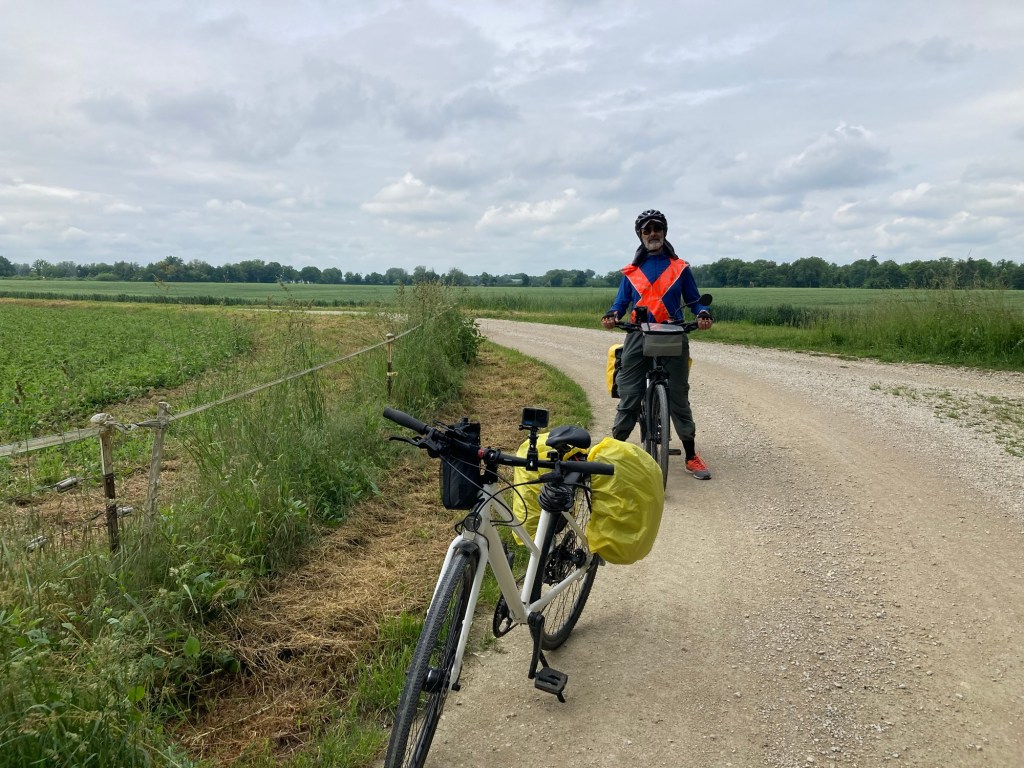
Bruised in limb and spirit, and soggy from the rain, my dearest wish was simply to reach the end of the day’s ride. Post-fall, the path seemed tedious—through farmland and away from the river. Had I been a believer, I would have prayed for a miracle.
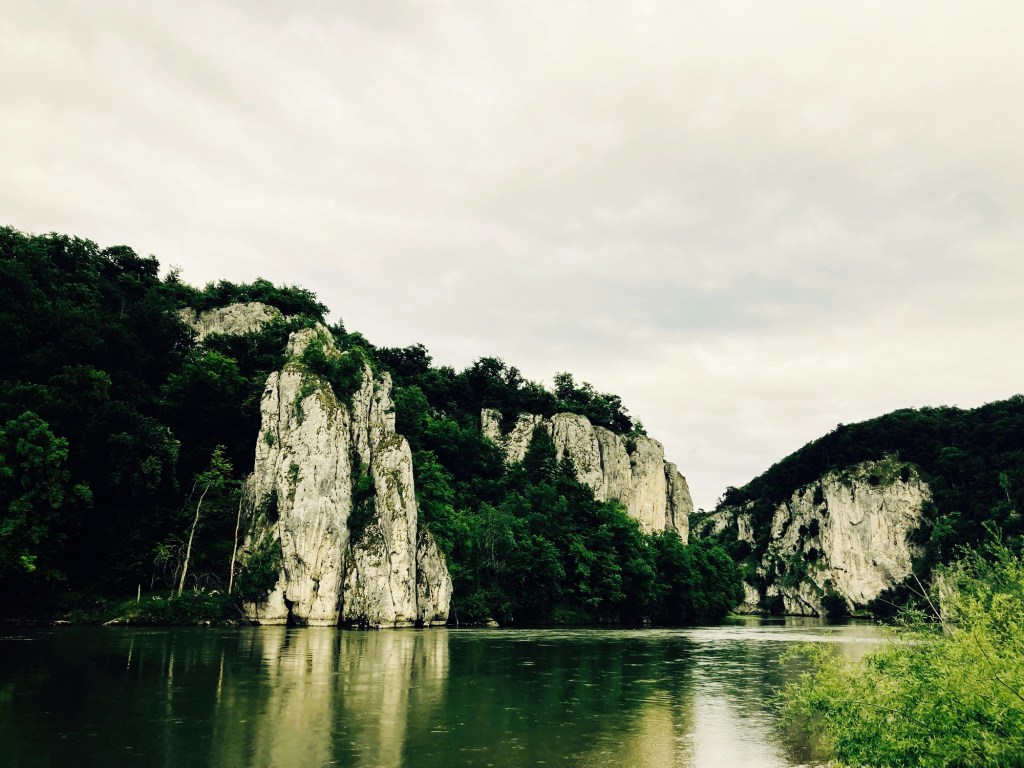
And then—almost as if to remind us who’s in charge—the Danube came back into view. The road curved with the river’s serpentine turn, just as the waterway narrowed, deepened, and began slicing through the Fränkische Alb to carve a path through the mountains—for itself, and for us. This is the Donaudurchbruch, the Danube Gorge, where the river has spent millennia chiseling its way through Upper Jurassic limestone, creating a spectacle of sheer cliffs and a current rippling with quiet resolve.
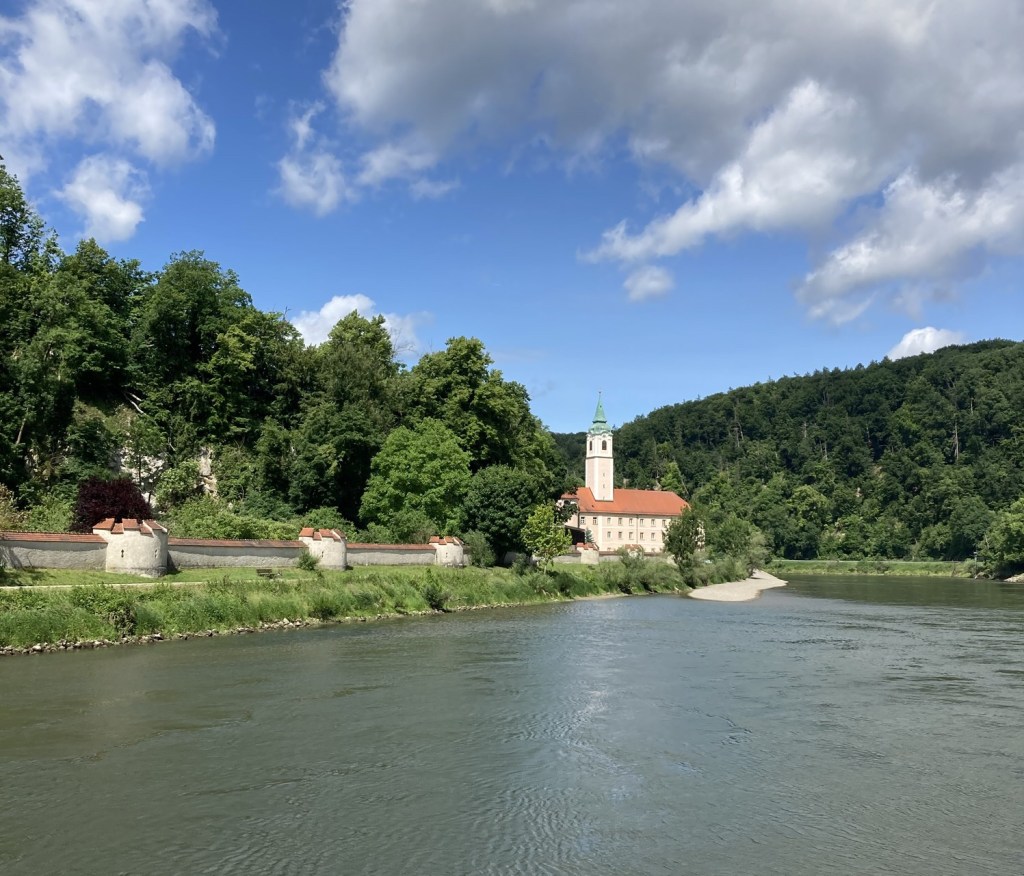
The river exhales and spreads out as the cliffs recede just a little. Tucked into this peaceful bend is Weltenburg Abbey—both revelation and refuge.
Founded around 620 AD, it is said to be the oldest monastery in Bavaria. But it was in the 18th century that the abbey took its current form. The Asam brothers—Baroque artists with a flair for the divine—transformed the church into a theatre of ornamentation. Frescoes coil and burst across the vaulted ceiling; marble gleams; golden stucco catches every wandering ray of light. It’s all a bit loud for a limping atheist. I wonder whether even some believers might find this relatively small (in comparison to the great churches elsewhere on our road) overdressed space a touch too theatrical.

The abbey’s older exterior walls feel more attuned to its natural setting—reaching out from the treed hills behind, with just enough foothold on the riverbank to seem sturdy, dependable, and welcoming.
And this sanctuary is no stranger to earthly pleasures. Its brewery, in operation since at least 1050, claims to be the oldest monastic brewery in the world. The restaurant menu is classic Bavarian. If you plan well, you can include board with your lodging. We did not – plan well, I mean!

The next morning, though well-rested, we opted to take the boat through the Weltenburger Enge—one of the oldest nature reserves in Bavaria—up to Kelheim, rather than pedal up the 10% gradient out of the gorge. The views from the water were stunning.
Maybe, sometimes, you have to lose your balance to find the best way forward?

 Reading the Road