After some 70 Kilometres of soaring and plunging with the cliffs above the Bristol Channel, the South West Coast Path (SWCP) moves down to the coast. From Woolacombe on, the path passes through a series of seaside suburbs with miles of sandy to muddy beaches, that I had never imagined in England. The water is mostly shallow, warm and inviting. Dogs and children everywhere with ice creams melting faster than you can lick. It isn’t Bali or Goa or even Western Australia. You can imagine how desolate it might get here in winter. Right now, however, happy holiday makers are taking full advantage of a rare sunny day, baking themselves red as lobsters, seemingly undaunted by monstrous jelly fish which have come ashore and melted into the sand like gelatinous blobs with multiple limbs.

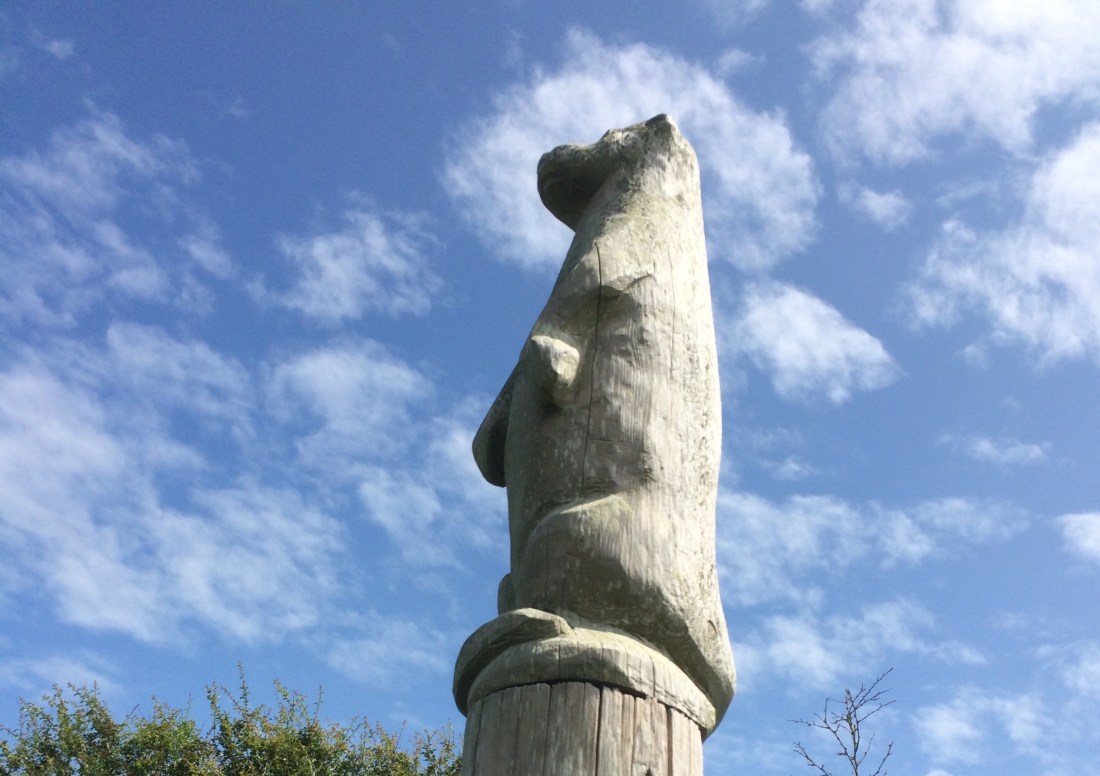
But no one flies from the pristine swimming beaches of Australia to the UK for sand or sun! Over the next 50 kilometres or so, I am chasing Tarka, the most famous otter in the world. See <https://en.wikipedia.org/wiki/Tarka_the_Otter> for more information or better still read Tarka the Otter: His Joyful Life and Death in the Country of the Two Rivers, 1927 novel by naturalist, broadcaster and writer Henry Williamson. There are films and tomes of readings and writings about Tarka. And since 1987, there’s even a walking trail to commemorate Tarka’s travels up and down the rivers Taw and Torridge.
Half a day’s walking brings us from the beach suburbs to Braunton Burrows, where the Tarka trail folds into the SWC path. Abundant signage informs all visitors of the rich flora and fauna of the region. The Tarka track is set up for tourists and families. In the small patchy sections of forest, you can imagine a baby otter running ‘among buttercups and cuckoo-flowers and grasses bending with bright points.’ The blackberry brambles still arch over the narrow track, with fluffs of wool from grazing sheep along the edges of farming tracts. In a thicket, feathers on the ground and what looks suspiciously like a foot without the rest of the rabbit, provide evidence of a mortal struggle the night before. Williamson’s Tarka prepares one for all of this. Tarka is no cute fluffy animal of children’s picture books. He is descended from ‘hunters in woods’ and he lives and dies as much amongst birdsongs and butterflies as amongst creatures who survive by eating each other.
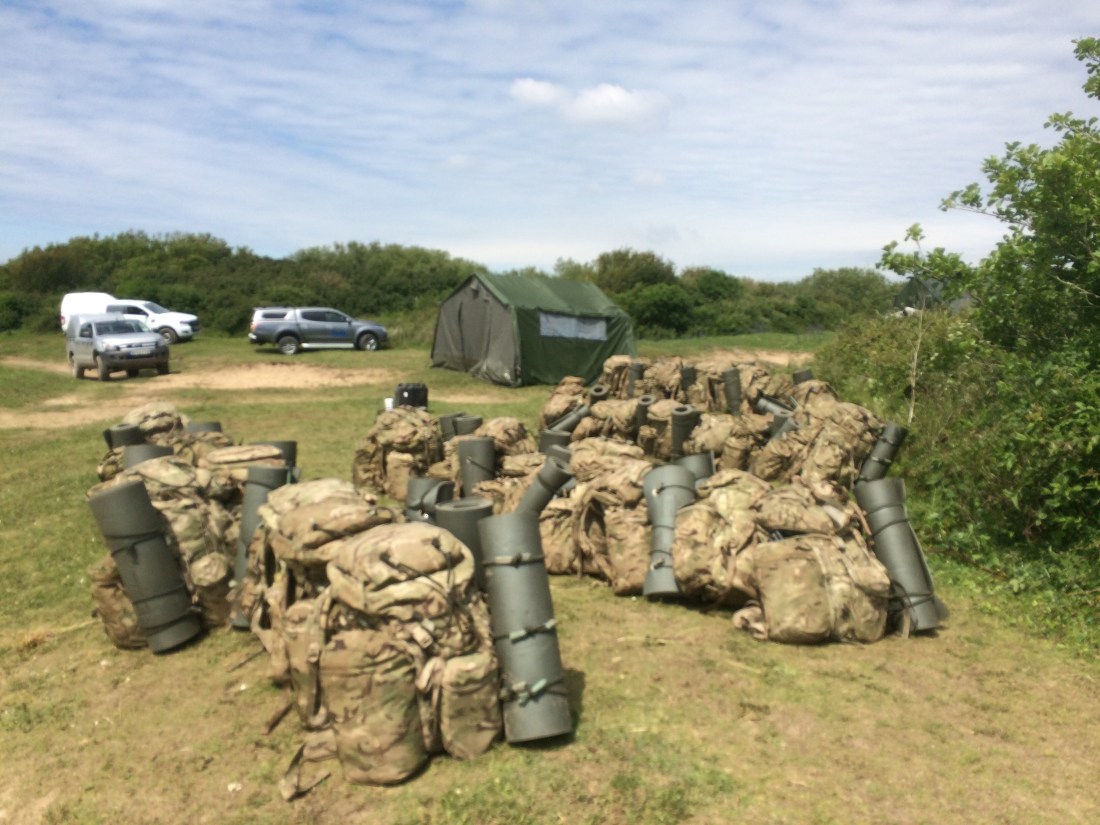
Though otters are no longer hunted (banned since 2004) and people in Braunton and nearby villages will tell you they are plentiful further up-river, no one seems to have seen these shy creatures in a while in this part of the track. Much of the walk into the town of Braunton is through a heavily used golf course and in and out of a military training area, then on to a dead straight sealed path called American Road, in memory of the US soldiers who trained here before the allied landing on the Normandy beaches. We had been hearing the tell-tale put-put of shooting for some time, then suddenly we were standing before what looked like a rehearsal for a film shoot: dogs barking and camouflaged men running around playing with guns. But ‘No ma’am, you cannot take photos’. And ‘yes, ma’am they are real guns’ and though the cartridges might be blanks, they can hurt you. Of course, it is perfectly safe to walk as long as we stay strictly on the marked walking track.
Tarka grew up knowing the dangers of dogs and men with guns. His parents were killed by hunters and he himself faced off with the hounds time and again. Though Tarka himself was courageous even vicious, it is hard to imagine his kind showing up near here.
The rest of the walk into Braunton is on an artificially raised embankment, much of it quite a distance from the riverbed. Tide is out. Mud banks are hosting several groups of feeding birds. Closer to the path, strings of boats, which look like they have been stationary for several seasons. From Braunton, Instow is another 25.7 kilometre flat walk, through bike tracks and farms on the banks of Taw. This is too close to salt-water for otters, we are told by a woman who sounds knowledgeable. To see otters, she says, we need travel up-river and away from the sea.
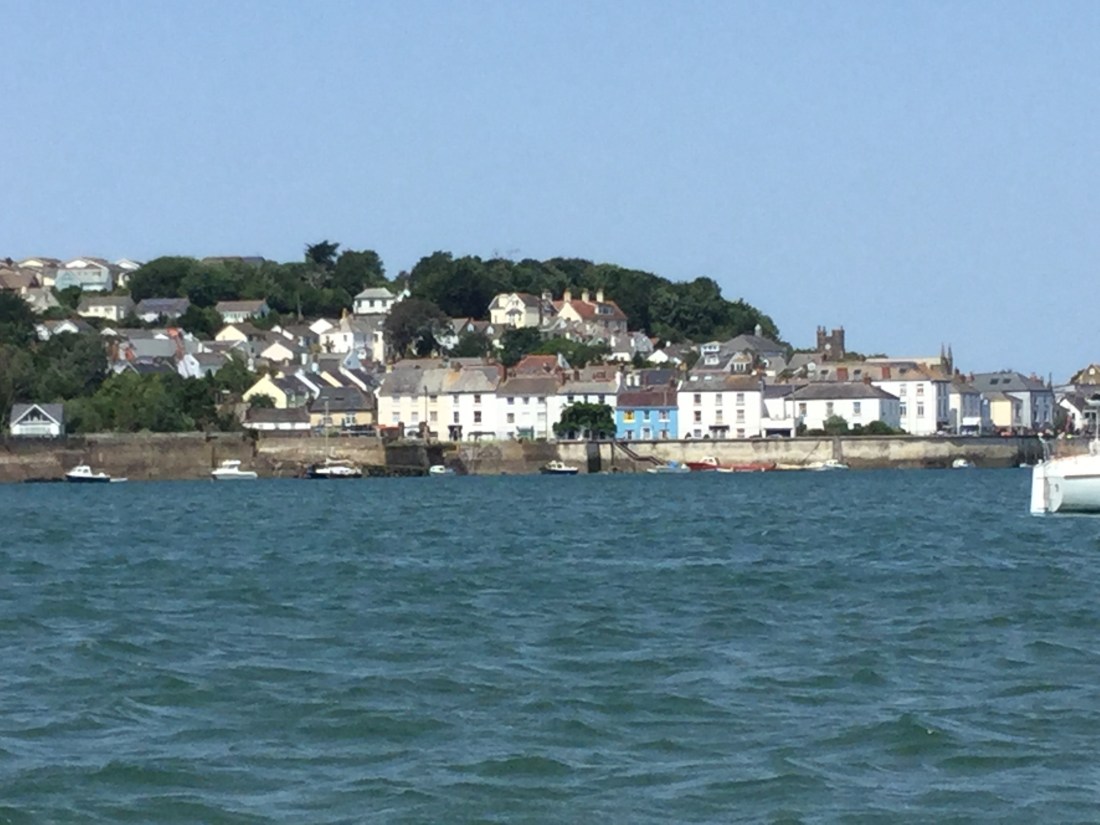
On the mudflat the scenery barely changes from one bend of the river to another. Flat walks are often kind of boring. So we decide to take the boat across the Torridge from Instow to the tourist town of Appledore, then walk just 8 kilometres, back to the coast, to a strangely named town called Westward Ho! (written always with an exclamation mark – but that’s another story), where the Tarka trail and the SWCP part company.
No otter sighting. But drifting, a tad listless on Tarka’s tail, lets my mind wander into my favourite childhood holidays, reading beautifully illustrated English children’s books, amongst them, of course, Wind in the Willows conjuring up every child’s dream forest-resort. I read Bengali, too. But the English books were so much better produced and with colour prints which our own books never had. Thus England’s stories and images fed my generation’s imagination on ‘strawberry, sugar and cream’ long before any of us tasted our first berry, let alone saw the first wild berry bush. We knew, fancied and fantasised the foods, the meadows and dells, the flowers and animals of England, more than anything in our own real surroundings. Not finding Tarka, bizarrely and precisely evokes that childhood, five thousand miles away in Kolkata and Delhi, spent chasing things that were always going to be manifestly unreal for us.

 Reading the Road